

1. Vertical Structure Adapts to Deep-Water Intake Environments
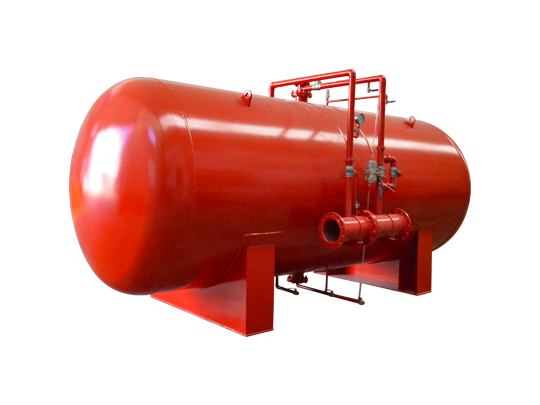
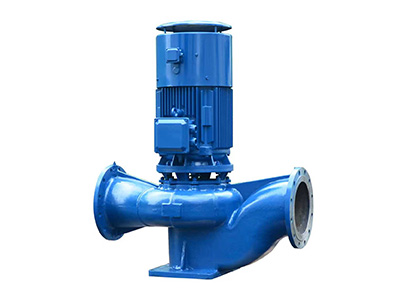
The system adopts a vertical long-shaft structure, with the pump impeller located inside the water source. It can directly draw water from underground fire pools, deep wells, or natural water sources, overcoming the suction head limitations of ordinary centrifugal pumps. This ensures stable water supply even in complex water intake environments, meeting the long-term needs of large-scale fire-fighting projects.
2. Efficient Hydraulic Design Enhances Water Supply Capacity
The fire pump employs an optimized flow channel and high-efficiency impeller design, effectively reducing hydraulic losses and improving water delivery efficiency. The equipment can continuously output a stable flow rate and head, providing ample fire-fighting water for automatic sprinkler systems, fire hydrant systems, and fire monitor systems, thus improving fire-fighting efficiency.
3. Fixed Installation Ensures Long-Term Stable Operation
The entire system adopts a fixed installation method, with a solid foundation, stable operation, and minimal vibration, making it suitable for long-term standby. Its reasonable structural design can adapt to continuous operation and frequent start-up conditions, providing reliable water supply for key fire-fighting areas.
4. Automatic Control Enables Rapid Response
The intelligent control system monitors the fire pipeline pressure and equipment operating status in real time. When the system detects a pressure drop or receives a fire start signal, it can automatically start the fire pump to achieve rapid water supply. The control system supports automatic, manual, and remote operation, improving the level of fire automation.
5. Multiple Safety Protections Enhance Equipment Reliability
The system is equipped with multiple safety functions, including overload protection, phase loss protection, overvoltage protection, undervoltage protection, over-temperature alarm, operational fault alarm, and motor protection. In case of abnormalities, it can promptly alarm and take protective measures, effectively reducing the risk of equipment failure and improving system stability.
6. Modular Design for Convenient Installation and Maintenance
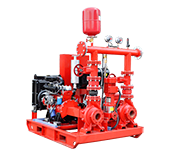
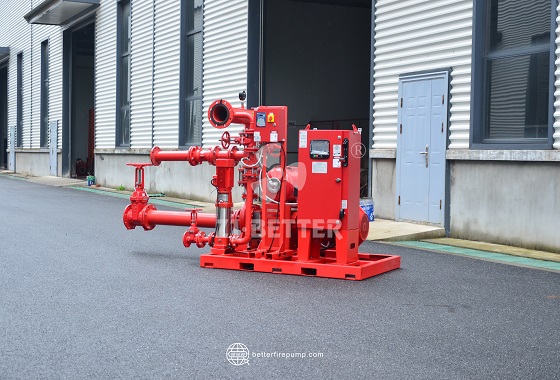
The fire pump, drive unit, control cabinet, and supporting piping adopt a modular design, making transportation, installation, and on-site commissioning more convenient. Ample maintenance space is provided for easy future inspection, replacement of parts, and routine maintenance, effectively reducing maintenance costs.
7. High-Quality Materials Extend Service Life
The pump body, impeller, pump shaft, and main flow-through components are made of wear-resistant and corrosion-resistant materials, possessing high mechanical strength and excellent durability. Key components undergo precision machining and balancing calibration, reducing wear and improving the equipment's long-term continuous operation capability.
8. Applicable to Diverse Fire Protection Projects
The equipment is suitable for fire protection projects in petrochemical, power plant, steel metallurgy, airport, port, data center, large commercial complexes, high-rise buildings, and municipal engineering. It can also be applied to underground water storage tanks, deep wells, and natural water source fire-fighting water intake projects, meeting diverse fire-fighting water supply needs.
9. Intelligent Monitoring Improves Management Efficiency
The system can be configured with a remote communication interface to connect with the fire control center or intelligent fire protection platform, enabling equipment operation status monitoring, fault alarms, operation data recording, and maintenance reminders. Digital management helps maintenance personnel keep abreast of equipment status, improving management efficiency.
10. Meeting the Requirements of Modern Fire Protection Systems
Fixed vertical fire pump systems meet the requirements of modern fire protection engineering for continuous water supply, highly reliable operation, and intelligent control. Different flow rates, head, and control schemes can be configured according to different projects, providing a stable, efficient, and reliable overall fire water supply solution for large-scale fire protection projects.
Fixed vertical fire pump systems, with their advantages of vertical long-shaft water intake, high-efficiency hydraulic design, automatic control, multiple safety protections, modular installation, and intelligent monitoring, can continuously provide stable fire water supply in complex water source environments. The equipment features reliable operation, convenient maintenance, wide applicability, and long service life, meeting the fire protection engineering needs of various fields such as industrial facilities, public buildings, and large infrastructure, providing a solid guarantee for modern fire water supply systems and contributing to the continuous development of smart fire protection.
 WhatsApp me