

1. Basic Functions and Positioning of Fire-Fighting Water System Pressure Tanks in Emergency Water Supply
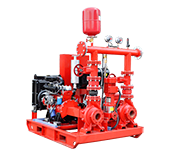
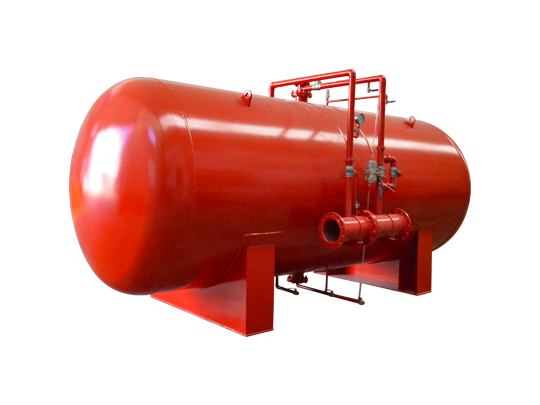
A fire-fighting water system pressure tank is a device that stores a certain volume of water and maintains system pressure. It is mainly installed in fire pump rooms or key nodes of the piping network. When the fire protection system is in standby mode, the pressure tank maintains a stable pressure through air-water separation or a diaphragm structure. Once pressure fluctuations or small flow demands occur at the end of the piping network, the pressure tank can immediately release the stored water to ensure that the system pressure does not drop. In emergency water supply scenarios, fires often occur suddenly, and the initial water supply response within the first few seconds or even tens of seconds is extremely critical. Pressure tanks are precisely the devices responsible for this "first-time water supply." Their existence effectively compensates for the time gap before the fire pump starts, preventing delays in firefighting due to insufficient pressure in sprinkler systems or fire hydrants, thus buying valuable time for the fire protection system.
2. The Key Value of Pressure Tanks in the Initial Response of Fire Protection Systems The initial stage of a fire is often the golden period for controlling the fire, but it takes time for the fire pump to reach its rated speed after receiving the start signal. During this period, if the system cannot maintain sufficient pressure, sprinkler heads may not open properly, and the water output from fire hydrants will also be affected. Fire water system pressure tanks, by pre-storing pressurized water, automatically compensate for the flow rate the instant the pipeline pressure drops, keeping the system pressure within the set range, thereby ensuring that the fire protection terminal equipment can respond immediately. This water supply method, which requires no electricity and relies entirely on physical energy storage, has extremely high reliability in emergency situations and is an important guarantee for improving the overall response capability of the fire protection system.
3. Impact of Structural Design on the Emergency Performance of Pressure Tanks
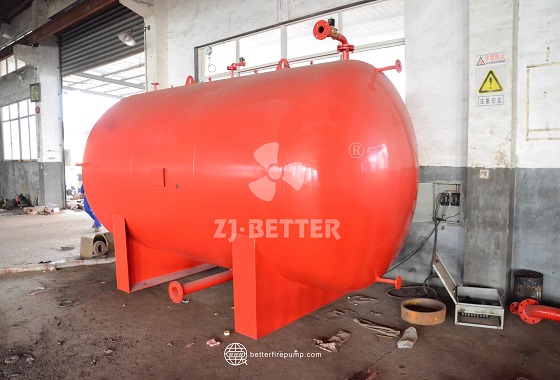
Fire-fighting pressure tanks typically employ welded steel structures, possessing excellent pressure-bearing capacity and structural stability. Internally, they can be designed as diaphragm, airbag, or air cushion structures depending on system requirements, each offering advantages in emergency water supply. A well-designed structure ensures the pressure tank maintains stable operation under high-frequency pressure changes, preventing gas leaks, water hammer, or structural fatigue. During emergency water supply, the pressure tank needs to complete rapid depressurization and repressurization cycles within a short time, placing high demands on shell strength, welding processes, and sealing performance. High-standard structural design effectively extends equipment lifespan and ensures long-term reliable operation.
4. Matching Principles of Capacity and Pressure Parameters in Emergency Water Supply
In fire protection system design, the effective volume and design pressure of the pressure tank must match the actual operating conditions. Insufficient capacity may fail to meet the instantaneous flow requirements during emergency water supply; excessive capacity may increase system costs and occupy more space. A reasonable capacity design should be based on comprehensive calculations considering the pipeline volume, the system's allowable pressure fluctuation range, and fire protection code requirements. Meanwhile, the rated working pressure of the pressure tank should be higher than the normal operating pressure of the system and have sufficient safety margin to cope with potential pressure peaks during a fire. Scientific parameter matching not only improves the reliability of emergency water supply but also contributes to the overall economic efficiency and safety of the system.
5. The Role of Pressure Tanks in Reducing Frequent Fire Pump Starts
In systems without pressure tanks or with improper configurations, even minor leaks or pressure fluctuations in the pipe network can lead to frequent fire pump starts, increasing energy consumption and accelerating equipment wear. Fire water system pressure tanks can absorb minor flow changes in the pipe network and play a crucial role during routine standby phases outside of emergency water supply. By stabilizing system pressure and reducing the number of fire pump start-ups and shutdowns, the pressure tank indirectly improves the reliability of the entire fire protection system. During a fire, fire pumps in good condition can quickly enter stable operation, further ensuring the continuity of emergency water supply.
6. Advantages of Emergency Water Supply in Different Application Scenarios
Whether in high-rise buildings, industrial plants, warehousing and logistics centers, or large public facilities, the value of fire water system pressure tanks in emergency water supply is significant. In high-rise buildings, the significant height differences in the pipe network lead to more pronounced pressure fluctuations. Pressure tanks effectively buffer pressure changes, ensuring stable water supply in high-rise areas. In industrial sites, fire protection systems are often large-scale, requiring higher reliability for emergency water supply. Pressure tanks provide a stable initial water source for the system. In remote areas or areas with unstable power supply, pressure tanks rely on their own energy storage to provide necessary support for the fire protection system even in the event of a short-term power outage.
7. Material and Protection Design for Long-Term Emergency Reliability Fire water system pressure tanks operate under constant water and pressure, demanding high corrosion resistance and protective properties from materials. High-quality steel combined with appropriate anti-corrosion treatment effectively resists the erosion caused by water quality, humidity, and environmental factors. Internal parts in contact with water must have good corrosion resistance to prevent rust from affecting water quality or structural strength. The external surface is treated with anti-rust coatings or spraying to adapt to complex environments such as pump rooms or outdoors. These design details directly affect the reliable operation of the pressure tank in critical moments and are fundamental to ensuring the stability of emergency water supply.
8. Collaboration Capability with Fire Control Systems Modern fire protection systems emphasize the coordinated operation of equipment. Pressure tanks are typically used in conjunction with pressure switches, control cabinets, and other equipment to achieve automatic pressure replenishment and status monitoring. In emergency water supply scenarios, pressure changes from the pressure tank can be promptly fed back to the control system, triggering the fire pump to start or issuing an alarm. This collaborative mechanism allows the system to switch from standby to full water supply in the shortest possible time, reducing human intervention and improving the automation level of emergency response. Good system compatibility and interface design are crucial conditions for maximizing the value of the pressure tank.
9. Impact of Installation and Maintenance on Emergency Water Supply Performance Correct installation location and standardized installation methods are essential prerequisites for ensuring the effectiveness of the pressure tank in emergency water supply. The pressure tank should generally be installed near the fire pump outlet or critical system nodes to shorten the response path. Simultaneously, a reasonable pipeline layout can reduce resistance loss and improve water supply efficiency. Regular maintenance checks of pressure values, sealing conditions, and anti-corrosion coatings can promptly identify potential problems and prevent equipment failure during a fire. Good maintenance management ensures that the pressure tank maintains stable performance even after long-term operation.
10. The Comprehensive Value of Fire Water System Pressure Tanks in the Overall Safety System
From a system perspective, fire water system pressure tanks are not merely standalone devices, but crucial components ensuring overall fire safety. Through multiple functions, including stabilizing pressure, providing emergency water supply, and protecting core equipment, they enhance the comprehensive resilience of the fire protection system in the face of sudden fires. In critical emergency water supply scenarios, the presence of the pressure tank often determines whether the system can function effectively in the first instance. Its value lies not only in its technical parameters but also in its long-term protection of personnel and property safety.
In summary, the importance of fire water system pressure tanks in emergency water supply is multifaceted: from initial water supply response and system pressure stabilization to equipment protection and overall reliability enhancement, they play an irreplaceable role. Through scientific design, reasonable parameter matching, and standardized installation and maintenance, pressure tanks can provide stable and reliable support to the fire protection system at critical moments, making them an indispensable and vital component of modern fire water systems.
 WhatsApp me