

1. Precision Boosting for Optimized System Pressure
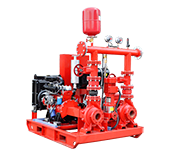
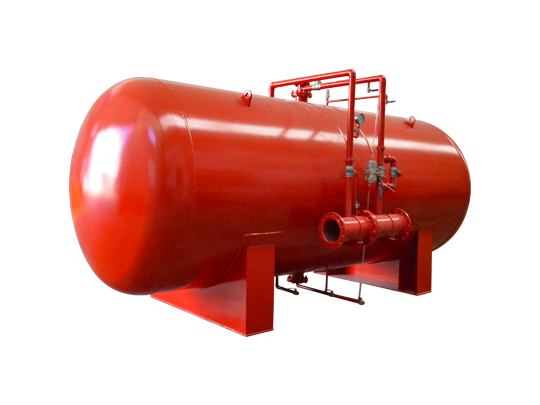
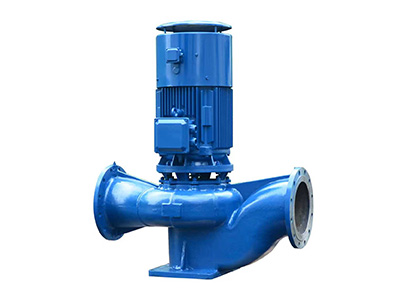
Through built-in high-efficiency pump sets, firefighting water booster equipment compensates for pressure deficiencies within the existing supply system, maintaining the entire pipe network within a set, stable pressure range. This is particularly critical in high-rise buildings or large-scale industrial facilities, where remote water outlets often fail to meet operational requirements due to pressure loss. The equipment automatically adjusts its output in response to pressure fluctuations, ensuring that every water outlet receives stable and sufficient water pressure, thereby fundamentally enhancing the overall performance of the fire protection system.
2. Balanced Flow Distribution to Meet Multi-Point Demands
In complex pipe networks, water demand varies significantly across different zones, often leading to localized supply shortages or uneven flow distribution. By optimizing its hydraulic design, the booster equipment achieves a rational distribution of flow. It maintains a stable output even when multiple points are drawing water simultaneously, preventing localized pressure drops that could compromise firefighting effectiveness and ensuring the system's reliability during high-load operations.
3. High-Efficiency Hydraulic Structure for Enhanced Operational Efficiency
The equipment incorporates an advanced centrifugal pump hydraulic model design, facilitating smoother water flow within the pump body. This design minimizes energy loss and boosts overall efficiency. In practical operation, the system not only delivers stable pressure output but also operates with high efficiency at lower energy consumption levels, thereby reducing long-term operating costs for users and improving the overall economic viability of the system.
4. Automated Control System for Intelligent Management
The firefighting water booster equipment is equipped with an intelligent control system capable of real-time monitoring of pipe network pressure, flow rates, and the operational status of the equipment itself. Based on pre-set parameters, the system can automatically start and stop the equipment, enabling unattended operation. Furthermore, it features fault alarm and protection functions that allow for immediate response in the event of anomalies, effectively safeguarding equipment integrity and system stability.
5. Rapid Response Mechanism for Enhanced Emergency Capability
In the event of a fire, the system is required to deliver a stable water source within the shortest possible timeframe. This equipment features rapid response capabilities; upon receiving a start signal, it can swiftly transition into operational mode—immediately boosting pipeline pressure—to ensure that firefighting equipment receives an adequate water supply without delay, thereby gaining precious time for fire suppression efforts.
6. Compact Structure: Facilitating Installation and Retrofitting
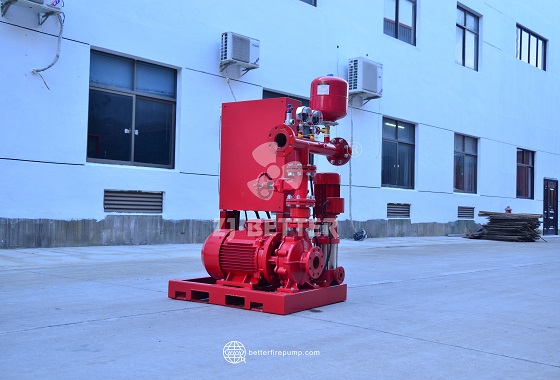
Typically featuring an integrated design, the equipment occupies a minimal footprint and can be flexibly incorporated into existing pipeline networks. This makes it particularly well-suited for retrofit projects or environments where space is at a premium. The installation process is straightforward, requiring no extensive modifications to the original system's structure; this significantly reduces construction complexity and costs while enhancing project implementation efficiency.
7. Durable Design: Adapting to Complex Operating Environments
In terms of materials and structural integrity, the equipment is manufactured using high-strength, corrosion-resistant components capable of withstanding humid, high-temperature, and complex industrial environments. Even under conditions of continuous, long-term operation, it maintains stable performance, effectively minimizing equipment failure rates and ensuring that the fire protection system remains in a consistently reliable state.
8. Energy-Efficient Operation: Reducing Long-Term Costs
Leveraging intelligent controls and an optimized design, the equipment dynamically adjusts its operation based on actual demand. During periods of low load, it reduces energy consumption, thereby lowering overall operating costs. Furthermore, by minimizing the wear and tear associated with frequent start-stop cycles, it extends the equipment's service life and enhances the overall return on investment.
9. Convenient Maintenance: Enhancing Operational Efficiency
The equipment features a well-engineered structural design with clearly organized key components, facilitating easy routine inspections and maintenance. The system supports rapid fault diagnosis, enabling maintenance personnel to quickly pinpoint and resolve issues, thereby minimizing downtime and boosting the equipment's operational efficiency and reliability.
10. Wide-Ranging Applications: Meeting Diverse Fire Protection Needs
This fire water boosting equipment is widely deployed across a multitude of sectors, including high-rise buildings, commercial complexes, industrial facilities, municipal infrastructure projects, and warehousing/logistics centers. Whether for new construction projects or the retrofitting of legacy systems, the equipment delivers efficient and stable water supply support, effectively meeting the specific fire protection requirements of various operational environments.
Through a combination of precise pressure boosting, flow optimization, and intelligent control, this fire water boosting equipment achieves a comprehensive enhancement of a fire protection system's water supply capabilities. Its characteristics of high efficiency, stability, and energy conservation establish it as a pivotal component in modern fire protection engineering. By judiciously integrating this equipment, organizations can not only effectively resolve issues related to insufficient water supply but also significantly elevate the overall safety and operational efficiency of their fire protection systems, thereby providing reliable fire safety assurance for a wide spectrum of facilities.
 WhatsApp me