

1. Core Supporting Equipment in Fire Pump Systems
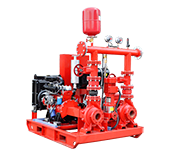
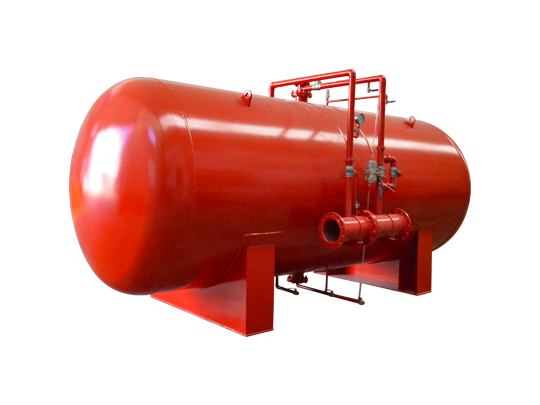
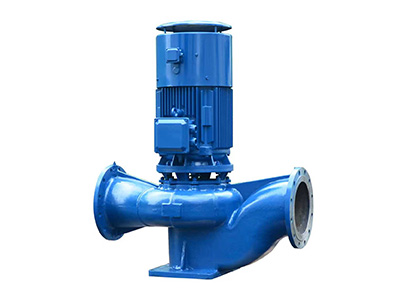
The pressure tank in a fire pump system is not an independent, ordinary water storage container, but a vital pressure regulating device in the fire-fighting water supply system. It is typically used in conjunction with the main fire pump, diesel fire pump, electric fire pump, and pressure-stabilizing pump, providing auxiliary pressure to the network by storing a certain amount of water at a certain pressure. A complete fire pump set usually also includes a pressure vessel, pressure gauge, pressure sensor, and control system to ensure coordinated operation between different devices.
2. Diaphragm Structure for Water-Air Separation
This type of fire-fighting pressure tank uses a steel tank body and a rubber diaphragm to form an internal pressure storage structure. The diaphragm completely separates the water chamber and the air chamber. When fire-fighting water enters the water chamber, the internal air is compressed and stores pressure energy; when the system pressure drops, the compressed air expands, pushing the stored water into the pipeline network. This water-air separation structure reduces direct contact between the water and the tank interior, which helps improve the long-term stability of the equipment.
3. Pressure Storage Function Reduces Frequent Fire Pump Starts
Fire-fighting pipelines may experience minor pressure changes in standby mode, such as localized water use or minor pipeline leaks. Without pressure buffering devices, fire pumps may start frequently due to pressure drops. The pressure tank can store a certain pressure, prioritizing the supply of compensating water under low flow demand, thereby reducing unnecessary fire pump starts and mitigating the impact of frequent start-stop cycles on the motor, pump body, and control system.
4. Stabilizing Fire-Fighting Pipeline Pressure
Fire-fighting systems need to be maintained at a specified standby pressure state for extended periods. Excessive pressure fluctuations can affect the stability of system operation. Pressure tanks utilize the pressure changes between compressed air and water to create a buffer, smoothing out pressure fluctuations in the pipe network to some extent. When a small pressure drop occurs in the system, the water stored in the tank can be replenished promptly, helping to maintain a relatively stable pressure environment in the fire-fighting water supply network.
5. Working in conjunction with pressure-stabilizing pumps
In automatic fire-fighting water supply systems, pressure-stabilizing pumps are primarily responsible for maintaining the daily pressure of the pipe network, while pressure tanks serve as pressure storage and buffers. Proper coordination between the two allows for priority handling of small flow and pressure demands by the pressure storage and stabilizing equipment. When a larger fire-fighting water demand occurs and the pipe network pressure drops significantly, the main fire pump is then activated to provide a larger flow and pressure.
6. Steel tanks are suitable for fire-fighting system environments
Structurally, fire-fighting pressure tanks use a metal tank as the external pressure-bearing structure, combined with an internal elastic diaphragm to form independent water and air chambers. The steel outer shell provides necessary mechanical support for the internal diaphragm and pressure storage space. In actual projects, the appropriate specifications should be selected based on the system design pressure, installation environment, media conditions, and usage requirements to ensure the pressure tank is compatible with the entire fire pump system.
7. Multiple Pressure Ratings to Meet Diverse System Needs
The operating pressure of fire pump systems is not entirely uniform; therefore, pressure tanks must be selected based on specific system parameters. Relevant fire pump set data shows that matching pressure vessels are available in different volumes and pressure ratings, such as 25L, 50L, 75L, and 100L, with the appropriate pressure rating selected based on the pump set's head. Actual selection also requires comprehensive consideration of the pipeline network volume, pressure-stabilizing pump parameters, and design operating conditions.
8. Compact Design Facilitates Fire Pump Station Configuration
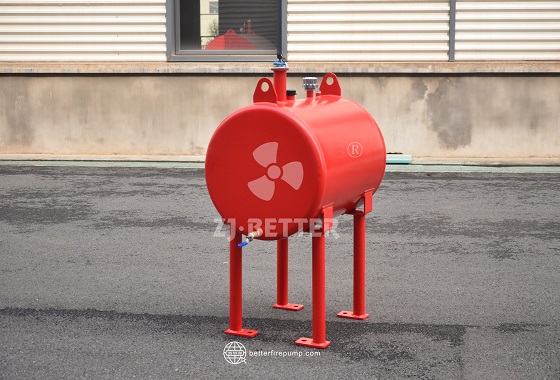
The vertical pressure tank shown in the image employs a relatively compact tank structure and is fixedly installed using support legs. Compared to large water storage facilities, pressure tanks primarily serve pressure storage and buffering functions, requiring less space. Therefore, they are suitable for installation in fire pump rooms, equipment rooms, and near complete fire pump sets. A well-planned layout of inlet and outlet pipes and maintenance space can further improve the overall equipment layout efficiency of the pump room.
9. Applicable to Multiple Firefighting Water Supply Scenarios
Fire pump system pressure tanks serve as a crucial component of fire-fighting pressure-stabilized water supply systems, suitable for warehouses, industrial plants, docks, airports, energy facilities, commercial buildings, and other locations requiring fire-fighting water supply assurance. For fire pump sets employing a combination of electric pumps, diesel pumps, and pressure-stabilizing pumps, the pressure tank can work in conjunction with other equipment to help maintain the system's pressurization status.
10. Comprehensive Value from Pressure Storage to System Stability
The value of fire pump pressure tanks lies not only in "storing water pressure" but also in optimizing the operational logic of the entire fire pump system. Through diaphragm pressure storage, pressure buffering, and low-flow compensation, frequent start-stop of the main pump can be reduced, and the pipeline network can be helped to maintain stable pressure. When the fire protection system truly enters a high-flow water supply state, the main fire pump undertakes the core water supply task, while the pressure tank continues to function as an important auxiliary device in the system.
The fire pump system pressure tank is a vital device connecting pressure storage, pressure stabilization, and pump set control. Its diaphragm structure enables water-air separation, storing pressure energy through compressed air and providing buffering and auxiliary water supply when system pressure changes. For fire-fighting water supply systems that require maintaining stable pressure over long periods, appropriately selecting the pressure tank's volume, operating pressure, and installation method helps reduce frequent start-ups and shutdowns of fire pumps and improves system operational stability. In practical engineering applications, the appropriate tank should be selected based on the fire pump's flow rate, head, pipeline parameters, and design requirements.
 WhatsApp me