

1. Continuous Pressure Compensation
The fire-fighting pressure booster pump can replenish pressure according to changes in the fire-fighting pipeline network pressure. When the system pressure falls below the set value, the pump unit can start operating, delivering water to the pipeline network and restoring the corresponding pressure, thereby reducing pressure drops caused by natural pressure loss in the pipeline network or small amounts of water usage.
2. Vertical and Compact Structure
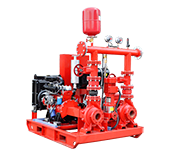
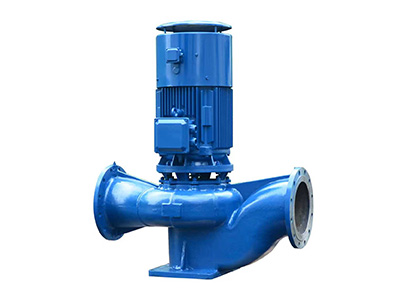
The equipment adopts a vertical pump body design, with the pump unit, piping, and control components centrally located, which helps reduce the equipment's footprint. For building projects with limited space in the fire pump room, a compact structure can improve the utilization of equipment installation space, while also facilitating piping planning and on-site maintenance.
3. Pressure Tank Co-operation
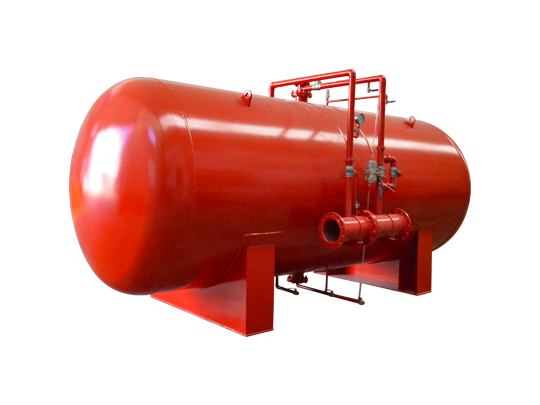
The accompanying pressure tank can store a certain amount of water at a certain pressure and buffer against system pressure changes. Used in conjunction with the booster pump, the pressure tank can improve network pressure fluctuations, providing pressure compensation under small flow pressure changes, and helping to reduce unnecessary frequent equipment starts.
4. Automatic Pressure Control
The equipment can operate in conjunction with pressure detection elements and a control system, determining whether the booster pump needs to be started by monitoring the fire network pressure in real time. Automatic control reduces manual operation, allowing the equipment to adjust accordingly based on the actual system pressure, improving the automation level of the fire water supply system.
5. Stable Pressure Boosting Capacity
The pump set adopts a pump structure suitable for fire water supply systems, generating pressure through impeller rotation and delivering water to the network. Selecting the appropriate model based on the required flow rate, head, and pressure parameters can meet the pressure boosting needs of different building fire protection systems.
6. Multi-equipment system compatibility
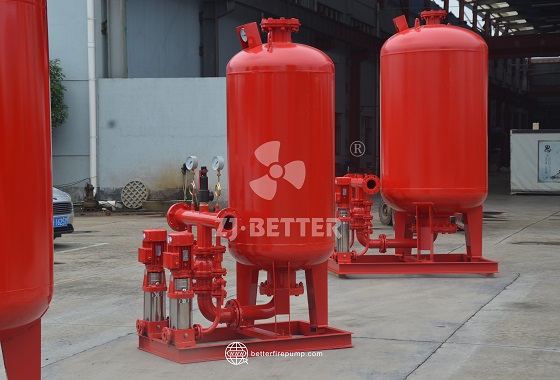
The fire-fighting pressure booster pump can be integrated with fire pumps, pressure-stabilizing pumps, pressure tanks, control cabinets, valves, and pressure detection devices to form a complete fire-fighting water supply system. By appropriately matching the parameters of each device, coordinated operation between pressure detection, automatic pressure replenishment, and fire-fighting water supply can be achieved.
7. Reduced pressure fluctuations
Fire-fighting pipe networks may be affected by factors such as temperature changes, minor pipe leaks, and changes in water usage during long-term operation. The booster pump, in conjunction with the pressure tank, can compensate for and buffer these pressure changes, maintaining the pipe network pressure within a reasonable range.
8. Easy monitoring of operating status
The equipment is equipped with pressure gauges and control components, allowing personnel to monitor the system's operating status through pressure detection devices. The control cabinet can be configured to control pump start/stop, provide operating indicators, and implement related protection functions, facilitating daily inspection, commissioning, and maintenance.
9. Flexible engineering configuration
Different buildings have different requirements for fire-fighting water supply pressure and flow rate; therefore, the equipment can be selected according to actual engineering conditions. The pump set power, flow rate, head, pressure tank capacity, and control method can all be matched with specific system parameters to meet the usage requirements of different fire protection projects.
10. Applicable to Multiple Fire Protection Scenarios
Fire-fighting pressure booster pumps can be applied to residential buildings, commercial complexes, office buildings, industrial plants, storage facilities, and other fire water supply systems. In projects requiring stable fire pipeline pressure, booster pump sets can be rationally configured to provide stable pressure support for fire protection facilities such as sprinkler systems and fire hydrant systems.
Fire-fighting pressure booster pumps are characterized by continuous pressure compensation, automatic pressurization, stable water supply, and compact installation. Through the coordinated operation of vertical pump sets, pressure tanks, pressure detection, and automatic control systems, they can respond promptly to changes in fire pipeline pressure. The product can be rationally configured according to actual flow rate, head, working pressure, and installation space, and can be used in conjunction with fire pumps and other fire water supply equipment. For building and industrial fire protection projects that require long-term maintenance of fire pipeline pressure, the rational selection of fire-fighting pressure booster pumps can improve system pressure control capabilities, providing effective support for stable standby and reliable water supply for fire equipment.
 WhatsApp me