

1. Compact Overall Structure Design and Convenient Installation
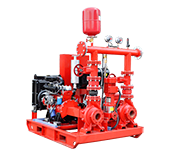
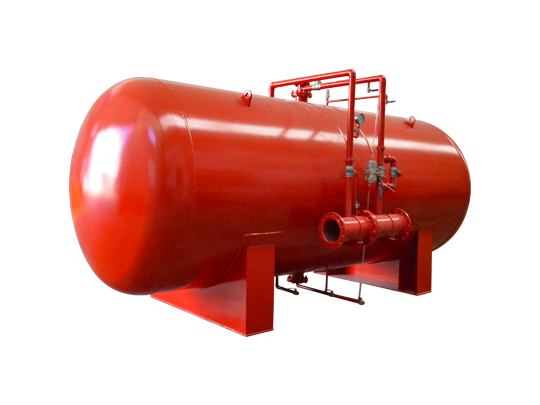
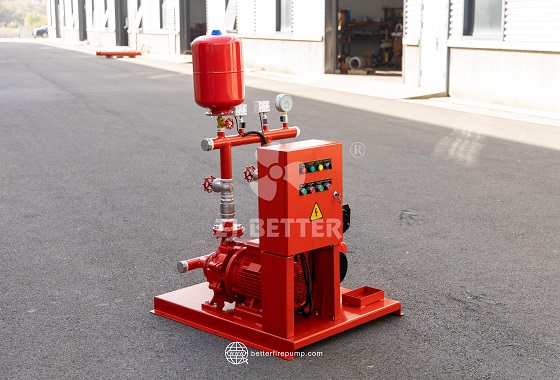
The energy-saving fire pump water supply system adopts a modular and integrated structural design concept, integrating the main fire pump, pressure-stabilizing pump, control system, piping components, and safety protection devices onto a unified base or equipment frame, making the overall structure more compact and rational. Compared to traditional, decentralized fire protection equipment, this integrated design significantly reduces on-site installation time, lowers construction difficulty, and effectively saves equipment space. For high-rise buildings, machine room space is often very limited, so the compact design better adapts to various complex building environments. Simultaneously, most piping connections and equipment debugging are completed during the manufacturing process, requiring only simple power and piping connections for on-site installation, greatly improving construction efficiency. Furthermore, the integrated structure makes the overall system operation more stable, reducing potential leakage and vibration problems caused by multiple connected devices, thereby improving the long-term reliability of the equipment.
2. High-Efficiency Energy-Saving Motor, Reducing Operating Energy Consumption
In high-rise building fire protection systems, fire pumps typically need to be in standby mode for extended periods and run periodically during testing or maintenance, making energy consumption a significant concern. The energy-saving fire pump water supply system uses a high-efficiency motor drive. Through optimized motor design and material structure, it achieves higher power conversion efficiency and lower energy loss during operation. This high-efficiency motor reduces power consumption while ensuring strong power output, significantly lowering long-term operating costs. Furthermore, the system optimizes pump and motor power matching to maintain optimal efficiency under various operating conditions. For large high-rise building projects, energy-saving design not only reduces electricity costs but also aligns with the development trends of green building and energy-saving engineering, providing crucial support for achieving energy conservation and emission reduction goals.
3. Stable High-Pressure Water Supply Capacity
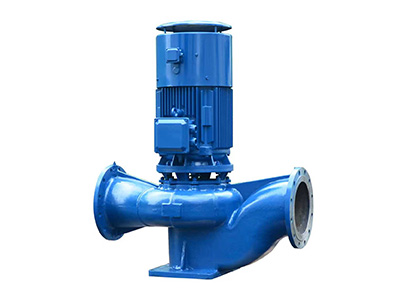
High-rise building fire protection systems have stringent requirements for water supply pressure, especially in high-rise or super high-rise buildings. Firefighting water must be rapidly delivered to higher levels to ensure the normal operation of automatic sprinkler and fire hydrant systems. The energy-saving fire pump water supply system employs a high-performance centrifugal pump design, possessing stable high-pressure water supply capacity to meet the water supply needs of complex pipe networks in high-rise buildings. Through optimized impeller structure and hydraulic channel design, the pump provides a strong and stable water flow output during operation, while reducing hydraulic losses and improving overall efficiency. Moreover, the system can be customized according to different building heights and fire protection design requirements to ensure rapid establishment of the necessary pressure during a fire, providing a continuous and stable water supply for firefighting equipment.
4. Intelligent Control System Ensures Automated Operation
Modern fire protection systems increasingly rely on automated control technology. Energy-saving fire pump water supply systems are equipped with advanced control cabinets and intelligent control modules, enabling automatic start-up, automatic monitoring, and fault alarms. When the system detects a drop in pipeline pressure or a fire alarm signal, the fire pump can automatically start within a very short time, quickly providing sufficient water pressure to the fire protection system. Simultaneously, the control system can monitor the equipment's operating status in real time, including key parameters such as motor current, pressure changes, and operating time. In case of any abnormalities, it will issue an alarm and take protective measures. This intelligent control not only improves the response speed of the fire protection system but also reduces the need for manual intervention, making the entire system safer and more reliable in daily operation.
5. Pressure Stabilizing Device Ensures Stable Pipeline Pressure
Maintaining stable system pressure is crucial in high-rise building fire protection pipeline networks. Energy-saving fire pump water supply systems are typically equipped with pressure stabilizing devices such as pressure pumps and pressure tanks to maintain stable pressure in the pipeline network under normal conditions. When the system is in standby mode, the pressure stabilizing pump can automatically replenish the pressure loss in the pipeline network, preventing excessively low pressure or large pressure fluctuations, thereby avoiding frequent starts of the main fire pump. This not only extends the service life of the main pump but also reduces the overall energy consumption of the system. Simultaneously, the pressure tank can store a certain amount of water and compressed air, automatically adjusting to slight changes in system pressure to ensure the stable operation of the entire fire-fighting water supply network.
6. Durable Materials and Reliable Manufacturing Processes
Fire-fighting equipment must be capable of long-term reliable operation; therefore, strict control is required in material selection and manufacturing processes. The main components of energy-saving fire pump water supply systems are typically made of high-strength cast iron, stainless steel, or corrosion-resistant alloy materials to ensure that the equipment is not easily corroded or worn during long-term operation. At the same time, the pump body and impeller undergo precision machining and dynamic balancing to reduce vibration and noise, improving equipment operational stability. Strict production processes and quality inspection procedures also ensure that each set of equipment undergoes comprehensive testing before leaving the factory, thereby guaranteeing the reliability and safety of the system in practical applications.
7. Adaptable to Multiple Fire-Fighting System Application Scenarios
Energy-saving fire pump water supply systems are not only suitable for high-rise residential buildings but also widely used in commercial complexes, hotels, hospitals, office buildings, industrial plants, and warehousing and logistics centers, among other places. In these different types of buildings, the design requirements for fire protection systems vary. Modular fire pump units can be flexibly configured according to project needs, such as combinations of different flow rates, heads, and control methods. This highly flexible application capability enables the equipment to meet the needs of fire protection projects of various scales, providing a stable and reliable fire water supply for building projects.
8. Simple Maintenance and Low Operating Costs
Compared to traditional complex fire pump systems, energy-saving fire pump water supply equipment is more convenient to maintain. The system structure layout is reasonable, and all key components are easy to inspect and replace, thereby reducing equipment downtime. At the same time, the equipment is designed with long-term operational stability in mind, reducing the number of vulnerable parts and optimizing the mechanical structure to extend the equipment's maintenance cycle. Lower maintenance frequency and simple maintenance procedures not only reduce labor maintenance costs but also improve the overall efficiency of equipment use, bringing more convenience to building operation and management.
9. Comprehensive Safety Protection Functions
Fire protection equipment must have comprehensive safety protection functions during operation to prevent equipment damage or system failure. Energy-saving fire pump water supply systems are typically equipped with multiple protection devices, such as overload protection, phase loss protection, overpressure protection, and low water level protection. When the system detects abnormal operation, the control system can automatically stop the equipment and issue an alarm signal, thereby preventing equipment damage or further expansion of the fault. These safety protection measures effectively improve the safety of system operation and ensure that fire-fighting equipment is always available in emergency situations.
10. In line with the development trend of modern fire protection engineering
With the continuous development of the construction industry, fire protection engineering has placed higher demands on the performance, efficiency, and intelligence of equipment. Energy-saving fire pump water supply systems are a new type of fire protection equipment developed in response to this trend. Through efficient energy-saving design, intelligent control technology, and modular structure, this system can not only meet the complex fire protection needs of modern high-rise buildings but also achieve higher energy utilization efficiency and lower operating costs. At the same time, the equipment structure is more standardized, facilitating transportation, installation, and future expansion, giving it broad application prospects in modern fire protection engineering projects.
Overall, energy-saving fire pump water supply systems play a crucial role in high-rise building fire protection engineering. Through efficient energy-saving design concepts, stable and reliable water supply capabilities, and advanced intelligent control technology, they provide a continuous and safe water source guarantee for building fire protection systems. Compared to traditional fire-fighting equipment, this system not only improves fire water supply efficiency but also effectively reduces operating energy consumption and maintenance costs, meeting the dual requirements of modern buildings for safety and energy conservation. With the increasing number of high-rise buildings and the continuous development of fire protection technology, energy-efficient fire pump water supply systems will play an even more important role in future fire protection engineering, providing a more solid and reliable guarantee for urban building safety.
 WhatsApp me