
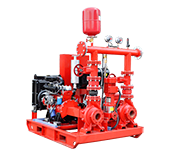
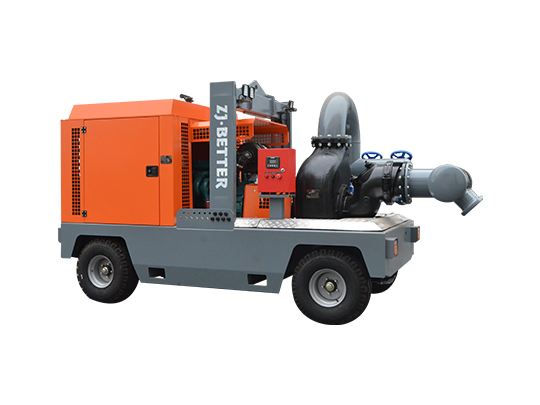
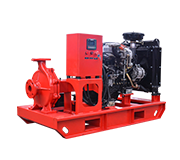
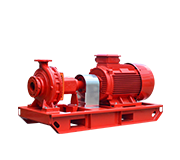

1. Core Advantages of Independent Power Drive Emergency water supply diesel fire pumps use a diesel engine as an independent power source, the biggest advantage of which is that they can operate independently without relying on the power grid. This design allows them to maintain stable starting capabilities even in the event of sudden power outages, line faults, or natural disasters. The diesel engine has high torque and high output power, maintaining stable water pressure and flow even during long-term fire-fighting water supply operations. Simultaneously, diesel power is unaffected by voltage fluctuations, avoiding delays or failures that may occur when starting a motor. Overall, the independent power mode makes this equipment the most reliable fire-fighting water source solution in power outage environments.
2. High-Efficiency Pump Structure and Flow Performance
The entire system utilizes a high-efficiency fire pump head, typically comprising a single-stage or multi-stage centrifugal pump structure, providing high head and large flow output. The pump body features hydraulically optimized design, improving hydraulic efficiency and reducing operating resistance through enlarged impeller channels and optimized guide vane and volute structures. The equipment can provide a stable operating pressure of 0.6–1.5 MPa in fire protection systems, suitable for long-distance water supply or high-rise building fire protection needs. Its high-efficiency structure not only rapidly delivers large volumes of water but also ensures a rapid and comprehensive fire-fighting water flow in the early stages of a fire.
3. Integrated Skid-Mounted Structure Facilitates Rapid Installation and Deployment
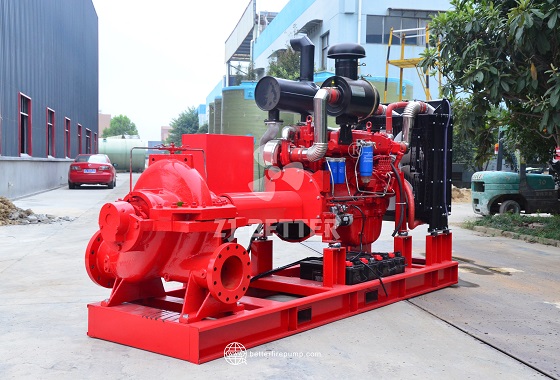
This diesel fire pump adopts a skid-mounted design, meaning all equipment, including the diesel engine, pump body, control cabinet, vibration damping base, and fuel system, is mounted on the same steel base. Users do not need complex assembly on-site; simply connecting the inlet and outlet pipes and fuel tank is sufficient for operation, significantly shortening the construction period. The skid-mounted structure also enhances the equipment's stability, maintaining stable performance during long-term operation or transportation. This integrated structure offers significant advantages for emergency projects, temporary fire protection systems, and construction sites.
4. Intelligent Control System Enables Automatic Start-up, Shutdown, and Monitoring
The equipment is equipped with an intelligent control cabinet, enabling automatic start-up, automatic switching, fault alarms, and operational monitoring. The system supports automatic pressure control: when the pipeline pressure drops to a set value, the diesel engine automatically starts and drives the fire pump; when the pressure recovers, the system automatically shuts down, achieving unattended operation. The control system also features historical data recording, automatic inspection, and operational data storage functions, facilitating maintenance and management by the user. The intelligent design makes the fire water supply system more stable and reliable.
5. Multiple Protection Designs Enhance Operational Safety
The emergency diesel fire pump incorporates multiple safety protection measures in its structural design, such as overspeed protection, low oil pressure protection, high water temperature protection, and low fuel alarm. These functions ensure that the diesel engine operates within a safe range, preventing equipment damage due to abnormal conditions. Furthermore, the pump body is equipped with check valves and pressure valves to prevent water hammer and backflow. The fuel system also features leak-proof and anti-clogging designs, effectively reducing the failure rate. Multiple protection mechanisms ensure the equipment performs at its maximum capacity in critical moments.
6. Weather-resistant structure adaptable to complex environments
The fire pump's structural design is highly suitable for outdoor environments. Features such as a steel frame with anti-rust paint, high-temperature resistant fuel lines, and a heavy-duty shock-absorbing base ensure normal operation in high-temperature, low-temperature, humid, dusty, and even salt spray environments. Compared to ordinary indoor fire pumps, emergency water supply models are more environmentally adaptable and are commonly used in remote areas, outdoor stations, petrochemical industries, ports, and other complex conditions, forming a crucial part of emergency fire water supply systems.
7. Large fuel system capacity and long operating range
To ensure long-term operation, the emergency fire diesel pump is equipped with a large-capacity fuel tank and supports external fuel tanks to extend its operating range. Diesel engines are inherently highly efficient combustion devices, consuming less fuel than gasoline engines of equivalent power. For applications requiring sustained fire-fighting water supply, such as chemical plants, oil depots, and large industrial bases, a large-capacity fuel system ensures stable operation for hours or even longer, preventing water supply interruptions due to fuel shortages.
8. Convenient Maintenance and Ample Spare Parts Supply: The modular design of the overall equipment facilitates maintenance personnel's inspection and upkeep of critical components. The diesel engine adopts an internationally standardized structure, making it easy to replace common components such as filters, belts, and injectors. Furthermore, the pump body uses standardized pump components, making spare parts readily available, thereby reducing maintenance costs and improving long-term equipment reliability. Convenient maintenance is a key advantage of emergency fire-fighting equipment, ensuring it is always in optimal readiness.
9. Applicable to Various Industries and Firefighting System Configurations: This diesel fire pump is widely used in petrochemical plants, oil tank areas, substations, construction sites, ports, fire truck water supply stations, agricultural irrigation, and remote water supply projects. Whether used as a main fire pump, backup pump, or mobile emergency pump, it can reliably provide the water needed for firefighting. In areas not connected to the power grid, this equipment can be used as an independent fire water supply system. In projects with existing electric fire pumps, it is often used as a backup power pump to handle unexpected power outages.
10. System Configuration Compliant with International Fire Protection Standards The design and manufacture of the emergency water supply diesel fire pump strictly adheres to international fire protection standards, such as NFPA 20. It matches international standards in terms of control logic, automatic start/stop, pressure control range, and safety protection requirements. Furthermore, the system can be customized to include remote monitoring, dual diesel engine configurations, and dual-circuit fuel supply systems according to user needs. Compliance with international standards not only enhances equipment reliability but also facilitates export to projects worldwide.
With its independent power source, efficient and stable pump structure, intelligent control system, and excellent environmental adaptability, the emergency water supply diesel fire pump has become an indispensable key piece of equipment in fire protection systems across various industries. Whether in power outage environments, remote construction sites, flammable and explosive areas, or complex working conditions, this system can provide a continuous and reliable fire water supply. As the core force of emergency fire water supply, it ensures maximum efficiency every second in critical moments, providing strong protection for life and property.
 WhatsApp me