

1. Independent Power System Design for True Electricity-Free Operation
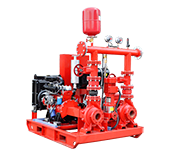
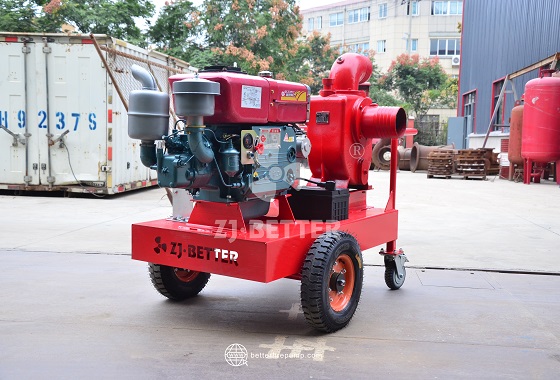
The biggest technological advantage of independently powered trailer-mounted fire pumps lies in their design concept of completely eliminating the need for external power. The equipment typically uses a highly reliable diesel engine as its core drive source, driving the fire pump mechanically or through direct coupling, avoiding common risks such as power outages and line damage. In areas prone to natural disasters or where infrastructure is underdeveloped, the ability to operate without electricity is particularly crucial. Even in power outages, power failures, or remote mountainous areas, the equipment can be deployed immediately upon arrival for rapid firefighting operations. This independent power structure not only enhances the safety redundancy of the fire protection system but also significantly expands the application range of the fire pump, providing a more stable and reliable power guarantee for emergency firefighting.
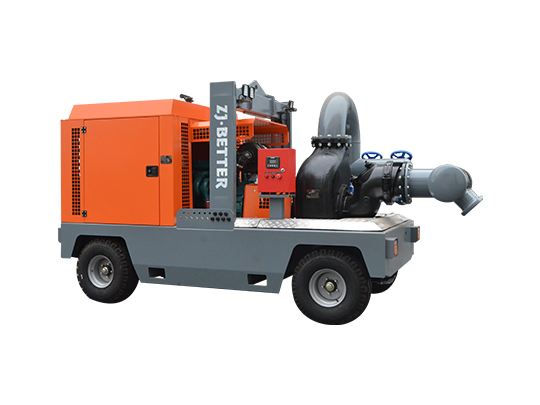
2. Trailer-mounted structure improves mobility and deployment efficiency. The trailer-mounted chassis structure is a key feature that distinguishes this fire pump from traditional fixed firefighting equipment. Through a dedicated towing system, the equipment can be quickly towed to the target area by pickup trucks, trucks, or engineering vehicles, eliminating the need for complex hoisting and foundation construction. Upon arrival at the site, only simple outrigger fixing and pipeline connection are required for immediate operation. This high mobility allows firefighting forces to overcome terrain limitations and achieve rapid deployment along highways, in mountainous areas, forest areas, construction sites, and other locations. Compared to the long construction period and high cost of fixed pump stations, trailer-mounted fire pumps have significant advantages in emergency response speed and flexibility.
3. High-performance fire pump body ensures stable flow and head output. As the core functional unit, the performance of the fire pump body directly determines the firefighting capability of the entire system. Independently powered trailer-mounted fire pumps are typically equipped with a dedicated fire pump structure, capable of maintaining stable flow and head output under high speed and long-term operating conditions. Through rational hydraulic design and precision machining, the equipment achieves high-efficiency water delivery, meeting the needs of simultaneous water supply from multiple nozzles or long-distance transport. Whether dealing with large-area fires or providing continuous water replenishment to temporary fire-fighting networks, this type of fire pump demonstrates reliable and durable performance.
4. Structural and Protective Design Adaptable to Complex Environments Remote and power-deprived areas often involve complex environmental conditions such as high temperatures, dust, rain, snow, or humidity fluctuations. Therefore, the independent power trailer fire pump's structural design fully considers environmental adaptability. Key components utilize robust metal structures with anti-corrosion and anti-rust treatments, effectively extending service life. Simultaneously, the power system, control system, and pump body are equipped with necessary protective devices to reduce the impact of external factors on operational stability. This design for harsh environments ensures the equipment maintains good operational reliability even under long-term outdoor standby or high-intensity use.
5. Simple and Intuitive Control System, Lowering the Operation Threshold
In emergency fire-fighting scenarios, ease of operation is paramount. Independent power trailer fire pumps typically employ a centralized control panel, highly integrating functions such as start-up, shutdown, and parameter monitoring. With clear signage and an intuitive layout, operators can quickly get started without complex training. Some systems are also equipped with necessary alarm and protection functions, providing timely alerts and automatic protection in case of abnormal operating conditions, reducing the risk of equipment failure. This user-friendly control design not only improves on-site operational efficiency but also buys valuable time for firefighting operations.
6. Applicable to Multiple Firefighting and Emergency Application Scenarios
The independent powered trailer-mounted fire pump is not limited to a single purpose but has a strong adaptability to various scenarios. It can be used for municipal fire emergency water replenishment, as well as serving key fire prevention areas such as industrial parks, warehousing and logistics, and ports. Simultaneously, in special scenarios such as forest fire prevention, emergency farmland irrigation, and mining operations, this equipment can also play a stable water supply role. Its multi-scenario applicability makes it a "jack-of-all-trades" in firefighting systems, flexibly switching roles under different task requirements.
7. Modular Configuration Facilitates Customization and Expansion
To meet the differentiated needs of different projects for flow rate, head, and functions, the independent powered trailer-mounted fire pump is typically designed with a modular concept. Users can select appropriate power configurations, pump models, and auxiliary systems, such as quick couplings, backup piping, or additional control modules, based on their actual applications. This modular structure not only improves the equipment's adaptability but also facilitates future functional upgrades and maintenance, effectively reducing the total lifecycle cost.
8. Reduced Infrastructure and Maintenance Costs
Compared to building fixed fire pump stations, independent powered trailer-mounted fire pumps eliminate the need for civil engineering foundations and complex piping networks, significantly reducing initial investment costs. Furthermore, due to the centralized equipment structure and high system integration, daily maintenance and repair are relatively simplified. Regular maintenance is sufficient to maintain good operating condition, reducing long-term maintenance pressure. For projects requiring rapid deployment of firefighting capabilities but also aiming to control the overall budget, this type of equipment offers a clear economic advantage.
9. Improved Emergency Response Speed and Fire Safety Levels
In the initial stages of a fire, rapid water supply often determines the success or failure of firefighting. Independently powered trailer-mounted fire pumps can reach the scene and be put into use in the shortest possible time, effectively compensating for the insufficient coverage of fixed fire-fighting facilities. By providing a stable water source for on-site firefighting forces, the equipment significantly improves the overall emergency response speed and firefighting efficiency. This rapid response capability is crucial for controlling the spread of fire and minimizing loss of life and property.
10. Aligning with Modern Firefighting System Development Trends
With the increasing demands for fire safety, firefighting equipment is evolving towards greater mobility, intelligence, and systematization. Independently powered trailer-mounted fire pumps are a prime example of this trend. Their integrated design, independent operation capabilities, and flexible deployment allow them to effectively complement existing firefighting systems, creating a more comprehensive and reliable fire protection system. As a vital component of modern emergency equipment, this equipment is being adopted by an increasing number of industries and regions.
Overall, independently powered trailer-mounted fire pumps, with their multiple advantages including no external power supply, high mobility, stable performance, and strong adaptability, have become an ideal choice for remote firefighting and fire suppression in areas without electricity. Whether in emergency response to sudden fires or in long-term fire protection in complex environments, this equipment demonstrates irreplaceable value. With the continuous improvement of emergency management systems, independently powered trailer-mounted fire pumps will play an even more important role in the field of fire safety, providing solid and reliable equipment support for firefighting missions in various scenarios.
 WhatsApp me