

1. Self-priming Structure Improves Water Intake Efficiency
One of the most prominent features of small self-priming fire pumps is their excellent self-priming capacity. The equipment adopts an optimized self-priming pump body structure, which can quickly expel air from the suction pipe after startup, rapidly forming a stable suction state. Compared to the operation method of ordinary centrifugal pumps that require pre-priming, self-priming pumps can significantly shorten preparation time. In agricultural irrigation, farmers can directly draw water from open water sources such as rivers, ponds, reservoirs, and irrigation canals, eliminating the need for complex water diversion facilities. In fire emergencies, the equipment can also quickly establish water supply capacity, buying valuable time for initial firefighting. Especially in rural areas where natural water sources are widely distributed, the self-priming function maximizes water resource utilization efficiency and enhances the equipment's practical application value.
2. Miniaturized Design Suitable for Rural and Grassroots Applications
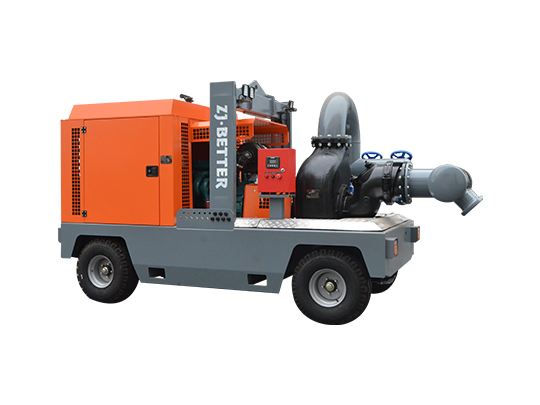
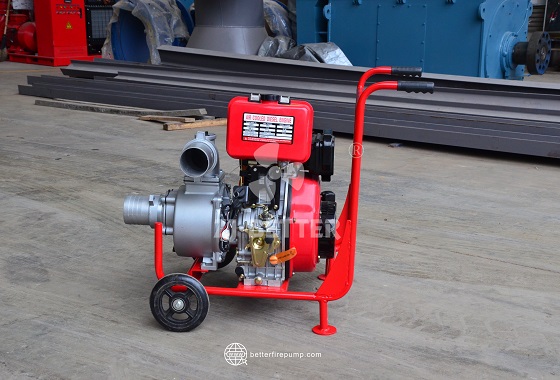
Rural areas often have complex road conditions and inconvenient transportation in some areas, making the transport of large equipment difficult. The mini self-priming fire pump features a compact design, small size, light weight, and limited footprint, facilitating transportation and movement. The equipment can be mounted on a small trailer or transported using agricultural vehicles, pickup trucks, or handcarts. For orchards, vegetable gardens, livestock farms, and remote villages, this high mobility significantly improves ease of use. When irrigation is needed, the equipment can be quickly moved to the water intake point; in the event of a fire, it can be rapidly transferred to the scene to provide water and fight the fire. Its miniaturized design makes it ideal for grassroots units and rural users.
3. Diesel Power Enhances Independent Operation Capability
Many rural areas have relatively limited power supply, especially in remote mountainous areas, forest areas, and field operation areas, where stable power is not easily obtained. Small self-priming fire pumps typically use diesel engines as their power source, enabling independent operation. During agricultural irrigation, the equipment can continue pumping water even without external power. In fire emergencies, when a fire causes a power outage, the diesel power system can still operate normally, providing a reliable water supply for firefighting. Compared to equipment relying on mains power, diesel self-priming fire pumps have stronger environmental adaptability and emergency response capabilities, which is one of the important reasons for their popularity in rural and grassroots markets.
4. Practical Application Value in Agricultural Irrigation
In agricultural production, a stable water supply is directly related to crop growth and yield. Small self-priming fire pumps can be widely used in farmland irrigation, orchard sprinkler irrigation, vegetable base water supply, and livestock farm water replenishment. The equipment can be connected to sprinkler irrigation systems, drip irrigation systems, or water pipelines according to different needs, achieving flexible water supply. Due to its good flow and head performance, it can meet the irrigation needs of small and medium-sized agriculture. Meanwhile, the equipment starts quickly and is easy to operate; farmers can become proficient in its use after simple training. For agricultural scenarios requiring frequent relocation of irrigation sites, small self-priming fire pumps can effectively reduce labor intensity and improve irrigation efficiency.
5. Rapid Response Advantage in Firefighting Water Supply
The initial stage of a fire is crucial for controlling the disaster; the ability to quickly establish a water supply system directly affects the firefighting effect. Small self-priming fire pumps, with their rapid start-up and self-priming capabilities, have a significant advantage in grassroots firefighting. The equipment can quickly draw water from nearby water sources and supply water to the fire scene via fire hoses. For rural residences, warehouses, farms, and agricultural product processing points, small self-priming fire pumps can be deployed immediately upon the occurrence of a fire, effectively controlling its spread. Since many rural areas are far from professional fire stations, grassroots self-rescue capabilities are particularly important, and this equipment can effectively compensate for the initial shortage of firefighting resources.
6. Multi-functionality Improves Equipment Utilization
Compared to single-function equipment, one of the biggest advantages of small self-priming fire pumps is their dual function as both agricultural irrigation and firefighting water supply. Normally used for farmland irrigation, drainage, and water supply, it can be quickly converted into fire-fighting water supply equipment in emergencies. This "multi-purpose" feature significantly increases equipment usage frequency and avoids long-term idleness. For rural collectives, township units, and agricultural cooperatives with limited budgets, it meets both production needs and fire safety requirements, undoubtedly possessing high economic value. The return on investment is higher, and it is easier to promote and apply at the grassroots level.
7. Simple Maintenance Reduces Operating Costs
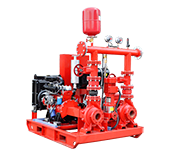
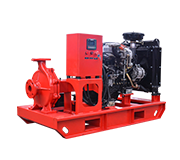
When selecting equipment, grassroots users, in addition to focusing on performance, also attach great importance to the later maintenance costs. Small self-priming fire pumps have a relatively simple structure, mainly composed of a diesel engine, pump body, pipelines, and control components, making maintenance convenient. Routine maintenance mainly includes basic tasks such as changing engine oil, checking filter elements, cleaning the pump body, and checking pipelines, requiring no complex professional equipment. Due to the high degree of parts interchangeability, repair and replacement are also relatively convenient. For rural areas, this easy-to-maintain feature can effectively reduce long-term operating costs and improve the equipment's continuous operating capability.
8. Adaptable to Various Complex Environments
Agricultural production and fire rescue often face complex environments. Small self-priming fire pumps typically feature a robust and durable structural design, capable of withstanding high and low temperatures, dusty conditions, and humid environments. Whether for summer farmland irrigation, mountainous forest operations, or post-rain flood drainage and fire rescue, the equipment maintains good operational stability. Some models also possess strong earthquake resistance and corrosion resistance, meeting the needs of long-term outdoor use. This broad environmental adaptability further enhances the equipment's practical value.
9. Supporting Grassroots Firefighting System Construction
In recent years, the construction of grassroots firefighting capabilities has received increasing attention. Many townships, villages, and agricultural parks are strengthening their firefighting equipment configurations. Small self-priming fire pumps, due to their moderate investment, flexible use, and diverse functions, have become an important choice for grassroots firefighting construction. The equipment can not only serve as village-level emergency firefighting equipment but also be used by volunteer fire brigades, agricultural cooperatives, and rural emergency rescue teams. Through proper configuration and regular drills, the initial fire response capabilities at the grassroots level can be effectively improved, establishing a more comprehensive fire safety system in rural areas.
10. Broad Future Development Prospects
With the development of smart agriculture and smart firefighting, small self-priming fire pumps are also continuously being upgraded. Future products will place greater emphasis on energy conservation, high efficiency, intelligence, and multifunctionality. By adding features such as intelligent monitoring, remote alarms, and automatic protection, equipment management will be further improved. Simultaneously, with the continuous advancement of rural infrastructure construction, the demand for equipment that combines production and safety protection functions will continue to grow. Small self-priming fire pumps, with their dual application value, are expected to find wider application in agriculture, fire fighting, emergency rescue, and rural construction.
Small self-priming fire pumps, with their advantages of rapid self-priming, independent diesel power operation, convenient miniaturization and mobility, and multi-purpose functionality, demonstrate significant value in agricultural irrigation and fire-fighting water supply. They can meet the needs of agricultural production such as farmland irrigation, orchard water supply, and aquaculture replenishment, and can also quickly establish fire-fighting water supply systems in the event of a fire, providing crucial support for grassroots fire fighting. With the continuous improvement of rural modernization and grassroots safety systems, small self-priming fire pumps will play an increasingly important role in multiple fields such as agricultural production, fire safety, and emergency rescue, providing solid support for ensuring rural economic development and the safety of people's lives and property.
 WhatsApp me