
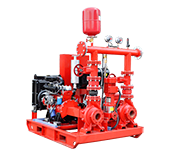
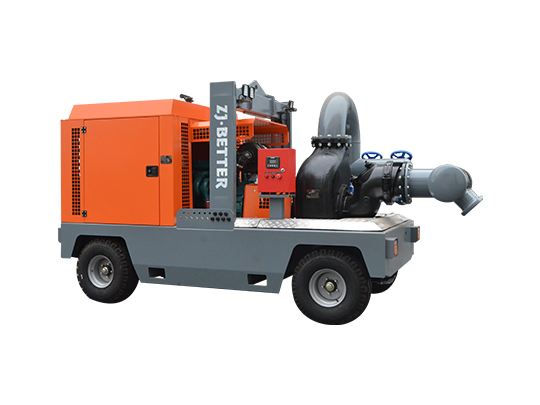
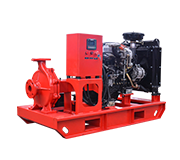
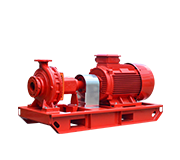
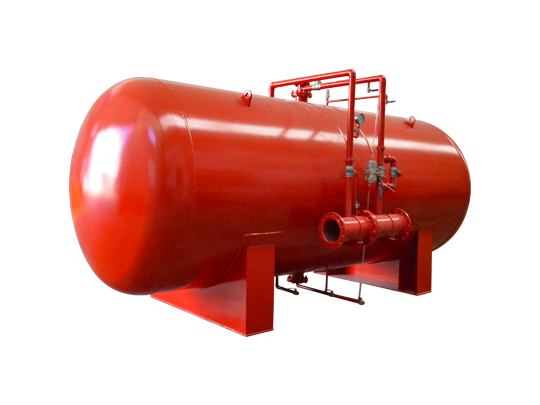
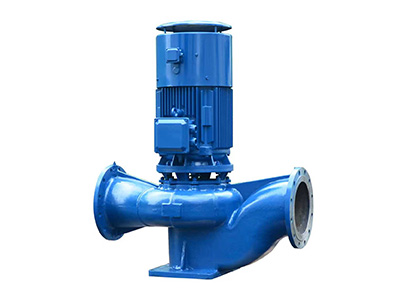

1. Independent Diesel Power System, Free from Mains Power Dependence The core advantage of diesel-powered fire pump units suitable for environments without mains power lies in their completely independent power system. The unit uses a dedicated diesel engine as its drive source, achieving rapid start-up and continuous operation without external mains power. This design is particularly suitable for remote areas, field projects, mountainous factories, and emergency backup fire protection systems. Even in the event of a complete power outage, natural disasters, or a mains power system failure, the equipment can still operate normally using diesel fuel. Diesel engines feature high starting torque and strong load adaptability, enabling them to maintain stable speed during instantaneous high-load operation of fire pumps. This ensures that the pump unit's output pressure and flow rate consistently meet the requirements of the fire protection system, fundamentally solving the fire hazard of "failure upon power failure."
2. Dedicated Fire Pump Body Design Ensures Stable Flow and Pressure
These diesel-powered fire pump units are typically equipped with dedicated fire pump bodies. The pump structure is optimized for fire protection system conditions, maintaining high efficiency even under high head and high flow conditions. The pump body is primarily made of high-strength cast iron or corrosion-resistant alloys, and the internal flow channels are precision-machined to reduce hydraulic losses and improve overall efficiency. Under long-term continuous operation, the pump body exhibits low vibration and noise, and the shaft seal and bearing system have high wear resistance, effectively extending the overall service life of the unit. For environments without mains power, once started, the equipment often needs to operate continuously for extended periods; this pump body design is specifically tailored to the "long-term, high-load" fire protection requirements.
3. Automatic Start-up and Multiple Control Logics Enhance Emergency Response Speed
Although the equipment is primarily used in environments without mains power, the unit is typically equipped with a comprehensive automatic control system that can achieve automatic start-up via battery power. When the fire hydrant pressure drops or a fire signal is received, the system can automatically complete the entire process of detection, start-up, acceleration, and steady-state operation without manual intervention. The control logic covers multiple modes, including manual start-up, automatic start-up, and remote control, to meet the needs of different engineering sites. Simultaneously, the system has functions such as retrying after a failed start-up, displaying operating status, and alarm output, ensuring the fire pump can be successfully put into operation at critical moments, even in unattended environments.
4. Structural Design Adaptable to Complex Environments Enhances On-Site Reliability
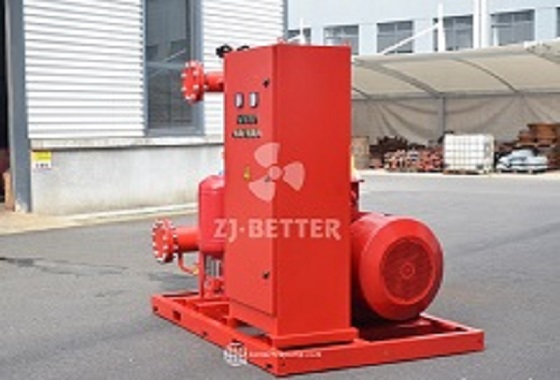
Environments without mains power often present complex environmental conditions, such as high dust levels, high humidity, large temperature differences, or outdoor exposure. The diesel-powered fire pump unit's structural design fully considers these factors, employing a steel base or integrated frame structure for strong stability and good vibration resistance. Key components such as the engine, pump body, and control cabinet are rationally arranged for easy heat dissipation and maintenance. Some units can also be configured with rain covers, sand covers, or soundproof structures as needed, ensuring reliable operation even in harsh environments and providing long-term, stable fire protection for high-risk locations.
5. Long-Term Continuous Operation Capability to Meet Large-Scale Firefighting Needs
In fire accidents, continuous water supply is often more important than instantaneous start-up. Diesel-powered fire pump units, with sufficient fuel supply, can operate continuously for several hours or even longer, making them particularly suitable for large factories, oil depots, logistics parks, and other locations with high requirements for continuous firefighting capabilities. The engine cooling system, lubrication system, and fuel system are all optimized for long-term high-load operation, avoiding overheating or performance degradation. Compared to temporary emergency equipment, these units are closer to being positioned as "long-term backup main firefighting systems."
6. Simple Maintenance, Reducing Operation and Maintenance Difficulty in Off-Grid Environments
In remote areas or areas without mains power, professional maintenance personnel and complex repair conditions are often difficult to guarantee. Therefore, the design of these fire pump units emphasizes ease of maintenance. The engine utilizes a mature and reliable diesel power platform with highly interchangeable parts and clear maintenance and repair cycles. The pump body structure is intuitive and easy to disassemble and inspect. The control system has a simple operating interface with clear status displays, allowing on-site personnel to complete daily inspections and basic maintenance without complex training. This "low dependence, high reliability" design concept is ideal for use in scenarios without mains power or with limited conditions.
7. Versatile Applications, Covering Diverse Firefighting Needs Diesel-powered fire pump units suitable for environments without mains power have an extremely wide range of applications. They play a vital role in mines, oil and gas extraction areas, ports and docks, temporary construction sites, municipal emergency fire stations, and as a backup power source for building fire protection systems. Their independent operation capability makes them unrestricted by the power grid, allowing them to be used as a main fire pump or as an emergency backup device in critical moments. For projects requiring fire safety inspections or upgrades to overall fire safety levels, these units have strong engineering adaptability.
8. Flexible Configuration Based on Project Needs Different projects have significantly different requirements for fire flow, pressure, installation methods, and control modes. Diesel-powered fire pump units typically support multiple configuration options, such as engine selection with different power ratings, matching with fire pumps of different specifications, and whether to include automatic control cabinets and adjust fuel tank capacity. Through flexible configuration, the unit can be precisely matched to the actual working conditions of the project, avoiding performance waste or insufficient water supply. This highly customizable characteristic makes the product more competitive in engineering applications.
9. Meets the Long-Term Safe Operation Requirements of Fire Protection Systems
From the perspective of the overall fire protection system, the reliability and predictability of equipment are particularly critical. Diesel-powered fire pump units have mature structures and stable technology, with numerous long-term operational cases worldwide. Their working principle is simple and intuitive, and failure points are relatively concentrated, facilitating early prevention and management. In environments without mains power, this controllability and stability are especially important, helping users establish a long-term, sustainable fire safety system, rather than relying on temporary emergency solutions.
10. Enhances Project Fire Safety Level and Risk Response Capability
Configuring diesel-powered fire pump units suitable for environments without mains power not only supplements the existing fire protection system but also significantly enhances the overall safety level. In the event of a sudden fire compounded by power outages, equipment damage, or other extreme circumstances, these units often serve as the "last line of defense." Their independent operation and continuous water supply capabilities enhance the fire protection system's resilience, buying valuable time for personnel evacuation, fire control, and property protection.
Overall, diesel-powered fire pump units, suitable for environments without mains power, are key equipment in fire protection systems for locations without electricity or with weak electrical current, due to their independent power, stable performance, continuous operation, and wide applicability. Whether used as the main fire pump or as a critical backup, this product can provide reliable and continuous fire water supply support in critical moments. For projects that prioritize high safety standards and emphasize emergency response capabilities, these diesel-powered fire pump units are undoubtedly essential fire protection equipment worthy of priority configuration.
 WhatsApp me