

1. Eliminating Pump House Restrictions and Achieving Flexible Layout
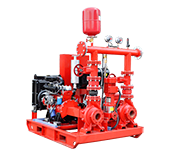
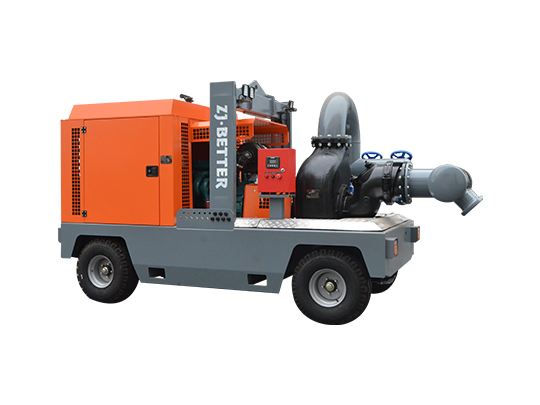
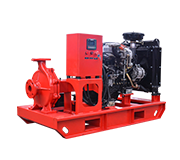
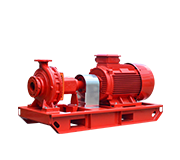
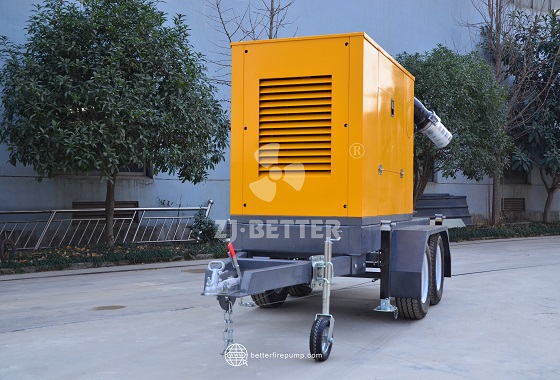
Diesel fire pump systems that do not require a fixed pump house break through the traditional model in structural design, allowing operation without the need for a dedicated pump house building. The entire system typically adopts a skid-mounted or integrated frame structure, integrating the power unit, pump body, control system, and piping components onto a single platform. This layout allows the equipment to be directly placed in outdoor areas, storage areas, or near production facilities, without being restricted by building conditions. For projects with tight construction schedules or limited site conditions, eliminating the need for an additional pump house can significantly shorten construction time, reduce upfront investment costs, and improve overall project implementation efficiency.
2. Diesel Power Ensures Independent Operation
This type of fire pump system uses a diesel engine as its primary power source, maintaining stable operation even when external power is interrupted or insufficient. Compared to systems relying on mains power, diesel drive offers greater independence and reliability, making it particularly suitable for remote areas, temporary construction sites, or emergency firefighting scenarios. In the event of a fire, even if the power grid fails, the system can quickly start and continuously supply water, buying valuable time for firefighting operations. This independent power characteristic makes it a crucial component of emergency firefighting water supply systems.
3. Integrated Structure Enhances System Stability
Diesel fire pump systems that do not require a fixed pump house typically employ an integrated design, mounting the pump unit, power unit, control module, and piping accessories on a unified steel base or frame. This reduces on-site installation steps and lowers the risk of leaks due to complex piping connections. The integrated structure allows for pre-delivery commissioning, ensuring rapid deployment upon arrival at the site. The unified layout also ensures higher compatibility between components, contributing to long-term operational stability and reliability.
4. Protective Design Adaptable to Diverse Environmental Conditions
Since these systems do not require a fixed pump house, they typically face the outdoor environment directly. Therefore, multiple protective measures are incorporated into the design. Common configurations include rainproof structures, dustproof shells, and corrosion-resistant coatings to withstand adverse factors such as wind, rain, dust, and ultraviolet radiation. Some systems also include ventilation and heat dissipation channels to ensure the power unit maintains good operating conditions under high temperature or high load operation. Through these protective designs, the equipment can operate stably for extended periods in complex environments, meeting outdoor fire-fighting water supply needs.
5. Rapid Deployment Enhances Emergency Response Efficiency
Diesel fire pump systems that do not require a fixed pump house offer significant advantages in installation and commissioning. Since complex civil engineering is unnecessary, the equipment can be put into use immediately after foundation fixing and pipeline connection upon arrival. This rapid deployment capability makes it crucial in temporary fire-fighting projects or sudden emergencies. For example, in large event venues, temporary storage areas, or emergency rescue sites, the system can establish independent water supply capacity in a short time, providing timely support for fire-fighting operations and significantly improving overall emergency response efficiency.
6. Convenient Maintenance Reduces Long-Term Operating Costs
The system adopts a centralized layout, with all major components within visual range, facilitating daily inspections and maintenance. Inspections and maintenance can be completed without entering a dedicated pump room, reducing manpower and time costs during maintenance. Simultaneously, due to its relatively simple structure, fault points are more concentrated, making troubleshooting more efficient. For long-term projects, this maintenance convenience helps reduce overall operation and maintenance costs, improve equipment utilization, and enhance operational reliability.
7. Applicable to Multiple Fire Water Supply Scenarios
This type of diesel fire pump system has a wide range of applications, suitable for fire water supply needs in industrial parks, warehousing and logistics centers, temporary construction projects, and remote areas. These locations often lack adequate fixed pump room facilities or power supply guarantees, and a system that eliminates the need for a fixed pump room can effectively address this deficiency. When used in conjunction with fire hydrant or sprinkler systems, it can form a relatively independent fire water supply network, improving overall fire safety.
8. Scalability Meets Different Flow Requirements
In its design, the system typically supports different pump set configurations to meet various flow and pressure requirements. Users can select the appropriate model based on their actual fire protection needs and expand the system's capabilities later by adding auxiliary equipment or upgrading components. This scalability allows it to adapt to changes in project scale or the need for upgraded fire protection standards, thus avoiding the need to replace the entire system due to changing requirements and enhancing the long-term value of the investment.
9. Reduced Overall Construction Costs: Traditional fixed pump station construction often involves multiple stages such as civil engineering, power supply, and pipeline layout, resulting in high overall costs. Diesel fire pump systems that do not require fixed pump stations concentrate the main equipment on an integrated platform, which can be directly installed in a designated location, thereby reducing civil engineering costs and ancillary engineering expenditures. For projects with limited budgets or tight schedules, this model has a significant advantage in cost control while still meeting the basic functional requirements of fire water supply.
10. Alignment with Modern Fire Protection Engineering Development Trends: As fire protection engineering develops towards modularization and integration, diesel fire pump systems that do not require fixed pump stations are gradually becoming a trending solution. Their core advantages lie in their high flexibility, short construction period, and high adaptability, meeting diverse application needs. In modern fire protection design, this model not only enhances system deployability but also helps drive the evolution of fire protection equipment towards standardization and engineering, providing more diverse solutions for future fire protection engineering.
Diesel fire pump systems that do not require fixed pump rooms offer a completely new approach to fire water supply due to their flexible deployment, independent power, and integrated structure. They effectively solve the problems of limited space, long construction periods, and high costs associated with traditional fixed pump room systems, while also possessing good environmental adaptability and operational reliability. This system demonstrates significant advantages in industrial projects, temporary works, and emergency scenarios. As the needs of fire protection engineering continue to evolve, this flexible fire water supply solution will become one of the important directions for future applications.
 WhatsApp me