

1. Flow Rate Determines Fire-Fighting Water Supply Capacity
Flow rate is a core parameter in the selection of diesel-engine fire pumps. Typically expressed in cubic meters per hour (m³/h) or liters per second (L/s), it measures the volume of water the equipment can deliver per unit of time. Selection should be based on the fire-protection system’s design flow rate, the scale of the building, the number of fire hydrants, and the requirements of any sprinkler systems, ensuring the pump can meet the specified water supply demands.
2. Head Influences Water Supply Pressure in the Piping Network
"Head" refers to a fire pump's capacity to overcome height differences, pipeline resistance, and localized pressure losses while transporting water. For high-rise buildings, long-distance piping, or complex fire-fighting networks, calculating the required system head is crucial. Insufficient head may result in inadequate pressure at the most critical (or "most unfavorable") supply point, while over-specification can lead to unnecessary equipment costs and increased difficulty in managing system pressure.
3. Flow Rate and Head Must Be Evaluated Together
Flow rate and head should not be considered in isolation; rather, they must be selected based on the specific design operating conditions of the fire-protection system. High flow rate requirements and high head requirements necessitate different pump types and power configurations. By analyzing the system’s design flow rate, pipeline resistance, water source conditions, and pressure requirements at the terminal points, one can determine the most suitable diesel-engine fire pump model, ensuring that the equipment’s performance aligns with actual operational needs.
4. Diesel Engine Power Must Match the Pump
The diesel engine provides the mechanical drive for the fire pump; its output power must be sufficient to meet the pump's operational requirements under the specified design conditions. During the selection process, the engine and pump must be appropriately matched by considering parameters such as flow rate, head, pump efficiency, and rotational speed. Insufficient power may prevent equipment from reaching its target operating conditions, while improper power configuration can lead to increased procurement and operational costs.
5. Selecting the Appropriate Fire Pump Configuration
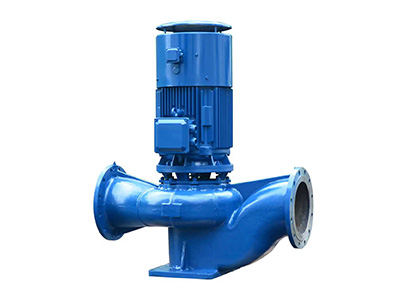
Fire pumps come in various configurations, which differ in terms of flow range, head capacity, installation method, and maintenance requirements. Depending on project needs, options such as end-suction pumps, horizontal split-case pumps, or multi-stage pumps may be evaluated. Selection should be based on a comprehensive assessment of required flow rate, pressure, water source conditions, available installation space, and piping layout—rather than judging performance solely by the equipment's appearance.
6. Focusing on the Hydraulic Performance of the Pump Casing and Impeller
The pump casing and impeller are critical components that dictate a fire pump's hydraulic performance. The impeller converts mechanical energy into the kinetic and pressure energy of the water flow; its structural design is directly linked to the pump's performance curve, efficiency, and operational stability. The appropriate pump model should be selected based on the target flow rate and head, with performance verified against the manufacturer’s product curves for the intended operating conditions.
7. Optimizing Inlet and Outlet Pipe Diameters
Inlet and outlet pipe diameters influence water flow velocity, pipeline resistance, and system connectivity. Pipe sizing must align with the pump’s connection ports, the design flow rate, and the on-site piping network, while also accounting for localized resistance caused by elbows, valves, and other fittings. A well-designed piping system helps minimize unnecessary hydraulic losses and ensures stable water supply from the fire pump.
8. Determining Equipment Parameters Based on Water Source Conditions
Factors such as water levels, supply capacity, and suction conditions—whether from a fire reservoir, storage tank, or other water source—directly influence the selection of a fire pump. During the design phase, it is essential to verify that the water source can meet the required fire-fighting water volume, and to calculate the suction lift, pipeline losses, and the pump’s allowable suction conditions. For any specific project, the suction piping configuration and installation height must also be determined in accordance with the equipment’s technical requirements.
9. Considering Control Systems and Maintenance Needs
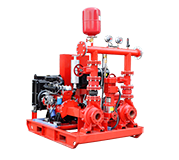
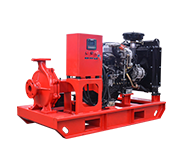
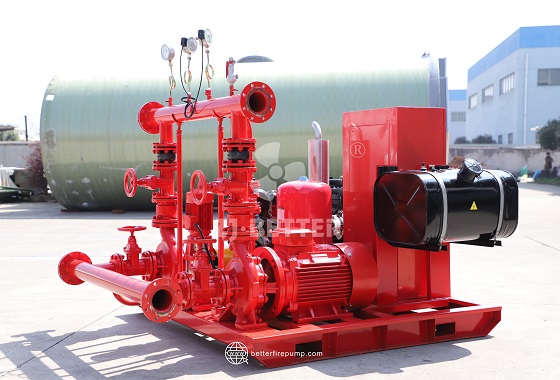
The equipment shown in the image features an integrated base-mounted layout, incorporating a diesel engine, a fire pump, a control cabinet, and associated piping components. This configuration facilitates the centralized arrangement of key equipment, simplifying transportation, positioning, and on-site piping connections. When selecting equipment, one should also consider the starting system, operational monitoring, control methods, heat dissipation conditions, and maintenance space to ensure that routine inspections and periodic maintenance can be carried out effectively.
10. Determining the Final Configuration Based on Project-Specific Operating Conditions
Diesel-engine fire pumps are suitable for fire-water supply applications in facilities such as factories, warehouses, ports, airports, energy infrastructure, and large-scale buildings. For each project, the required flow rate, head, engine power, and auxiliary equipment should be determined based on fire-protection design requirements, water source conditions, piping network layout, installation environment, and local regulations. The final model selection must be based on specific product parameters, performance curves, and engineering design calculations to ensure the equipment is well-suited to the fire-protection system.
Proper selection of a diesel-engine fire pump requires a comprehensive assessment of flow rate, head, engine power, pump structure, piping configuration, and on-site installation conditions. Only by aligning hydraulic parameters with actual fire-protection requirements can one select a pump unit that is appropriate for a given project. For procurement and engineering design personnel, clearly defining the design operating conditions, verifying product performance curves, and confirming the necessary auxiliary equipment are essential steps toward ensuring optimal equipment compatibility and the reliable operation of the fire-water supply system.
 WhatsApp me