

1. Independent Power Structure Ensures Continuous Operation Capability Engineering-grade diesel fire pump systems use diesel engines as their drive source, allowing them to operate independently of the external power grid compared to electric drive systems. This characteristic enables them to operate stably even in situations such as power outages, power supply failures due to fires, or disasters, providing a reliable guarantee for continuous water supply. Diesel power features stable torque output and strong adaptability to load changes, maintaining continuous output even under high-head, high-flow operating conditions. 1. By rationally matching the diesel engine power and water pump performance curves, the unit can operate continuously within its rated operating range, avoiding mechanical shocks and system pressure fluctuations caused by frequent start-stop cycles, thus laying the foundation for continuous water supply from the power source level.
2. Integrated Design Improves System Stability
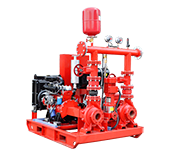
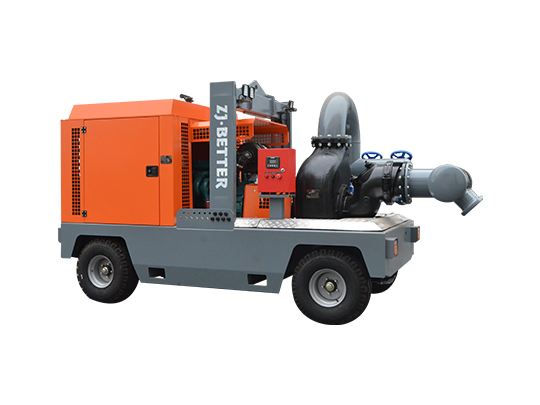
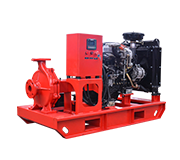
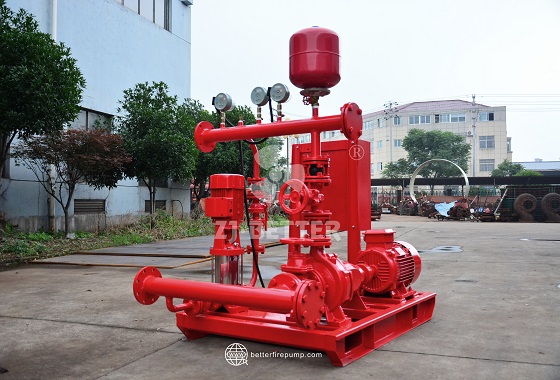
Engineering-type diesel fire pump systems typically adopt an integrated design, unifying the water pump, diesel engine, base, coupling, cooling system, piping, and control components on the same platform structure. This integrated structure reduces the uncertainties caused by on-site secondary piping and decentralized installation, contributing to improved overall system stability. Factory pre-assembly and commissioning allow for operational matching verification before delivery, enabling rapid deployment after the unit arrives at the project site. The integrated design also reduces the number of system interfaces, minimizing leakage points and vibration sources, which is crucial for achieving long-term continuous operation.
3. Optimized Hydraulic Structure Supports Continuous Water Supply Requirements
The fire pumps used in this type of system are mostly single-stage or multi-stage centrifugal pumps, with the hydraulic channel design prioritizing high efficiency and stable operating conditions. After optimization, the pump body flow channel maintains high efficiency over a wide flow range, adapting to varying water supply demands. For continuous water supply operations, the pump operates long-term at rated speed and head, requiring high internal flow stability. Engineering-grade fire pumps, through optimized impeller profiles, bearing configurations, and sealing methods, effectively reduce energy loss and vibration levels, ensuring safety and durability during continuous operation.
4. Cooling and Heat Dissipation System Ensures Long-Term Operation Capability
Diesel fire pump systems generate significant heat during continuous operation. Insufficient heat dissipation can lead to performance degradation or even shutdown of the power system. Therefore, engineering-grade diesel fire pump systems are typically equipped with comprehensive cooling and heat dissipation structures, including water-cooled or air-cooled methods, and achieve stable temperature control through pipeline circulation. The cooling system not only protects the diesel engine itself but also indirectly protects the lubrication and exhaust systems. Through a rational heat exchange structure design, the unit can maintain a safe temperature range even under prolonged high-load operation, providing a reliable operating environment for continuous water supply.
5. Enhanced Reliability of Continuous Water Supply Through Control System: Modern engineering-grade diesel fire pump systems are generally equipped with a centralized control unit to monitor and manage start-up, operation, shutdown, and fault status. The control system comprehensively monitors speed, oil pressure, water temperature, and operating status, responding promptly to abnormal conditions and preventing system shutdown due to partial faults. For continuous water supply scenarios, the control system not only handles start-up and shutdown logic but also plays a crucial role in ensuring stable operation. By rationally setting operating parameters and alarm thresholds, continuous operating time can be extended while ensuring safety, maintaining stable output during fires or emergency water supply.
6. Structural Strength Meets Engineering-Grade Load Requirements: Engineering-grade diesel fire pump systems are typically used in large-scale engineering projects, where operating conditions are more demanding than those of ordinary small equipment. Therefore, the structural design emphasizes base strength and overall rigidity. A thickened steel structure base ensures that the unit does not shift or deform under long-term vibration and load conditions. By rationally arranging the force paths at the power end and pump end, the system vibration is evenly distributed, helping to extend the service life of bearings, couplings, and fasteners. The improved structural strength enables the equipment to maintain stability during continuous water supply operations, reducing the risk of failures due to mechanical fatigue.
7. Piping and Interface Design for System Coordination
In continuous water supply systems, diesel fire pumps are not just standalone devices but integral parts of the overall fire protection network. Engineering-grade units typically employ standard flanges or engineering-grade interfaces for easy connection to sprinkler systems, fire hydrant systems, and water storage devices. A well-designed inlet and outlet layout helps reduce hydraulic shock and pressure loss, maintaining a stable water flow within the system. Reserved maintenance interfaces and exhaust/drainage structures facilitate maintenance and adjustment during long-term operation, ensuring the controllability and maintainability of continuous water supply.
8. Engineering Application Capability for Complex Working Conditions
Engineering-grade diesel fire pump systems are frequently used in industrial parks, petrochemical plants, warehousing and logistics centers, and municipal fire protection projects. These locations often involve high temperatures, high humidity, dust, or outdoor exposure. For complex working conditions, the unit design must possess excellent environmental adaptability, including corrosion protection, dustproof structures, and necessary protective covers. Through careful material selection and surface treatment processes, the equipment can operate stably even in harsh environments. Its engineered design philosophy extends its capabilities beyond standard machine room conditions, enabling it to provide continuous water supply in various scenarios.
9. Operation and Maintenance Methods Facilitate Long-Term Assurance
Continuous water supply systems place higher demands on equipment maintainability. Engineered diesel fire pump systems typically incorporate sufficient maintenance space in their structural layout, facilitating the inspection and replacement of filters, lubrication systems, and critical components. Simplified maintenance procedures allow for routine maintenance without affecting the overall system functionality. Good maintenance conditions help extend the equipment's service life, reduce the probability of sudden failures, and ensure the reliability of continuous water supply from a management perspective.
10. Comprehensive Protection Value in Fire Protection Systems
From the perspective of overall fire protection engineering, engineered diesel fire pump systems not only provide water but are also a crucial component ensuring system continuity. Their independent power characteristics ensure operation even in the event of power failure, their modular structure enhances system stability, and their control and monitoring functions strengthen operational reliability. By coordinating with main fire pumps, pressure-stabilizing pumps, and pipeline systems, this type of equipment can form a multi-layered water supply guarantee system. When the main system malfunctions, the diesel fire pump can serve as a crucial supplement or alternative force, ensuring a continuous supply of fire water and demonstrating its core value in engineering-grade fire protection systems.
The technical characteristics of engineering-grade diesel fire pump systems in ensuring continuous water supply are concentrated in independent power, complete structure, hydraulic stability, and engineering adaptability. Through sophisticated power configuration, structural design, and control systems, this type of equipment can maintain stable water supply under long-term, high-load operating conditions, providing reliable support for the fire protection system. In industrial fire protection, municipal engineering, and large-scale building projects, its role is not only to provide a water source but also to form a crucial foundation for building a continuous water supply safety barrier. As the reliability requirements of fire protection engineering continue to increase, engineering-grade diesel fire pump systems will play an increasingly important role in the field of continuous water supply guarantee.
 WhatsApp me