
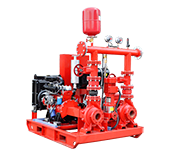
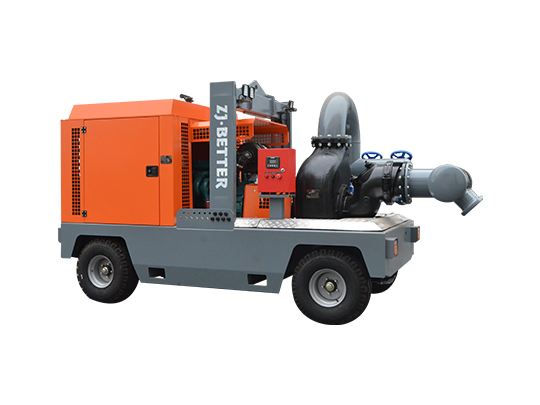
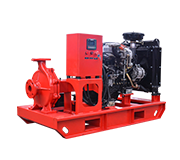
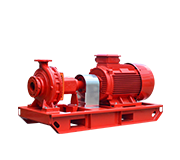

1. Highly Integrated Complete Set Design, Reducing Engineering Complexity One of the biggest technical features of complete sets of engine-driven fire pumps for engineering applications lies in their highly integrated system structure design. This product integrates the engine, fire pump, inlet and outlet water piping, valve components, instrumentation system, and control unit, all mounted on the same skid-mounted base or steel structure frame, forming a complete fire water supply unit. This design effectively avoids the problems associated with traditional split-type equipment, such as extensive secondary piping, electrical wiring, and system debugging on-site, significantly reducing construction difficulty and human error during installation. For engineering projects, the integrated solution can significantly shorten the equipment placement and system commissioning cycle, enabling the fire protection system to be put into use more quickly. Simultaneously, the integrated layout allows for more rational matching between components, reducing operational risks caused by improper selection or interface incompatibility, and providing a solid guarantee for the overall quality of the project.
2. Independent Engine Drive Ensures Reliable Operation During Power Outages
During a fire, the power supply system often faces the risk of interruption, posing a significant challenge to fire protection equipment that relies on electricity. The integrated engine-driven fire pump solution for engineering applications uses an engine as an independent power source, independent of external power supply, and can maintain stable startup and continuous operation even in the event of a power outage or unstable voltage. This characteristic makes it particularly suitable for industrial plants, remote areas, municipal emergency systems, and key facilities with extremely high requirements for power supply reliability. The engine-driven method not only improves the system's safety redundancy level but also significantly enhances the availability of the fire water supply system under extreme conditions. Through a rational power matching design, this type of fire pump can maintain stable speed and continuous output under high load conditions, ensuring sufficient water volume and pressure support during the initial and continuous firefighting phases.
3. Robust Structure, Adaptable to Complex Engineering Environments Engineering site environments often present unfavorable factors such as high dust levels, high humidity, and significant temperature variations, placing higher demands on the structural strength and durability of equipment. The complete set of engine-driven fire pumps for engineering applications fully considers these actual working conditions in its structural design, typically employing a high-strength steel base or an integral welded frame, possessing excellent vibration and impact resistance. The scientifically laid-out installation positions of key components effectively disperse the mechanical stress generated during equipment operation, extending the overall service life. Furthermore, components such as the pump body, pipelines, and valves are mostly made of corrosion-resistant materials or have surface protective treatments, enabling long-term stable operation in humid or mildly corrosive environments. This engineering-oriented structural design ensures that the product maintains good reliability and safety even in complex environments.
4. Stable Performance, Meeting Continuous Operation and High Load Requirements Firefighting engineering requirements for equipment performance are not only reflected in start-up speed but also in continuous operation capability and stable output levels. The complete engine-fired pump system for engineering applications is optimized for continuous operation during the design phase, ensuring stable flow and pressure output even under prolonged high-load conditions. Through rational hydraulic model design and dynamic matching calculations, the pump unit operates efficiently within its rated operating range, avoiding equipment damage due to overload or inefficiency. Simultaneously, the engine cooling, lubrication, and fuel systems are systematically configured to maintain optimal performance under high-temperature environments or prolonged operation. This stable and reliable performance enables the product to meet the long-term needs of large industrial facilities and key fire protection projects.
5. Flexible Installation, Significantly Saving On-Site Construction Time
Compared to traditional decentralized fire-fighting equipment, the complete engine-fired pump system for engineering applications offers significant advantages in installation. The equipment is typically pre-assembled and pre-commissioned at the factory; on-site installation only requires foundation fixing, inlet/outlet connection, and necessary system checks before deployment. This ready-to-use characteristic greatly reduces construction procedures and installation time, which is particularly important for projects with tight schedules or limited construction conditions. Furthermore, the complete solution offers greater flexibility in installation location selection, allowing for indoor, outdoor, or dedicated equipment room layouts based on site conditions, facilitating overall project planning and space utilization.
6. Centralized Maintenance, Reducing Post-Operation and Maintenance Costs
In the entire lifecycle of a fire protection system, post-operation and maintenance costs often constitute a significant proportion. The engineering-grade engine-fired pump complete solution, through its centralized design, concentrates key maintenance points within a single equipment unit, making daily inspections, maintenance, and troubleshooting more efficient. Maintenance personnel can complete comprehensive inspections of the power system, pump body, and control components without frequently switching between multiple equipment rooms. In addition, the clear piping layout and standardized interface design make the replacement of vulnerable parts and system adjustments more convenient. This maintenance-friendly design philosophy effectively reduces long-term manpower and time costs, bringing higher overall economic benefits to project users.
7. Comprehensive System Configuration to Meet Diverse Project Needs
The engineering-grade engine-fired pump complete solution offers strong flexibility in configuration, allowing for customized designs based on different project scales and usage scenarios. By rationally selecting pump types, flow parameters, and head ranges, the products can meet diverse fire protection needs ranging from small and medium-sized buildings to large industrial facilities. Simultaneously, the complete system can integrate various auxiliary devices, such as voltage stabilizing components, instrument monitoring devices, and safety protection elements, making the overall system more comprehensive. Through this combination of modularity and customization, project owners can achieve a reasonable balance between performance and cost while meeting regulatory requirements.
8. Comprehensive Safety Protection Design Enhances System Reliability
Fire protection equipment must operate reliably at critical moments; therefore, safety protection design is paramount. Engineering-grade engine fire pump systems typically feature multiple safety protection mechanisms that monitor operating status in real time. In case of abnormal operating conditions, the system can alert maintenance personnel through alarms or protective measures to address the issue promptly, preventing damage from continued operation under adverse conditions. A reasonable safety design not only enhances the reliability of the equipment itself but also strengthens the stability of the entire fire protection system, providing a higher level of safety assurance for engineering applications.
9. Wide Applicability, Covering Multiple Industry Fire Protection Projects
With its independent power, robust structure, and stable performance, engineering-grade engine fire pump systems are widely used in multiple industries. Whether in industrial plants, logistics warehouses, energy facilities, municipal emergency systems, or key public buildings, this type of product plays a vital role. Its low dependence on power supply and strong environmental adaptability make it a preferred solution for fire protection systems in many special locations. This broad applicability also reflects the product's maturity and practical value in the engineering field.
10. Compliance with Engineering Standards, Facilitating Smooth Project Acceptance
During the implementation of fire protection engineering, whether the equipment complies with relevant technical specifications and engineering requirements directly affects the project's acceptance progress. The engineering-grade engine-fired pump system fully considers the applicability of engineering standards during design and manufacturing, ensuring that system configuration, performance parameters, and safety measures meet the actual needs of the project. Through standardized design and configuration, this product can be better integrated into the overall fire protection system, reducing the risk of rectification due to equipment problems and providing strong support for smooth project delivery.
Overall, the engineering-grade engine-fired pump system demonstrates significant advantages in modern fire protection engineering due to its highly integrated structural design, independent and reliable power system, and excellent engineering adaptability. It not only effectively simplifies on-site installation and subsequent maintenance processes, but also provides stable and reliable fire water supply in complex environments and critical operating conditions. For fire protection engineering projects that pursue high efficiency, high reliability, and long-term stable operation, this type of product is undoubtedly an ideal choice that balances performance, safety, and economy.

 WhatsApp me