

1. System Architecture: Collaborative Operation of Diesel Main Pumps and Pressure-Maintaining Pumps
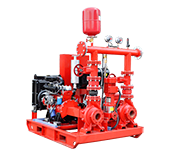
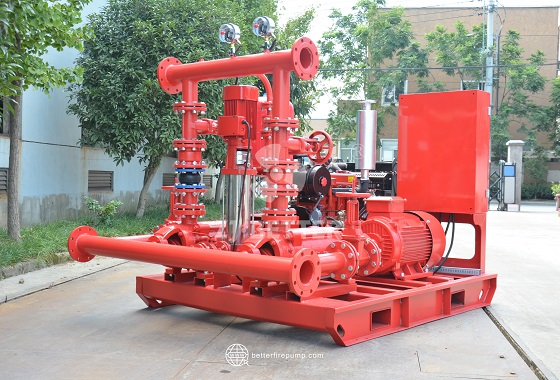
This integrated fire protection system consists of several core components: a diesel-driven main pump, an electric pressure-maintaining pump, a control system, and associated piping accessories. Acting as the primary water supply unit, the diesel main pump assumes the task of delivering high-volume water flow during a fire emergency, while the pressure-maintaining pump works to maintain stable pressure within the pipe network during routine operations. When minor fluctuations in system pressure occur, the pressure-maintaining pump activates first; this prevents the main pump from undergoing frequent start-stop cycles, thereby extending the equipment's service life. Should the pressure drop below a predetermined threshold, the diesel main pump rapidly intervenes to deliver a high-volume water supply. This tiered response mechanism not only enhances the system's operational efficiency but also significantly boosts the overall reliability of the fire protection infrastructure.
2. Rapid Response Mechanism: Ensuring Timely Water Supply During the Initial Stages of a Fire
In the incipient stages of a fire, time is of the essence. Utilizing intelligent control logic, this system integrates pressure monitoring with rapid startup capabilities. The moment an abnormal drop in pipe network pressure is detected, the system automatically activates the diesel main pump within a matter of moments—without relying on an external power source—thereby ensuring that an ample water supply is delivered immediately during critical moments. This rapid response capability is particularly well-suited for regions with unstable power grids or high-risk industrial environments, providing a robust safeguard for fire containment during the initial outbreak phase.
3. Continuous Supply Capability: Meeting Long-Duration Firefighting Demands
Compared to single-pump systems, this integrated system offers superior capabilities for continuous water supply. The diesel main pump operates on an independent fuel source; provided there is a sufficient fuel supply, it can run stably for extended periods, remaining unaffected by power outages. Furthermore, the system's design incorporates comprehensive considerations for heat dissipation and load balancing, ensuring that the equipment maintains high efficiency and stability even during prolonged periods of operation. This feature is particularly vital for scenarios requiring sustained firefighting efforts—such as in large-scale warehousing facilities, petrochemical complexes, and high-rise buildings.
4. Pressure-Maintaining Pumps: Reducing Energy Consumption and Equipment Wear
4. Pressure-Maintaining Pumps: Reducing Energy Consumption and Equipment Wear
The role of the pressure-maintaining pump within the system extends beyond merely sustaining pressure; it serves as a critical component for energy conservation and equipment protection. In the absence of a fire emergency, the system operates solely on the low-power pressure-maintaining pump, thereby significantly reducing energy consumption. Concurrently, by minimizing the frequent starts of the diesel-driven main pump, the system reduces mechanical wear and lowers maintenance costs. This design philosophy strikes a balance between economic efficiency and reliability, offering distinct advantages for the system's long-term operation.
5. Intelligent Control System: Enabling Automated Operation
The system is equipped with an advanced control cabinet that integrates pressure monitoring, automatic start-stop functions, fault alarms, and multiple layers of protection. Through pre-configured parameters, the system achieves fully automated operation, requiring no manual intervention. Furthermore, the control system supports the switching of various operating modes—such as automatic, manual, and remote control—to meet the diverse requirements of different application scenarios. This intelligent management approach not only enhances operational convenience but also bolsters overall system safety.
6. Integrated Skid-Mounted Design: Boosting Installation Efficiency
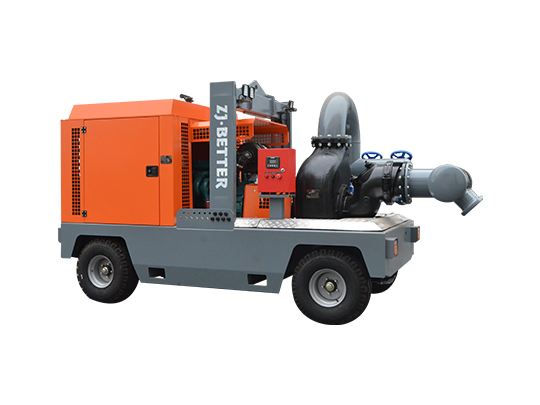
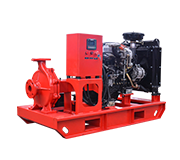
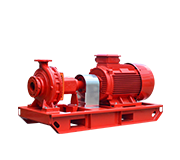
The system features a skid-mounted structural design, integrating the diesel engine, pump assembly, control cabinet, and piping onto a single unified base. Users are spared the complexity of intricate on-site installation; the system can be commissioned simply by making a few basic connections. This design significantly shortens construction cycles and reduces installation costs, while also facilitating ease of transport and on-site layout—making it particularly well-suited for engineering projects with tight deadlines.
7. Stable Performance Across Diverse and Complex Operating Conditions
The combined fire protection system is designed with full consideration for the demands of various operating conditions, including environments characterized by high temperatures, low temperatures, high humidity, and dust. The diesel engine demonstrates excellent environmental adaptability, while the pressure-maintaining pump ensures stable operation even amidst pressure fluctuations. The system's overall structure is robust and durable, enabling it to function stably over extended periods in complex environments, thereby guaranteeing the continuous reliability of the fire protection system.
8. Multiple Safety Protection Mechanisms: Enhancing System Reliability
To ensure operational safety, the system is configured with multiple protective measures, including over-pressure protection, overload protection, low oil pressure alarms, high-temperature protection, and emergency shutdown capabilities. Should the system encounter an anomaly, it automatically triggers these protective measures to prevent equipment damage and safeguard operational safety. This comprehensive safety design ensures that the system remains highly reliable during critical moments.
9. Widely Applied Across Diverse Firefighting Scenarios
9. Widely Applied Across Diverse Firefighting Scenarios
This combined system—featuring a diesel-driven main pump paired with a pressure-maintaining pump—finds extensive application in various sectors, including industrial facilities, logistics and warehousing centers, high-rise buildings, data centers, and municipal engineering projects. In these environments, firefighting systems demand not only efficient operation but also a high degree of reliability. Leveraging its multifunctional advantages, this combined system is capable of meeting the diverse requirements of projects of varying scales, serving as a vital component of modern firefighting engineering.
10. Compliant with International Standards and Engineering Specifications
Throughout its design and manufacturing phases, this system strictly adheres to relevant firefighting standards and engineering specifications, thereby ensuring that both equipment performance and safety meet rigorous industry requirements. From material selection to system testing, every stage undergoes stringent quality control to provide users with high-quality firefighting equipment solutions. This standardized design not only enhances product credibility but also facilitates engineering acceptance procedures and ensures ease of long-term operation.
Through the synergy of multiple pumps, intelligent control systems, and an integrated design, this combined firefighting system—featuring both a diesel main pump and a pressure-maintaining pump—achieves a perfect balance between rapid response capabilities and continuous water supply. Whether maintaining routine system pressure or responding to emergency fire situations, the system delivers stable, reliable, and highly efficient water supply assurance. Its energy efficiency, adaptability, and inherent safety features establish it as an indispensable asset in modern firefighting engineering. As firefighting standards continue to evolve and rise, this combined system is poised to play an increasingly critical role across a wider range of sectors, serving as a steadfast guardian of life and property safety.
 WhatsApp me