
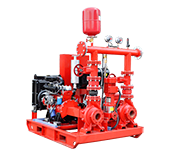
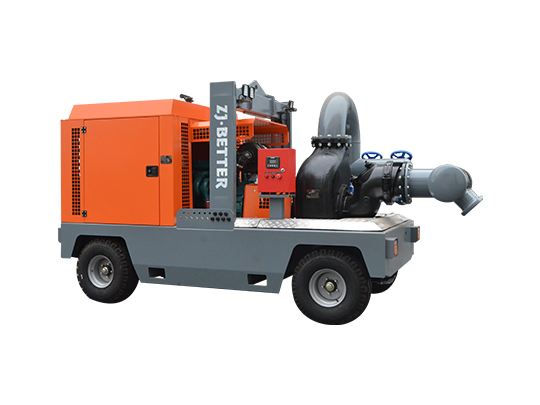
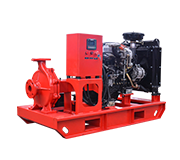
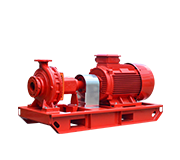
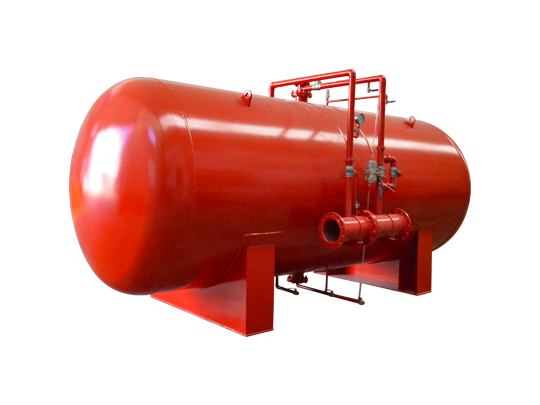
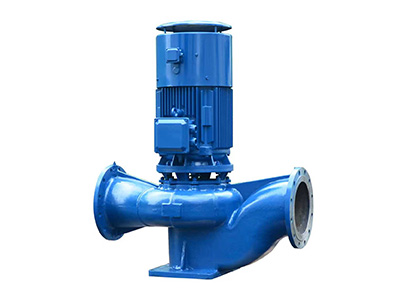

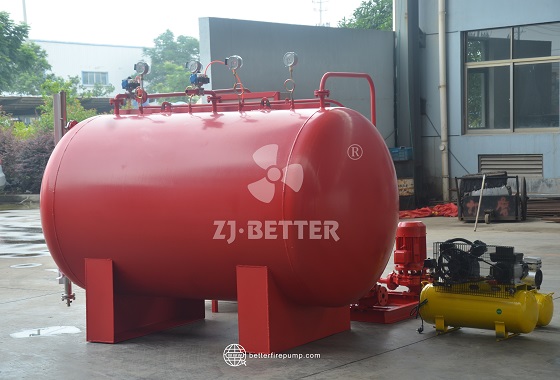
1. Working Principle and System Composition of Pneumatic Fire Water Supply Equipment The core principle of pneumatic fire water supply equipment is to utilize the compressibility of air in a closed pressure vessel to store and stabilize the pressure of fire water. The equipment typically consists of a pressure tank, a pressure stabilizing pump, a water replenishment pump, a pressure control device, a liquid level monitoring device, and safety protection components. In normal standby mode, the pressure tank stores a certain volume of water and compressed air, and the pipeline pressure is maintained within a set range. When minor leaks or pressure drops occur in the fire protection pipeline network, the pressure-stabilizing pump automatically starts to replenish the pressure. When water is needed during a fire, the water in the pressure tank can be immediately output under pneumatic pressure, without waiting for the main fire pump to start. This structure effectively shortens the time from "detecting a fire" to "actually discharging water," improving the overall response speed.
2. The Key Role of Rapid Response in Initial Firefighting The initial stage of a fire is often the golden time to control its spread. Traditional fire protection systems may require multiple steps before starting the fire pump, including signal confirmation, motor startup, and pipeline filling. Pneumatic fire water supply equipment, however, can supply water to the pipeline network instantly, achieving "instant use." This rapid response capability is particularly suitable for high-rise buildings, underground garages, data centers, and densely populated areas. Once fire hydrants or sprinkler systems are activated, the pneumatic water supply equipment can immediately release stored water, buying time for the fire protection system and creating conditions for the stable operation of the main fire pump, thus improving the success rate of fire suppression at the system level.
3. The Significance of Pressure Stabilization for the Long-Term Reliable Operation of Fire Protection Pipelines Fire protection pipe networks are constantly in a standby state, and minor leaks are inevitable at pipe joints, valves, and sprinklers. Without pressure stabilization measures, the network pressure can gradually decrease, causing the system to fail to meet specifications. Pneumatic fire protection water supply equipment continuously maintains network pressure through pressure monitoring and automatic control. The pressure-stabilizing pump operates under low-flow conditions, maintaining network pressure while avoiding frequent start-stops of the main fire pump, thus extending the service life of the fire pump and electrical system. This pressure stabilization mechanism is crucial for ensuring the "always-available" nature of the fire protection system.
4. Reducing Frequent Fire Pump Start-Stops and Extending Overall System Lifespan In systems without pressure stabilization and pneumatic water supply equipment, network pressure fluctuations often directly trigger the main fire pump to start, causing frequent start-stops, increasing energy consumption, and accelerating mechanical wear. Pneumatic fire protection water supply equipment, through the cooperation of pressure tanks and pressure-stabilizing pumps, separates the low-flow, low-frequency water replenishment needs from the high-flow fire protection water supply needs. This way, the main fire pump only starts during actual fires or when there is a high flow rate demand, significantly reducing the operating load and improving the reliability and service life of the entire fire water supply system.
5. Technical Advantages for High-Rise Buildings and Complex Piping Networks High-rise building fire protection systems are characterized by long pipe networks, large pressure losses, and complex zoning. Pneumatic fire water supply equipment can be rationally configured according to the pressure requirements of different zones. By matching the pressure tank capacity with the set pressure, it ensures that both high- and low-zone pipe networks are in a safe and stable state. In high-rise buildings, this equipment not only compensates for the impact of static pressure changes but also maintains stable pipe network pressure during fire pump switching, avoiding the impact of instantaneous pressure drops on fire extinguishing effectiveness.
6. Synergistic Application in Fire Hydrant and Automatic Sprinkler Systems Pneumatic fire water supply equipment typically serves both fire hydrant and automatic sprinkler systems. For sprinkler systems, startup often involves the opening of a single or a small number of sprinklers, requiring a small flow rate but immediate response; for fire hydrant systems, the emphasis is on the continuity and stability of the initial water supply. Pneumatic water supply equipment perfectly addresses both of these needs, providing a stable water source during the initial operation of the sprinkler system and serving as an effective supplement when fire hydrants are activated, creating a smooth transition for the full commissioning of fire pumps.
7. The Importance of Automatic Control and Safety Protection Design Modern pneumatic fire water supply equipment is generally equipped with an automatic control system, enabling real-time monitoring and联动 control of pressure and liquid level. When system pressure is abnormal, liquid level is insufficient, or equipment malfunctions, the control system can promptly alarm and take protective measures, such as stopping water supply and releasing overpressure, ensuring the safe operation of equipment and pipelines. This highly automated design not only reduces the need for manual intervention but also improves the reliability and safety of the fire protection system during long-term operation.
8. Energy Saving and Operating Cost Control Advantages Compared to high-power fire pumps that frequently start and stop, pneumatic fire water supply equipment mainly relies on low-power pressure-stabilizing pumps for pressure replenishment during daily operation, significantly reducing energy consumption. At the same time, due to the relatively simple equipment structure and stable operating conditions, maintenance costs are relatively controllable. For large buildings or long-term operating fire protection systems, this energy-saving and low-maintenance characteristic has a significant advantage in terms of life-cycle cost control. 9. Wide Applicability and Engineering Flexibility: Pneumatic fire-fighting water supply equipment is suitable for various scenarios, including high-rise residential buildings, commercial complexes, industrial plants, underground spaces, and public buildings. Its structural form can be selected as a vertical or horizontal pressure tank according to project needs, and the system capacity and pressure rating can also be flexibly configured to meet the requirements of different specifications and engineering conditions. This highly adaptable design allows it to play a stable role in various fire protection projects.
10. Enhanced Safety Level through Synergy with the Overall Fire Protection System: As an important component of the fire-fighting water supply system, pneumatic fire-fighting water supply equipment does not exist independently but forms a complete synergy with fire pump sets, control systems, piping networks, and terminal equipment. Through reasonable design and selection, this equipment can significantly improve the response speed, stability, and reliability of the entire fire protection system, providing a higher level of fire safety protection for buildings and facilities.
Pneumatic fire-fighting water supply equipment effectively compensates for the shortcomings of traditional fire-fighting water supply systems in terms of response speed and operational stability through technologies such as energy storage and pressure stabilization, rapid water output, and automatic control. Whether in high-rise buildings, complex pipe networks, or industrial and public projects with extremely high requirements for fire protection reliability, this equipment demonstrates irreplaceable technological value. As an important technical solution for improving the response speed of fire protection systems, pneumatic fire water supply equipment is becoming an indispensable key device in modern fire protection engineering.
 WhatsApp me