

1. The Independent Operation Advantages of Diesel Engine Drive Diesel engine drive is one of the most prominent core features of skid-mounted fire pump units. Compared to electric motor-driven fire pumps, diesel engines do not rely on external mains power or backup power systems. Even in extreme situations such as fires, power grid damage, or power outages, they can still start quickly and operate stably. This characteristic makes them a key guarantee device in emergency fire protection systems. Diesel engines typically employ mature and reliable mechanical or electronic speed control structures, offering strong starting performance and stable torque output. They can quickly reach rated speed and drive fire pumps to provide the required flow and pressure. Simultaneously, diesel fuel is relatively readily available and suitable for long-term storage, ensuring the equipment maintains immediate responsiveness even during extended standby periods. In emergency firefighting scenarios, this independent operation capability significantly enhances the safety redundancy of the entire fire protection system.
2. Skid-Mounted Integrated Structure Enhances System Integration
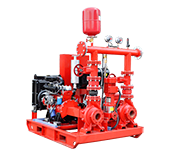
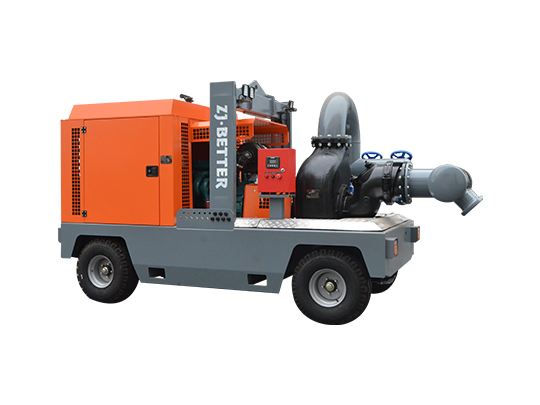
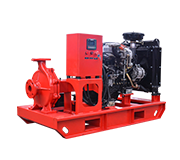
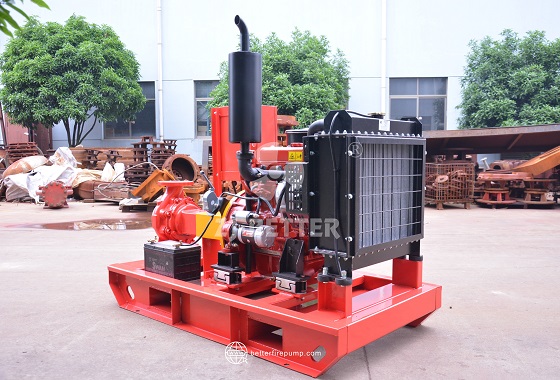
The skid-mounted structure design is a key advantage of this type of fire pump unit. Core components such as the diesel engine, fire pump, control system, cooling system, and piping valves are integrated onto a unified base, forming a complete set of equipment. This integrated structure not only reduces the complexity of on-site installation but also effectively reduces the number of system interfaces, minimizing potential leaks and failure points. The skid base is typically constructed from high-strength steel, possessing excellent load-bearing capacity and vibration resistance, enabling it to adapt to complex installation environments. For engineering projects, skid-mounted fire pump units allow for integrated transportation, hoisting, and rapid placement, significantly shortening the construction cycle, improving project delivery efficiency, and ensuring overall system stability and consistency.
3. Stable Output Meets High-Intensity Emergency Firefighting Needs
In fire emergencies, fire pumps need to continuously output large flow rates and high pressures of water for a short period, placing extremely high demands on the stability and durability of the equipment. Diesel engine-driven skid-mounted fire pump units are typically selected and matched for continuous operation during the design phase, ensuring sufficient diesel engine power reserves and stable hydraulic performance of the fire pump. Through reasonable speed control and pump design, the unit can operate for extended periods under rated conditions without performance degradation. Even under conditions of high ambient temperature and frequent load changes, the system can maintain stable output, providing continuous and reliable water support to the fire protection network and meeting the emergency firefighting needs of large venues and high-risk areas.
4. Comprehensive Cooling and Lubrication System Ensures Long-Term Operation
Diesel engines generate a large amount of heat during high-load operation. The reliability of the cooling and lubrication system directly affects the unit's service life and operational safety. Skid-mounted fire pump units are typically equipped with efficient water-cooling or air-cooling systems, optimized for the application environment, ensuring that the diesel engine maintains a reasonable operating temperature during long-term operation. Meanwhile, a sophisticated lubrication system provides continuous lubrication to critical components under high-speed operation, reducing wear and mechanical losses. This systematic design not only improves the reliability of the unit in emergency situations but also reduces the frequency of routine maintenance, allowing the equipment to maintain good performance even during long-term standby.
5. Intelligent Control System Enhances Emergency Response Capabilities Modern diesel engine-driven skid-mounted fire pump units are generally equipped with dedicated control systems for automatic start-up, operation monitoring, and fault alarm functions. When the fire protection system detects a pressure drop or receives a start signal, the control system can automatically complete the entire process of diesel engine start-up, speed increase, and pump unit commissioning, significantly shortening response time. Simultaneously, the control system can monitor oil pressure, water temperature, speed, and operating status in real time, immediately alarming or taking protective measures in case of abnormalities. This intelligent control not only reduces the need for manual intervention but also improves the reliability and safety of the emergency fire protection system at critical moments.
6. Structural and Protective Design Adaptable to Complex Environments Emergency fire protection equipment often needs to operate for extended periods in outdoor, semi-open, or harsh environmental conditions. The diesel engine-driven skid-mounted fire pump unit is designed with protection requirements in mind. Key components are treated with anti-corrosion and anti-rust measures, and electrical components have excellent dustproof and moisture-proof properties. The overall structure is compact and rationally laid out, capable of withstanding vibration, impact, and environmental changes. This design for complex environments allows the unit to maintain stable operation under high temperature, humidity, or dusty conditions, ensuring the emergency fire protection system functions effectively in any scenario.
7. Ease of Maintenance Reduces Long-Term Operating Costs Firefighting equipment is often in a standby state for extended periods, and the ease of maintenance directly affects its actual effectiveness. The skid-mounted fire pump unit's structural layout fully considers maintenance needs, with key components arranged rationally and ample maintenance space for easy daily inspection and upkeep. The diesel engine, pump body, and control system all use mature and reliable common components, which are easy to replace and maintain. This design not only reduces the workload of maintenance personnel but also effectively reduces downtime and maintenance costs, bringing users higher economic benefits and value in the long run.
8. Wide Application in Various Emergency Firefighting Scenarios
Diesel engine-driven skid-mounted fire pump units are suitable for various emergency firefighting scenarios, including industrial plants, warehousing and logistics centers, petrochemical facilities, port terminals, and municipal emergency systems. In these locations, electrical systems are often unstable in the event of a fire, while diesel engine fire pumps can be quickly deployed, becoming core equipment for ensuring fire water supply. Their flexible installation methods and strong adaptability allow them to play a vital role in projects of different scales and types, making them an indispensable part of modern emergency firefighting systems.
9. Compliance with Fire Protection Codes and Engineering Application Requirements
In engineering projects, fire protection equipment must comply with relevant codes and design requirements. During the design and manufacturing process, diesel engine-driven skid-mounted fire pump units are typically selected and configured strictly according to the technical standards of fire protection systems, ensuring that flow rate, pressure, and operational performance meet system requirements. Through reasonable parameter matching and system integration, the unit can achieve good coordination with pipelines, valves, and other fire protection equipment, ensuring efficient operation of the overall system in emergency situations. This standardized and engineering-oriented design approach makes it more reliable in project acceptance and actual use.
10. Enhancing the Safety Redundancy of the Overall Emergency Firefighting System
From a system perspective, diesel engine-driven skid-mounted fire pump units are not only independent devices but also crucial components for enhancing the safety redundancy of emergency firefighting systems. In multi-pump configurations or multi-energy water supply systems, diesel engine fire pumps, as critical backup or primary equipment, can effectively compensate for the shortcomings of electric pumps in extreme situations. Through proper configuration, these units can significantly improve the overall reliability of the fire protection system, buying valuable time for personnel evacuation and fire control, thus playing a decisive role in actual emergencies.
In summary, diesel engine-driven skid-mounted fire pump units, with their independent operation capability, highly integrated structure, stable output performance, and good environmental adaptability, demonstrate irreplaceable value in emergency firefighting systems. They not only provide reliable fire water supply at critical moments but also enhance the overall system's safety and reliability through mature design and intelligent control. With the continuous increase in emergency firefighting demands, these products will be applied in more fields and scenarios, becoming a vital force in ensuring safety within modern fire protection systems.
 WhatsApp me