

1. Specialized Design for Warehousing and Logistics Fire Characteristics
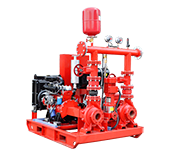
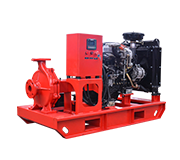
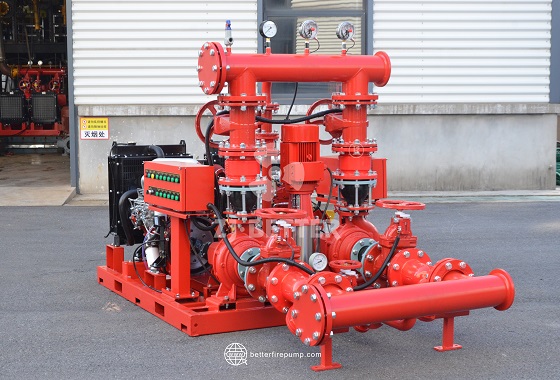
Warehousing and logistics facilities generally have large spatial spans, dense goods, and complex types of combustible materials, placing higher demands on the start-up speed and continuous operation capabilities of fire water supply equipment. Diesel fire pumps are designed from the outset to fully consider these working conditions. By matching a high-torque diesel power system, the equipment can start quickly without relying on external power in the event of a fire, ensuring that the fire protection network establishes stable water pressure immediately. Its structural design balances high flow rate and high head output, capable of covering long-distance water delivery and high-level sprinkler system needs, making it particularly suitable for large warehouses and multi-zone logistics buildings, effectively compensating for the shortcomings of traditional water supply systems in extreme situations.
2. Independent Power System Ensures Continuity of Fire Water Supply
In warehousing and logistics park fires, the power system is often easily interrupted due to high temperatures, smoke, or line damage, posing a significant risk to fire protection equipment that relies on electricity. Diesel fire pumps use an independent diesel engine as the power source, unaffected by municipal power outages, and can operate stably even in the event of a complete power failure. This power independence significantly improves the overall reliability of the fire protection system, ensuring continuous, stable, and uninterrupted fire water supply during the initial, middle, and even prolonged firefighting stages, gaining valuable time to control the fire.
3. High Flow Output Meets the Needs of Large-Area Warehousing Fire Protection
Modern logistics warehouses are mostly large-span buildings, requiring extremely high instantaneous water supply capacity from the fire protection system. Diesel fire pumps achieve stable, high-flow output through optimized pump body hydraulic models and power matching, capable of simultaneously meeting the water demands of multiple fire pipelines, sprinkler systems, or fire hydrant systems. In practical applications, even when multiple fire zones are activated simultaneously, it can maintain stable water pressure, preventing reduced fire extinguishing efficiency due to insufficient water supply. This characteristic makes it particularly important in large logistics parks, distribution centers, and centralized warehousing bases.
4. Stable and Durable Structure Adapts to High-Intensity Operating Conditions
Warehousing and logistics fire protection systems have extremely high requirements for equipment reliability. Once put into use, they often need to withstand high loads and continuous operation for extended periods. The diesel fire pump adopts high-strength materials and a mature mechanical structure in its design, with key components reinforced to effectively reduce wear and failure risks during long-term operation. The reasonable layout between the pump body and the power system facilitates heat dissipation and vibration reduction, ensuring that the equipment maintains stable performance even in high-temperature, high-humidity, or dusty warehousing environments.
5. Adaptable to Various Warehousing Fire Protection System Configurations
Different types of warehousing and logistics facilities have significant differences in fire protection system design. The diesel fire pump has good system compatibility and can be flexibly applied to various fire protection configurations, including fire hydrant systems, automatic sprinkler systems, and water cannon systems. Through reasonable selection and parameter matching, it can be customized according to warehouse size, building height, and risk level, meeting multi-level fire protection needs from ordinary warehousing to high-risk logistics facilities, providing greater flexibility for engineering design.
6. Fast Start-up Performance Improves Initial Fire Extinguishing Efficiency
The initial stage of a fire is often the critical stage for controlling losses, and the ability of fire protection equipment to quickly become operational is crucial. The diesel fire pump achieves fast and reliable start-up performance through a mature start-up system design, quickly establishing rated speed and water supply pressure after receiving a start-up signal, shortening the water supply response time. This advantage is particularly evident in logistics warehouses with dense goods, effectively suppressing fire spread and reducing damage to goods and building structures caused by fire.
7. Suitable for Outdoor and Semi-Outdoor Warehousing Environments
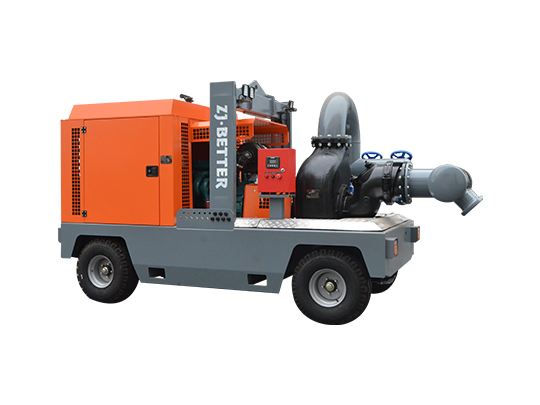
Many logistics parks and warehousing bases adopt semi-open or outdoor layouts, which places higher demands on the environmental adaptability of fire protection equipment. The diesel fire pump features a robust overall structure and excellent protective performance, enabling it to operate stably for extended periods in environments with strong winds, direct sunlight, and significant temperature fluctuations. Through a well-designed base and protective casing, the impact of external environmental factors on equipment operation is effectively reduced, ensuring reliable operation in complex warehousing environments.
8. Convenient Maintenance Design Reduces Operating Costs
In large-scale warehousing and logistics projects, the large number and wide distribution of fire protection equipment make long-term operating costs a crucial consideration. The diesel fire pump is designed with ease of maintenance in mind; key components are rationally arranged, and daily inspection, maintenance, and replacement operations are simple and intuitive, helping to shorten maintenance time and reduce labor costs. Its stable and reliable performance also reduces the frequency of failures, effectively controlling overall operating expenses in the long run.
9. Meets the Long-Term Usage Requirements of Industrial Fire Protection Systems
Warehousing and logistics fire protection systems often need to remain on standby for extended periods, requiring extremely high levels of long-term stability and durability. The diesel fire pump, with its mature mechanical structure and stable power output, maintains excellent performance during prolonged standby periods, reliably starting and continuing to operate when needed. This long-term reliability makes it one of the trustworthy core components of industrial fire protection systems.
10. Enhances the Overall Fire Safety Level of Warehousing and Logistics
Applying diesel fire pumps to warehousing and logistics fire protection systems is not only a choice based on the performance of a single piece of equipment, but also a reinforcement of the overall fire safety system. Its independent power, high flow rate, and high reliability effectively improve the ability of warehousing and logistics facilities to respond to sudden fires, enhancing the redundancy and reliability of the fire protection system, and providing a solid foundation for personnel safety, cargo protection, and stable business operations.
Against the backdrop of continuously increasing fire safety requirements in the warehousing and logistics industry, the diesel fire pump, with its independent power, stable water supply, and strong adaptability, has become an important component of industrial fire protection systems. Through proper selection and system configuration, this type of product can effectively meet the demand for highly reliable fire water supply in large-scale warehousing and logistics facilities, providing strong support for building a safe, stable, and sustainable fire protection system.
 WhatsApp me