
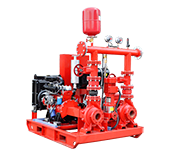
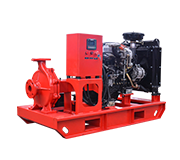
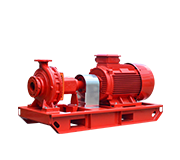
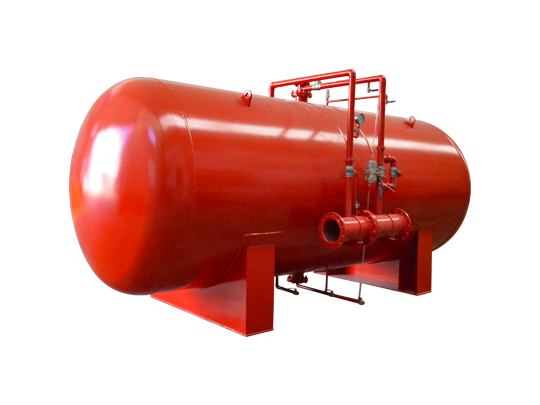
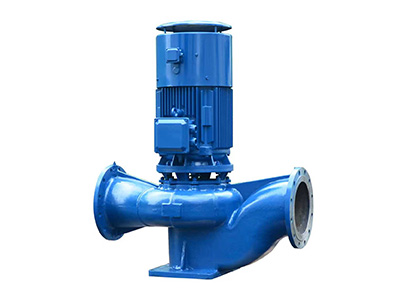

1. Basic Concepts and Working Principles of Intelligent Pressure-Stabilizing Pump Systems Intelligent pressure-stabilizing pump systems are automated devices used to maintain constant pressure in fire protection networks. They typically consist of an electric pressure-stabilizing pump, a pump control cabinet, a pressure tank, pressure sensors, and piping systems. When the fire protection network experiences a slight pressure drop due to minor depressurization or pressure fluctuations, the system automatically starts the electric pump to replenish water and restore the pressure to the set value. Once the pressure is restored, the pump automatically stops, achieving intelligent start/stop and constant pressure control. Compared to traditional pressure stabilization methods, intelligent pressure stabilization systems, through PLC control, real-time sensor sampling, and frequency conversion adjustment technology, achieve higher response speed and control precision, significantly improving system stability and reliability.
2. The Key Role of Pressure Stabilizing Pump Systems in Firefighting Water Supply
In firefighting water supply systems, pressure stabilizing pumps play a crucial role in maintaining pressure balance. While the main fire pump is typically in standby mode, only activating during a fire alarm, the pressure stabilizing pump continuously maintains network pressure during daily operation, ensuring readiness for firefighting activation at any time. When minor leaks, valve openings, or temperature changes cause pressure drops, the intelligent pressure stabilizing pump immediately intervenes to replenish pressure, preventing the pressure from falling to the alarm or main pump activation threshold. Its function not only protects the main pump from frequent start-stop cycles but also extends the lifespan of system equipment and maintains a stable and reliable standby status for the entire firefighting system.
3. The Core Advantages of Intelligent Control Technology
Intelligent pressure stabilizing pump systems employ advanced automated control technology, typically equipped with a PLC or microcomputer control module, which automatically determines start-stop conditions based on real-time signals from pressure sensors. This system allows for the setting of multiple pressure control points, enabling precise adjustment under varying water usage conditions. Simultaneously, the intelligent control system features self-checking and alarm functions, automatically shutting down and issuing alarm signals in case of motor overload, abnormal pressure, or sensor malfunction, thus ensuring safe system operation. Furthermore, some systems support remote monitoring, allowing real-time viewing of pressure curves, operating status, and energy consumption data via a network platform, providing data support for intelligent fire management.
4. Energy Saving and Optimized Operating Cost Design Traditional pressure-stabilizing pumps operate at a fixed speed, easily leading to frequent start-stop cycles and energy waste. The intelligent pressure-stabilizing pump system, however, uses variable frequency control technology to achieve on-demand pressure supply, automatically reducing speed under low flow conditions, significantly reducing energy consumption. Data analysis shows that a high-efficiency variable frequency pressure-stabilizing system can save 30%–50% more energy than traditional systems. In addition, this system effectively reduces operating and maintenance costs throughout the equipment's lifecycle by extending the main pump's idle time, reducing mechanical shock, and lowering maintenance frequency, balancing economic efficiency and sustainability.
5. Reliability Assurance Through Structural Design and Material Selection The intelligent pressure-stabilizing pump system's structural design prioritizes stability and durability. The pump body is typically made of cast iron or stainless steel, possessing excellent pressure resistance and corrosion resistance. The pressure tank is a sealed container made of carbon steel or stainless steel, filled with nitrogen to balance water pressure fluctuations. The base employs a vibration-damping structure to ensure stable equipment operation. The electrical control box features dustproof and moisture-proof design, suitable for underground pump rooms or outdoor installation environments. The overall design is compact, occupying a small area, facilitating integration with the main pump system, and is suitable for various high-rise buildings, industrial plants, and large public facilities.
6. Convenience of System Commissioning, Operation, and Maintenance The intelligent pressure-stabilizing pump system fully considers ease of installation and maintenance during the design phase. The system adopts a modular structure, undergoing pressure testing and functional testing before leaving the factory. On-site operation only requires connecting pipelines and power. During operation, the control panel displays parameters such as pressure, running time, and current, allowing inspection personnel to monitor the equipment status. The system has both automatic start and manual control modes, allowing maintenance personnel to perform testing operations as needed. Regular maintenance mainly includes checking the pressure tank pressure, cleaning the filter device, and testing the electrical wiring and operating status. This maintenance is minimal in quantity and has a long cycle.
7. Flexible Adaptability to Different Application Scenarios
The intelligent pressure-stabilizing pump system can be flexibly configured according to the needs of different scenarios. For example, in high-rise buildings, the system needs to maintain a stable high-pressure water supply to ensure the activation sensitivity of the roof sprinkler system; in industrial and mining enterprises, the system needs to cope with frequent pressure fluctuations and complex pipe network structures; in municipal facilities or warehousing centers, the system needs to balance the pressure of multi-area fire protection pipe networks. For different environments, the system can be configured with different power pump sets, tank capacities, and control logic to achieve a "scenario-based" pressure stabilization solution, ensuring that every fire water source is always at an ideal pressure state.
8. Coordinated Control with the Main Pump System
The pressure-stabilizing pump system and the main fire pump need to achieve precise coordination to ensure rapid switching of water supply modes in the event of a fire. The intelligent pressure-stabilizing system can achieve automatic linkage through pressure setting. When the pressure continuously drops to the main pump activation threshold, the system automatically stops the pressure-stabilizing pump and sends a main pump activation signal, ensuring seamless water supply switching. Collaborative control not only improves fire response speed but also avoids pressure surges and system instability, making the overall water supply system more coordinated and efficient.
9. System Safety and Alarm Protection Mechanisms
To ensure long-term safe operation, the intelligent pressure-stabilizing pump system is designed with multiple protection measures, including overload protection, phase loss protection, abnormal pressure alarm, and low-pressure gas tank alarm. In case of abnormalities, the system will immediately stop operation and issue audible and visual alarm signals. Some systems can also upload alarm information to the fire monitoring platform via a communication module for remote alarm functionality. Furthermore, the control box has an emergency manual mode, allowing manual intervention in case of automatic control system failure to ensure uninterrupted water supply and improve the overall safety redundancy of the fire protection system.
10. Future Development Trends and Intelligent Direction
With the development of smart fire protection and IoT technologies, intelligent pressure-stabilizing pump systems are evolving towards digitalization, visualization, and cloud monitoring. Future systems will achieve full lifecycle management, including remote parameter adjustment, predictive maintenance, and energy consumption analysis. By connecting to a cloud platform, users can view equipment status in real time, and the system can automatically optimize its operating logic based on historical data, achieving higher energy utilization and equipment reliability. This trend towards intelligentization has not only improved the automation level of fire-fighting water supply systems but also promoted the overall upgrade of fire safety management.
Intelligent pressure-stabilizing pump systems are indispensable core equipment in modern fire-fighting water supply systems. They not only maintain pressure balance during daily operation but also ensure rapid system response in critical moments. Their integrated automatic control, energy-saving technologies, and remote monitoring capabilities enable fire-fighting water supply systems to shift from "passive maintenance" to "proactive management." In the future, with the development of intelligent buildings and smart fire protection, intelligent pressure-stabilizing pump systems will become a key support for achieving efficient, safe, and sustainable fire-fighting water supply, providing a solid guarantee for the safety protection of urban and industrial facilities.
 WhatsApp me