

1. Independent Power Design Ensures Fire Protection Systems Are Not Constrained by External Conditions
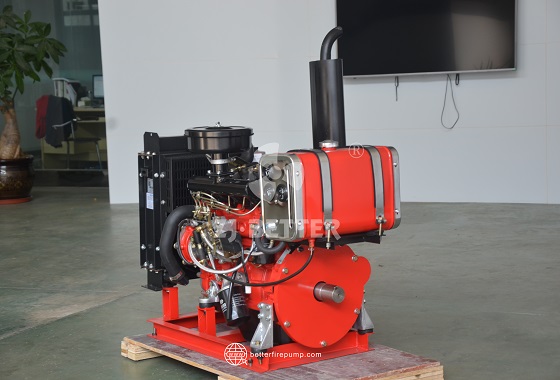
The greatest technical advantage of independently powered diesel fire pump units lies in their complete independence from external power systems. The unit uses a diesel engine as its core power source, driving the fire pump through a mechanical direct coupling or high-efficiency coupling device. Even in the event of a mains power outage, damaged lines, or a power distribution system failure, it can still maintain stable operation. For critical locations such as high-rise buildings, industrial parks, petrochemical plants, and warehousing and logistics centers, fires are often accompanied by the risk of power outages. Traditional electric fire pumps may fail at the most critical moments, while diesel engine-driven systems fundamentally avoid this hazard. Through the configuration of an independent power system, fire water supply capacity is no longer constrained by external environmental conditions, significantly improving the reliability and safety redundancy of the overall fire protection system.
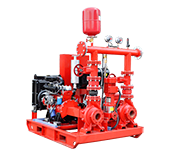
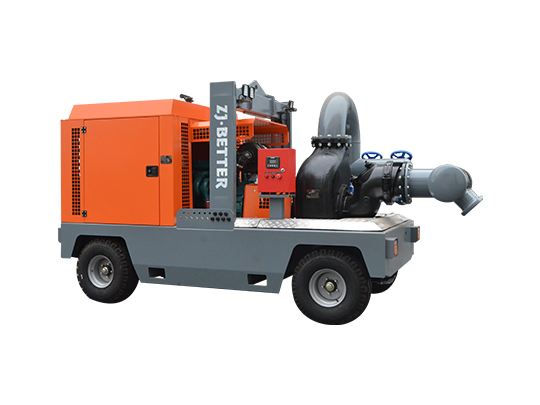
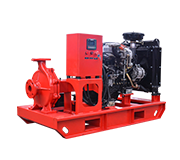
2. Integrated Structural Design Enhances Overall Stability and Installation Adaptability These diesel fire pump units typically employ a highly integrated structural design, rationally arranging the diesel engine, fire pump, cooling system, fuel system, control system, and foundation base on the same skid-mounted platform. This structural form not only reduces the complexity of on-site installation and piping connections but also effectively reduces the impact of vibration and noise during system operation. The integral rigid base ensures the coaxiality and stability of the engine and pump body during long-term operation, preventing efficiency reduction or malfunctions due to structural loosening. For critical locations with limited space or requiring rapid deployment, the integrated design makes the unit easier to transport, hoist, and position, shortening the fire protection system construction cycle.
3. High-performance diesel engines ensure long-term continuous operation.
In fire protection applications, equipment must not only be able to start, but also to operate continuously. Independent diesel fire pump units typically use specialized diesel engines designed for specific operating conditions, featuring low speed, high torque, and strong fuel adaptability, enabling stable operation for extended periods under high loads. The engine is designed with fire protection requirements in mind, enhancing the cooling system, optimizing combustion efficiency, and improving the durability of key components to maintain stable output during continuous water supply. This characteristic is particularly important for large industrial installations or locations with high fire risk; in the event of a fire, the unit can continuously provide stable water pressure and flow for an extended period, buying valuable time for firefighting operations.
4. Dual-mode automatic and manual operation enhances emergency response efficiency.
To meet the needs of different fire protection systems, diesel fire pump units are typically equipped with a comprehensive control system, enabling automatic start-up, automatic monitoring, and manual emergency operation. In automatic mode, when the system detects a drop in pipeline pressure or receives a fire signal, the unit can quickly start and begin operation, reducing delays caused by human intervention. Meanwhile, the control system can monitor key parameters such as engine speed, oil pressure, and water temperature in real time to ensure the equipment operates within safe ranges. In special circumstances, operators can also manually start the unit, further enhancing emergency flexibility and providing multi-layered safety assurance for critical locations.
5. Stable Hydraulic Performance Meets Diverse Firefighting Needs Independent diesel fire pump units exhibit excellent hydraulic performance and can be configured with different types and parameters of fire pumps according to actual needs to meet the requirements of various firefighting scenarios. Whether it's high-lift water supply, high-flow sprinkler systems, or long-distance water delivery, stable output can be achieved through appropriate selection. The pump body is typically made of high-strength, wear-resistant materials, possessing excellent corrosion and erosion resistance, suitable for long-term standby and frequent start-up firefighting conditions. In fire protection systems for critical locations, stable and predictable hydraulic performance is a crucial prerequisite for ensuring firefighting efficiency, and diesel fire pump units provide reliable support for this requirement.
6. Good Environmental Adaptability for Complex Application Scenarios Firefighting equipment in critical locations often needs to withstand complex and variable environmental conditions, such as high temperature, low temperature, high humidity, or dusty environments. Diesel fire pump units are designed with environmental adaptability in mind. Through reasonable air intake and exhaust structures, enhanced protection levels, and material selection, the equipment can operate normally under various harsh conditions. Some units can also be equipped with rainproof, antifreeze, or noise reduction measures to suit outdoor or special location installations. This excellent environmental adaptability makes them widely applicable in critical locations such as industrial plants, mines, ports, and remote areas.
7. Simplified Maintenance Reduces Long-Term Operating Costs
From a long-term operational perspective, fire-fighting equipment must not only be reliable but also easy to maintain. Independent power diesel fire pump units are designed with ease of maintenance in mind. The layout of major components is clear, and daily inspection and maintenance are relatively simple. Routine maintenance mainly focuses on the fuel, lubrication, and cooling systems. The technology is mature, and the parts are highly interchangeable, facilitating daily management for users. For critical locations, reducing maintenance difficulty and costs helps ensure that the equipment is always in good standby condition, avoiding impacts on the overall reliability of the fire protection system due to improper maintenance.
8. Enhancing Fire Protection System Redundancy as Backup Core Equipment
In many high-level fire protection designs, diesel fire pump units are often configured as backup core equipment for electric fire pumps. When the main pump fails or is unable to operate due to power problems, the diesel unit can quickly take over the water supply task, forming a reliable dual-protection system. This redundancy configuration concept is particularly important in critical locations, significantly reducing the system risk caused by single-point failures. By rationally configuring independent-powered diesel fire pump units, the overall safety level of the fire protection system is effectively improved, providing a more solid guarantee for the safety of personnel and property.
9. Facilitating System Integration by Meeting Fire Protection Code Requirements
In fire protection engineering practice, whether equipment complies with relevant codes and standards is a crucial prerequisite for its successful application. Independent-powered diesel fire pump units are typically configured strictly according to the fire protection system's requirements for start-up performance, continuous operation capability, and safety during the design and manufacturing process, facilitating integration with existing fire protection networks, alarm systems, and control systems. Their mature application models and extensive engineering experience give them good compatibility and feasibility in fire protection systems in critical locations, providing design units and users with more options.
10. Widely Used in Various Critical Locations
With its comprehensive advantages of independent power, stability, reliability, and strong adaptability, diesel fire pump units have been widely used in various critical locations, such as large commercial complexes, high-rise buildings, industrial plants, energy facilities, transportation hubs, and important warehousing facilities. In these locations, rapid and stable fire water supply often determines the effectiveness of loss control in the event of a fire. Independently powered diesel fire pump units, through their reliable performance, have become a crucial foundation for ensuring fire safety in these critical locations.
In summary, independently powered diesel fire pump units, with their outstanding characteristics of not relying on external power sources, stable structure, reliable operation, and strong adaptability, play an irreplaceable role in fire protection systems for critical locations. Whether used as the main water supply equipment or as backup core equipment, they can provide a continuous and stable fire water source under complex and harsh conditions, providing a solid guarantee for firefighting operations. With the continuous improvement of fire safety requirements, independently powered diesel fire pump units will be applied in more critical locations, continuously contributing significant value to public safety and property protection.
 WhatsApp me