

1. Advantages of an Independent Power System Requiring No External Power Supply The biggest core advantage of mobile diesel fire pumps lies in their complete independence from external power conditions. The product uses a diesel engine as its power source, enabling independent operation in situations where mains power is interrupted, there is no power in the field, or power outages occur in disaster areas. This independent power design greatly improves the availability and reliability of fire protection equipment in complex environments. Diesel engines inherently possess characteristics such as rapid start-up, stable torque output, and strong adaptability, enabling continuous operation under various harsh conditions including high temperature, low temperature, and high humidity. Furthermore, compared to electric equipment, diesel drive is not limited by voltage fluctuations or cable laying distances, avoiding pump performance degradation due to insufficient power supply. For emergency firefighting, stable and continuous power output translates to uninterrupted water supply, a crucial guarantee for controlling fire spread and gaining valuable rescue time.
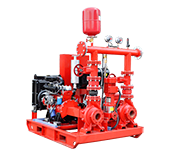
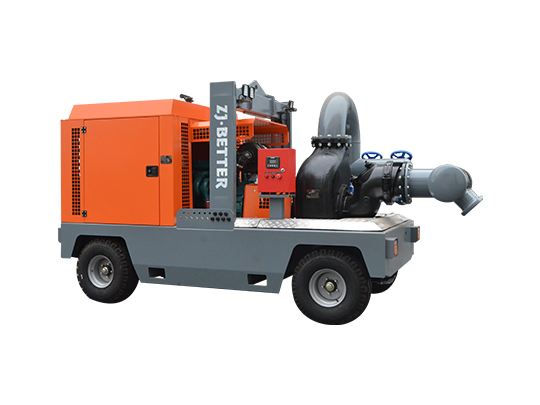
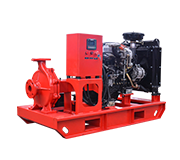
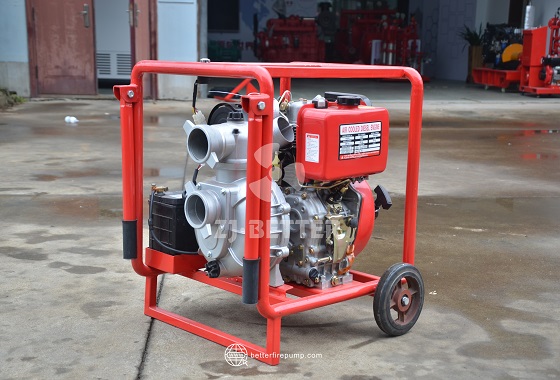
2. Mobile Integrated Structure Design Enhances Emergency Response Efficiency These fire pumps typically employ an integrated base structure, highly integrating the diesel engine, water pump, control system, and piping components to form a unified mobile firefighting unit. The compact and rational layout not only reduces the equipment's footprint but also effectively improves transportation and deployment efficiency. Some models are equipped with a trolley structure or a hoistable base frame, facilitating rapid movement and positioning in different locations. The overall structural design fully considers emergency usage scenarios, ensuring that the equipment can be quickly put into operation upon arrival at the site without complex installation. This "ready-to-use" characteristic is particularly crucial in the early stages of a fire, helping rescuers establish a stable water source in the shortest possible time, creating favorable conditions for subsequent firefighting operations.
3. High-efficiency fire pump body ensures stable high-flow output
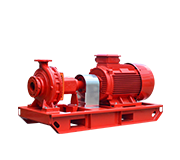
As a core working component, the fire pump body directly determines the water supply capacity of the entire system. This type of product typically uses a high-efficiency centrifugal pump or multi-stage pump structure, possessing high head and stable high-flow output capacity. During the design process, the pump body material is selected from wear-resistant and corrosion-resistant metals to ensure long-term durability. The optimized hydraulic structure not only improves the energy efficiency ratio but also effectively reduces vibration and noise during operation. Stable flow and pressure output enable the equipment to simultaneously meet the water supply needs of fire hoses, sprinkler systems, or temporary pipe networks, providing reliable support for multi-point firefighting.
4. Powerful water intake capacity adaptable to various water source conditions
In emergency firefighting scenarios, available water source conditions are often complex and diverse. Mobile diesel fire pumps possess excellent self-priming capabilities and wide adaptability to various water sources, including rivers, ponds, wells, and reservoirs. Some models can also be equipped with filtration devices to reduce impurities entering the pump body, effectively protecting the pump body and pipelines. This flexible water intake method frees fire rescue operations from the constraints of fixed fire hydrants or municipal water networks, providing a practical water supply solution for remote areas and field operations.
5. Stable and Reliable Operation Ensures Continuous Work In prolonged firefighting or rescue operations, the operational stability of the equipment is paramount. Mobile diesel fire pumps are designed with continuous operation requirements in mind. By optimizing the cooling, lubrication, and fuel supply systems, they ensure stable operation of the engine and pump body even under high loads. The sophisticated structural design effectively reduces the risks of overheating and wear, enabling continuous water supply for extended periods without affecting performance. This reliability provides strong logistical support for firefighters, reducing the risk of operational interruptions due to equipment failure.
6. Simple and Intuitive Control System for Quick Operation
Emergency sites are often noisy and staffed, so equipment operation must be simple and intuitive. Mobile diesel fire pumps are typically equipped with integrated control panels that centrally display functions such as start-up, shutdown, and parameter monitoring. Clear indicator instruments and simplified operating procedures allow operators to quickly learn and use the equipment without complex training. Additionally, some models have automatic protection functions, such as low oil pressure alarms and high-temperature protection, which can promptly alert or automatically shut down the system in abnormal situations, effectively ensuring the safety of equipment and personnel.
7. Robust and Durable Structure for Complex Operating Environments
These products prioritize overall strength and durability in their structural design. The base is often made of high-strength steel, capable of withstanding impacts and vibrations during transportation and operation. The surface is treated with anti-corrosion and anti-rust agents, making it suitable for humid and dusty working environments. The robust structure not only extends the equipment's service life but also reduces maintenance frequency, providing a reliable foundation for long-term standby or frequent use.
8. Multi-Scenario Application Value and Outstanding Emergency Water Supply Advantages.
Mobile diesel fire pumps, requiring no external power supply, are suitable for various firefighting and emergency scenarios, including rural firefighting, forest fire prevention, construction sites, warehouse parks, ports and docks, and disaster relief. In these scenarios, fixed fire-fighting facilities are often insufficient or unable to cover the area, while mobile equipment can flexibly supplement firefighting forces. Its rapid deployment and independent operation make it an indispensable piece of equipment in various emergency systems.
Mobile diesel fire pumps, requiring no external power supply, are suitable for various firefighting and emergency scenarios, including rural firefighting, forest fire prevention, construction sites, warehouse parks, ports and docks, and disaster relief. In these scenarios, fixed fire-fighting facilities are often insufficient or unable to cover the area, while mobile equipment can flexibly supplement firefighting forces. Its rapid deployment and independent operation make it an indispensable piece of equipment in various emergency systems.
9. Easy Maintenance and Reduced Long-Term Operating Costs.
From a long-term perspective, equipment maintenance costs directly impact user investment. Mobile diesel fire pumps are designed with ease of maintenance in mind, featuring a rational layout of key components and simple daily inspection and maintenance operations. Diesel engine technology is mature, parts are highly interchangeable, and maintenance resources are readily available. The rational structural design not only reduces maintenance difficulty but also minimizes downtime, improving the overall efficiency of the equipment.
From a long-term perspective, equipment maintenance costs directly impact user investment. Mobile diesel fire pumps are designed with ease of maintenance in mind, featuring a rational layout of key components and simple daily inspection and maintenance operations. Diesel engine technology is mature, parts are highly interchangeable, and maintenance resources are readily available. The rational structural design not only reduces maintenance difficulty but also minimizes downtime, improving the overall efficiency of the equipment.
10. Equipment Trends in Emergency Firefighting System Development.
As emergency management systems continue to improve, firefighting equipment is developing towards motorization and independence. Mobile diesel fire pumps, requiring no external power supply, are an important product form in this trend. Its highly flexible, rapid-response, and independent-operation characteristics perfectly align with modern emergency rescue needs, effectively enhancing overall fire protection capabilities and providing solid support for the public safety system.
As emergency management systems continue to improve, firefighting equipment is developing towards motorization and independence. Mobile diesel fire pumps, requiring no external power supply, are an important product form in this trend. Its highly flexible, rapid-response, and independent-operation characteristics perfectly align with modern emergency rescue needs, effectively enhancing overall fire protection capabilities and providing solid support for the public safety system.
In summary, the mobile diesel fire pump, requiring no external power source, has become a key piece of equipment in emergency firefighting and rescue operations due to its independent power system, flexible mobility, stable water supply performance, and wide application adaptability. This product not only effectively solves the water supply problem in environments without electricity but also significantly improves fire response speed and operational reliability. In future fire equipment configuration and emergency system construction, this highly mobile and adaptable emergency water supply solution will continue to play a vital role, providing safer and more efficient protection for various fire scenarios.
 WhatsApp me