
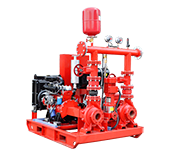
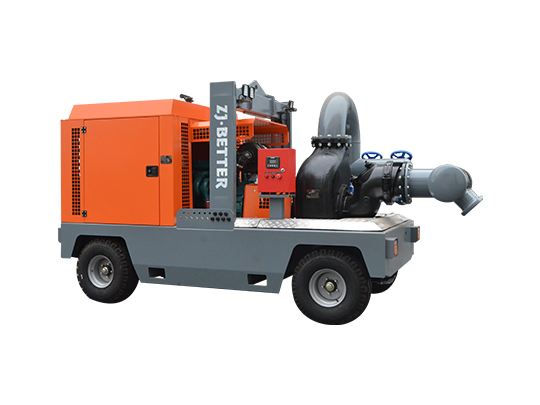
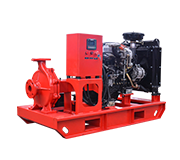
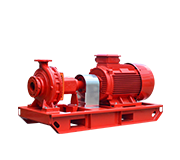

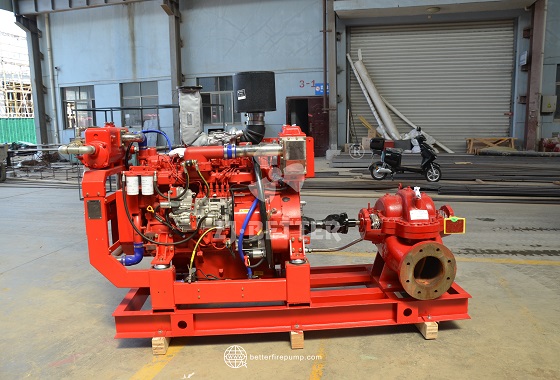
1. The Core Value of Independent Power Systems The most significant characteristic of diesel fire pump units is that their power system is completely independent of the external power grid. Driven directly by a diesel engine, the pump can start quickly and operate stably even in the event of a complete power outage or damage to the power system. This independence makes it a core guarantee for emergency fire protection systems, especially suitable for locations with unstable power or extremely high fire safety requirements. The reliability of diesel power provides a "last line of defense" for the fire protection system, ensuring firefighting capability even under the most unfavorable conditions.
2. Start-up Reliability Designed for Emergency Conditions In the event of a fire, the fire pump must start and be operational within a very short time. Diesel fire pump units are specifically designed to address this characteristic. The engine boasts excellent cold-start performance, enabling rapid startup even in low temperatures or long standby conditions. A sophisticated startup control logic and mechanical structure ensure high predictability in emergency situations, preventing delays in firefighting due to startup failure. This high startup reliability is an irreplaceable key advantage in emergency and backup fire protection systems.
3. Stable Output Ensures Continuous Firefighting Water Supply
Emergency and backup fire protection systems require not only "startability" but also "continuous operation." Diesel fire pump units are designed with long-term operational needs in mind, ensuring stable output flow and pressure under rated conditions through a reasonable match between engine power and pump performance. Even during prolonged firefighting operations, the unit maintains stable operation, providing a continuous and reliable water supply to the fire protection system. This stable output capability is crucial for controlling large or complex fires.
4. Applicable to Various Backup Fire Protection System Architectures
In practical engineering, diesel fire pump units are often used as backup main pumps for electric fire pumps or configured as independent emergency pumps within the system. When the main power supply or main pump fails, the diesel pump can automatically or manually intervene to ensure uninterrupted system operation. This flexible system positioning allows it to adapt to various fire protection system architectures, providing designers with greater safety redundancy and improving the overall reliability level of the fire protection system.
5. Structural Design Adaptable to Complex Environments Emergency fire protection equipment is often installed in pump rooms, outdoor platforms, or semi-open environments, placing higher demands on the equipment's environmental adaptability. The diesel fire pump unit has a robust structure, compact overall layout, and key components with excellent protection performance, enabling it to adapt to complex environments such as high temperature, high humidity, and dust. A reasonable structural design not only improves the stability of equipment operation but also reduces the impact of environmental factors on system reliability, allowing it to function stably in various emergency scenarios.
6. Reduced System Dependence on the Power System In large-scale fires or emergencies, the power system is often one of the first infrastructures to be affected. Configuring an independent diesel fire pump unit can effectively reduce the fire protection system's dependence on the power system, avoiding the risk of "losing water supply due to power outages." This design philosophy is particularly important in emergency and backup fire protection systems, significantly enhancing overall disaster prevention and risk resistance capabilities, and is a common configuration choice for high-safety-level projects.
7. Reliability Guarantee in Long-Term Standby Status Emergency fire pump units are typically in a long-term standby state, placing special demands on the durability and reliability of the equipment. Diesel fire pump units fully consider startup reliability after long-term static operation in terms of material selection, sealing structure, and lubrication system. Through proper maintenance and regular testing, the equipment can maintain good working condition even after years of standby, ensuring it is "ready to be called upon" when truly needed.
8. Practical Advantages in Maintenance and Management Compared to complex electrical systems, diesel fire pump units are more intuitive in terms of maintenance and management. Their operating status can be clearly monitored through mechanical and basic electrical control systems, making it easy for maintenance personnel to understand the equipment's condition. The clear structure and ample maintenance space facilitate routine maintenance and emergency repairs, reducing the risk of affecting system reliability due to improper maintenance. This practical advantage makes them more controllable in emergency fire protection systems.
9. Widely Applicable to Critical Protection Locations
Independent-powered diesel fire pump units are widely used in critical protection locations such as industrial plants, petrochemical facilities, energy stations, transportation hubs, large warehouses, and municipal emergency fire protection systems. These locations face severe consequences in the event of a fire, requiring extremely high levels of continuity and independence in fire water supply. Due to their emergency response capabilities and backup value, diesel fire pump units have become indispensable core equipment in such projects.
10. Enhanced Overall Fire Protection System Safety Level
Introducing independent-powered diesel fire pump units into the overall design of fire protection systems can significantly improve the system's safety level and reliability. It not only serves as backup equipment but also plays a crucial role in ensuring the system's continued operation under extreme conditions. Through proper coordination with the main pump, pressure stabilization system, and control system, diesel fire pump units construct a more robust fire water supply system, providing a solid guarantee for life and property safety.
Independent-powered diesel fire pump units, with their advantages of not relying on electricity, reliable start-up, stable operation, and strong environmental adaptability, have become key equipment in emergency and backup fire protection systems. In extreme situations such as fires, they ensure uninterrupted fire water supply, providing the last and most important guarantee for the system. With proper configuration and standardized maintenance, diesel fire pump units can provide long-term and stable service to various high-safety-level projects, making them an irreplaceable and important component of modern fire protection systems.
 WhatsApp me