

1. System Overview: Pressure Stabilization Solution Based on Automated Control
The fully automatic fire-fighting pressure-stabilizing pump system is a constant pressure water supply device specifically designed for fire protection pipe networks. Through the coordinated operation of an electric pressure-stabilizing pump, pressure tank, pressure sensor, and intelligent control system, it achieves automatic regulation and maintenance of pipe network pressure. When the pipe network pressure drops to the set value, the pressure-stabilizing pump automatically starts to replenish pressure; when the pressure recovers, the pump automatically stops, maintaining the system in a stable state. Its fully automatic control logic enables unattended operation, reducing maintenance costs and improving system reliability and safety, making it particularly suitable for large-scale fire protection systems in high-rise buildings, industrial plants, and warehousing and logistics centers.
2. Core Structural Components: High-Efficiency Linkage Between the Pressure Stabilizing Pump and Control System
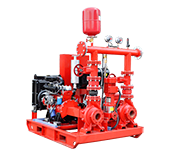
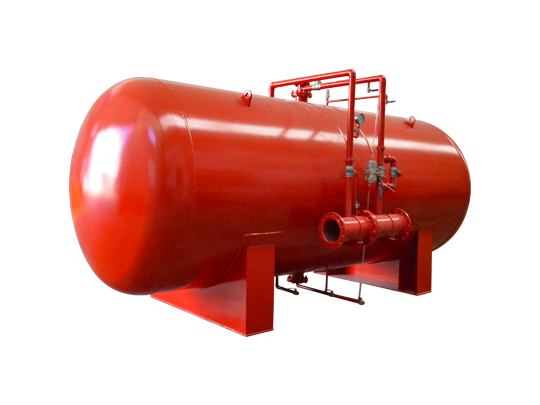
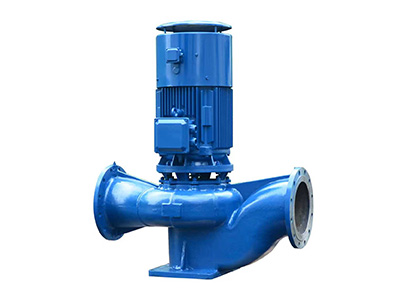
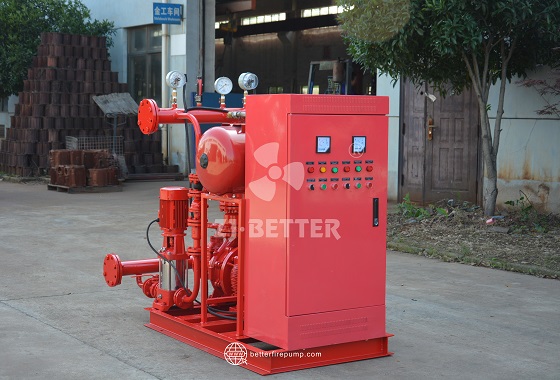
The system mainly consists of a pressure stabilizing pump, electrical control cabinet, pressure tank, check valve, pressure sensor, and pipeline valves. The pressure stabilizing pump is responsible for boosting water pressure, the electrical control cabinet handles control and monitoring functions, the pressure tank acts as a buffer and energy storage unit, and the pressure sensor monitors the pipeline pressure in real time and feeds it back to the control center. The components within the system are interconnected, forming a closed-loop control, making the pressure stabilization process precise and efficient. Furthermore, all key components undergo pressure-resistant, corrosion-resistant, and high-temperature-resistant treatments to ensure stable performance even under high humidity, high temperature, and long-term operating environments.
3. Automated Control Logic: Intelligent Response, Precise Pressure Regulation
Fully automatic control is the most significant feature of this system. The control system automatically determines whether to activate the pressure stabilizing pump for pressure replenishment by collecting real-time pressure signals from the pipeline network; it automatically shuts down when the upper pressure limit is reached to avoid overpressure operation. The system features delayed start-up, pressure upper and lower limit adjustment, self-test alarm, and automatic reset functions. Real-time viewing of operating status and historical data is available via a human-machine interface (HMI), enabling remote monitoring and intelligent diagnostics. This adaptive control logic makes the pressure stabilization process more intelligent and energy-efficient, significantly reducing the risk of misoperation and energy consumption.
4. Energy-Saving Performance Advantages: Optimized Operation, Reduced Costs
In terms of energy-saving control, the fully automatic fire-fighting pressure-stabilizing pump system utilizes frequency conversion technology and pressure sensor feedback control to automatically adjust the operating frequency of the pressure-stabilizing pump according to demand, reducing ineffective power consumption. The system operates in a low-power standby mode during non-firefighting operations, only starting when pressure fluctuates or the pipeline network depressurizes, effectively reducing energy consumption. Compared to traditional pressure stabilization methods, this system can save approximately 30%-50% of electrical energy consumption while extending the service life of the pump body and motor, thereby significantly reducing long-term operating costs.
5. Safety and Reliability Design: Ensuring Stable Pressure Supply in Critical Moments
The system design emphasizes safety and redundancy. Equipped with multiple electrical protection functions including overcurrent, overload, short circuit, and phase loss, the system automatically cuts off power and alarms when abnormalities occur. Simultaneously, the pressure-stabilizing pump uses high-strength shaft seals and high-temperature resistant materials to prevent leakage and damage under high-temperature or high-pressure environments. The control cabinet has an emergency manual control function, allowing manual start and stop of the pump unit in case of automatic control system failure, ensuring stable water pressure in the fire protection network under any circumstances.
6. Application Areas: Adaptable to Various Building and Engineering Scenarios
The fully automatic fire-fighting pressure-stabilizing pump system is widely used in high-rise buildings, subway stations, commercial complexes, factories and warehouses, airports and docks, and underground parking garages. Its design fully considers the pressure requirements and water supply structures of different scenarios, and can be flexibly configured with single or dual pump modes according to the system scale. For high-rise buildings, it can achieve zoned pressure supply; for industrial plants, it can operate in conjunction with the main fire pump to ensure continuous emergency water supply. The flexible system configuration allows it to meet the actual needs of diverse fire protection projects.
7. Maintenance Convenience: Modular Design Improves Operation and Maintenance Efficiency
The system adopts a modular structure design with a reasonable component layout and simple and clear pipeline connections. Maintenance personnel can quickly view operating status, alarm information, and pressure change curves through the control panel, facilitating problem location. The pump body and motor adopt a quick-release connection structure, making it easy to replace vulnerable parts. The pressure tank and valves are equipped with independent testing interfaces, allowing for individual maintenance without affecting system operation, thus significantly shortening maintenance time and improving overall equipment availability.
8. Intelligent Monitoring and Remote Management: A Modern Trend in Fire Management
The fully automatic fire-fighting pressure-stabilizing pump system supports remote monitoring and intelligent networking. Through the IoT communication module, users can view equipment operating parameters, alarm records, and operating curves in real time on a remote platform, achieving centralized management of multiple devices. The system can be linked with fire control panels or building automation systems (BAS) for unified dispatch and control. Intelligent data analysis functions can predict equipment operating trends and provide early warnings of potential faults, helping the fire protection system achieve digital management and intelligent operation and maintenance.
9. Installation and Commissioning Advantages: Standardized Configuration and Rapid Deployment
The system adopts a skid-mounted integrated design. Equipment assembly, piping connections, and performance testing are completed before leaving the factory. Upon arrival at the site, only the inlet and outlet water pipes and power supply need to be connected for immediate use. This plug-and-play standardized configuration greatly simplifies the construction process, reducing installation errors and commissioning time. Simultaneously, the system comes with detailed installation drawings and operation manuals, facilitating rapid deployment by construction personnel, shortening project cycles, and improving project delivery efficiency.
10. Compliant with International Standards: Authoritative Certification Guarantees Reliable Quality The fully automatic fire-fighting pressure-stabilizing pump system strictly adheres to international fire protection standards and water supply equipment specifications, such as ISO, NFPA, and GB50974. All key components have passed pressure testing and performance certification, ensuring stable use in fire protection projects in different countries and regions. Customized versions with different voltages, frequencies, and protection levels are also available to meet project requirements and adapt to overseas market application environments. This standardized and international design makes the product more competitive and adaptable to engineering projects.
With its intelligent control, highly reliable structure, and energy-saving operation, the fully automatic fire-fighting pressure-stabilizing pump system has become an indispensable component of modern fire-fighting water supply systems. It not only ensures continuous constant pressure in the fire-fighting network but also achieves remote monitoring and automatic management through intelligent technology, significantly improving the response speed and operational efficiency of the fire-fighting system. In the future, with the development of smart fire protection, this type of equipment will play a more important role in ensuring safety in various building projects, providing solid water pressure support for urban fire protection systems.
 WhatsApp me