
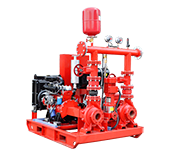
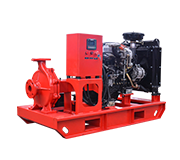
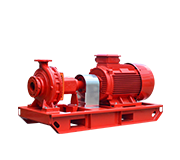
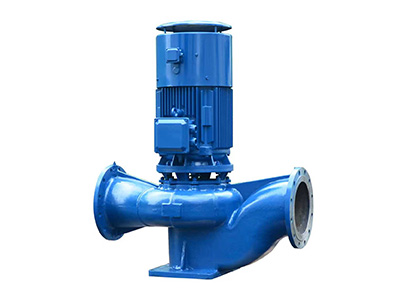

1. Efficient Hydraulic Model Design Enhances Energy Efficiency The energy-saving single-stage fire centrifugal pump employs an optimized hydraulic model design. The impeller flow path is smooth and the transition is natural, effectively reducing water flow turbulence and energy loss. While ensuring rated flow and head output, it improves overall hydraulic efficiency, allowing for more efficient use of the motor input power. By accurately calculating the fluid path and pressure distribution, the equipment can maintain a high efficiency range during operation, thereby reducing energy consumption. For stationary fire suppression systems that are in standby or periodically tested operation, high efficiency means lower electricity costs and a more environmentally friendly operating mode.
2. Simplified Single-Stage Structure for Stable and Reliable Systems
Compared to multi-stage structures, single-stage centrifugal pumps have a simpler structure with fewer internal transmission components, making maintenance clearer. The single-stage design meets the needs of medium-to-high lift fire suppression while reducing mechanical friction points and potential sources of failure, improving overall operational stability. The simple structure not only enhances reliability but also shortens the installation and commissioning cycle, allowing projects to be put into use more quickly. In stationary fire suppression systems, equipment stability is particularly important because fire pumps must start immediately and provide a continuous and stable water supply in emergencies.
3. Stable Flow Output for Automatic Sprinkler Systems
Automatic sprinkler systems have extremely high requirements for flow and pressure stability. Energy-saving single-stage fire centrifugal pumps, through optimized impeller diameter and pump casing structure, achieve stable flow output and minimal pressure fluctuations, continuously providing a stable water source to the sprinkler network. Even with multiple points operating simultaneously, they can maintain a balanced water supply, ensuring timely control of fires within the sprinkler coverage area. Stable flow output capability is the foundation for the efficient operation of stationary fire suppression systems.
4. Rapid Response Capability for Fire Hydrant Systems
In fire hydrant systems, fire pumps need to have rapid start-up and instantaneous high-pressure output capabilities. This product adopts a high-efficiency motor direct-drive structure, reducing transmission losses and improving start-up response speed. When the system detects a pressure drop, the equipment can quickly enter working condition, providing sufficient water pressure to the fire hydrants. Rapid response not only shortens the initial response time for fire suppression but also improves the overall system safety level.
5. Energy-Saving Operation Reduces Long-Term Operating Costs
Although fire protection systems operate for a limited time daily, they still consume electricity during regular inspections and tests. The energy-saving design reduces energy consumption per operation by improving efficiency, reducing shaft power loss, and minimizing mechanical friction. In the long term, this energy-saving characteristic can significantly reduce building operating costs, especially in large commercial complexes and industrial parks, where the energy-saving advantages are even more pronounced.
6. Robust Structure Adapts to Complex Environmental Conditions
Stationary fire suppression systems are often installed in underground pump rooms or industrial environments, which may be affected by factors such as humidity, high temperatures, or dust. This type of fire pump is manufactured with a robust pump body structure and durable materials. Key components are reinforced, providing excellent corrosion and wear resistance. The stable structural design ensures long-term reliable operation even in complex environments.
7. Convenient Maintenance Improves System Availability
The energy-saving single-stage fire centrifugal pump is designed with future maintenance needs in mind. Its compact and rational pump body structure and clear maintenance access are key features. Routine maintenance only requires checking critical components such as shaft seals and bearings. Convenient maintenance reduces downtime, ensuring the fire protection system is always available and improving overall safety.
8. Complies with Fixed Fire Extinguishing System Engineering Standards
The product's design parameters and performance curves fully consider the standard requirements of fixed fire extinguishing systems, meeting the standardized configuration requirements of flow rate and head for different projects. Reasonable performance matching makes the system easier to pass acceptance testing, reducing later adjustment costs. Standardized design facilitates smooth project implementation and ensures long-term stable operation.
9. Smooth Operation Reduces Vibration and Noise
Through precise dynamic balancing and a robust support structure design, the equipment exhibits excellent vibration control during high-speed operation. Lower vibration levels not only extend the lifespan of bearings and seals but also reduce the impact on piping systems. For commercial buildings, low-noise operation also improves the machine room environment and enhances the overall building quality.
10. Widely Applicable to Various Fixed Firefighting Scenarios
Energy-efficient single-stage fire centrifugal pumps are suitable not only for automatic sprinkler systems and fire hydrant systems but also for use with foam extinguishing systems, water curtain systems, and more. Their stable performance and flexible parameter configuration capabilities allow them to meet the needs of various scenarios, including industrial plants, logistics warehouses, underground parking garages, and commercial centers. This wide applicability enhances the product's engineering application value.
Energy-efficient single-stage fire centrifugal pumps provide reliable power for fixed firefighting systems through efficient hydraulic design, stable structural layout, and energy-saving operation advantages. Their excellent performance in automatic sprinkler systems, fire hydrant systems, and other fixed firefighting devices not only meets fire water supply needs but also effectively reduces energy consumption and long-term operating costs. In the modern trend of pursuing both safety and energy conservation in buildings, these products have become indispensable equipment in fixed firefighting systems, providing stable, efficient, and economical fire protection solutions for various engineering projects.
 WhatsApp me