

1. Core Guarantee Provided by Independent Power Design in Emergency Situations
One of the most common and dangerous situations in emergency situations is a power outage. Engine-powered fire pump systems use an independent power source, not relying on external power supply. Even if a fire causes a large-scale power outage and damages the power distribution system, the system can still start and operate stably through its own engine. This independence frees the fire water supply system from external conditions, buying valuable time for initial firefighting. Compared to electric drive systems, engine-driven systems offer greater controllability and determinism in emergency scenarios, maintaining reliable startup even in unattended or harsh environments. Through a mature starting structure and power matching design, the system maintains stable output in high-temperature, high-humidity, dusty, or vibrating environments, making it an indispensable key piece of equipment in emergency firefighting projects.
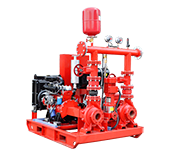
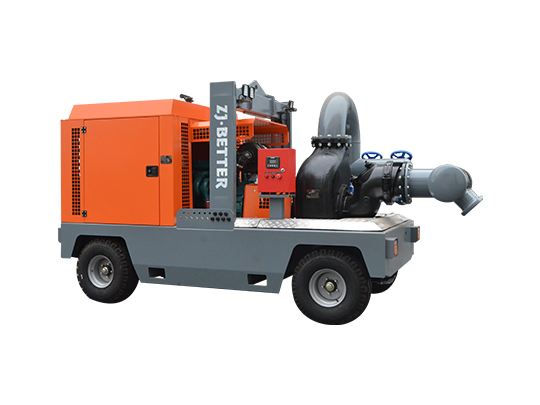
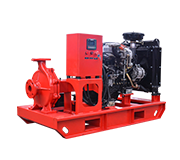
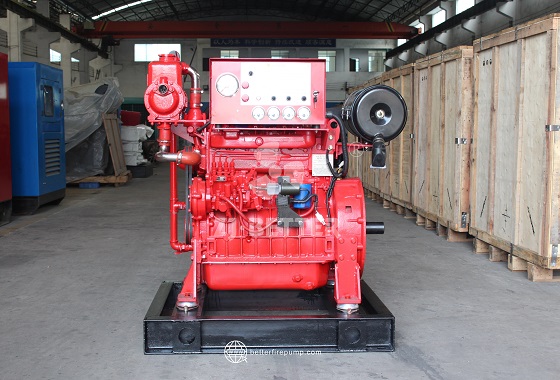
2. Standardized Structure Enhances Emergency Response Efficiency The engine-driven fire pump system is not a single pump unit, but rather integrates the engine, fire pump, control system, cooling system, fuel system, and necessary safety accessories onto a single base or skid-mounted platform. This standardized design significantly reduces on-site installation and commissioning time, allowing for rapid deployment in emergency situations. For temporary fire stations, emergency rescue sites, or areas requiring rapid restoration of protective capabilities, the system offers "ready-to-use" functionality, avoiding complex secondary construction. Simultaneously, the unified design and matching reduce the risk of internal incompatibility, making the entire unit more stable and reliable during emergency startup, ensuring that firefighting operations are not delayed due to system failures at critical moments.
3. Stable and Continuous Water Supply to Meet Long-Term Emergency Needs
Fire is not a short-term event, especially in large industrial facilities, warehousing and logistics centers, or municipal infrastructure, where firefighting often requires a continuous water supply. Engine-fired pump systems are designed for long-term stable operation, ensuring stable flow and pressure output through reasonable power reserves and cooling schemes. Even under prolonged high-load operation, temperature rise and wear are effectively controlled, preventing water supply interruptions due to overheating or power attenuation. This continuous water supply capability is particularly important in emergency situations, providing reliable water support for firefighters and significantly improving firefighting efficiency and safety.
4. Dual Automatic and Manual Start-up Mechanisms Enhance Emergency Reliability
In emergencies, any startup failure can have serious consequences. Engine-fired pump systems are typically equipped with both automatic and manual start-up mechanisms, which can be flexibly switched according to site conditions. When the system detects a pressure drop or fire signal, it can automatically start operation; if the automatic system is damaged or fails, operators can still quickly start the equipment manually. This dual-protection mechanism significantly enhances the system's reliability under emergency conditions, avoiding the risks associated with failure of a single startup method and ensuring that fire water supply remains under control.
5. High Adaptability to Complex and Harsh Environments Emergency situations often involve complex or even extreme environmental conditions, such as high-temperature smoke, rain immersion, dust accumulation, or vibration and impact. The engine-fired pump system fully considers these factors in material selection and structural design, enhancing protection and optimizing ventilation and sealing to ensure normal operation in adverse environments. This high adaptability makes it suitable not only for fixed fire stations but also for temporary rescues, field operations, and special engineering projects, playing a stable role in various unforeseen emergency environments.
6. Safety and Compliance Advantages from Standardized Engineering Design In emergency fire protection engineering, compliance with relevant technical specifications and engineering standards is a crucial prerequisite for deployment. The engine-fired pump system fully considers the standardization requirements of fire protection engineering during its design process, with performance parameters, interface types, and control logic all geared towards engineering applications. Standardized design not only facilitates system integration with existing fire hydrant networks and facilities but also reduces uncertainties in emergency deployment, ensuring compliant and safe operation even in emergencies and providing greater confidence to management and users.
7. Maintenance Convenience Ensures Availability in Emergency Situations
Emergency conditions do not mean equipment maintenance can be neglected; on the contrary, equipment availability is paramount, especially in critical moments. The engine-fired pump system is structurally designed with ample space for inspection and maintenance, with clear layout of key components, facilitating routine inspections and maintenance. This design philosophy helps maintain equipment in good condition during normal times, allowing for rapid deployment in emergencies and preventing prolonged idleness or performance degradation due to inconvenient maintenance.
8. Flexible Configuration Meets Diverse Emergency Scenarios
Different emergency scenarios have different requirements for fire water supply; some emphasize high pressure, others high flow rates, and still others require multi-point water supply. The engine-fired pump system can be flexibly configured according to project needs. By rationally selecting pump types, power parameters, and control methods, the equipment can adapt to diverse emergency application scenarios. This flexibility makes it widely applicable in industrial, commercial, municipal, and special engineering fields, providing reliable support for emergency firefighting tasks of varying scales and complexities.
9. Comprehensive Value in Reducing Overall System Risk
From the perspective of the overall fire protection system, the value of the engine-fired pump system lies not only in the performance of individual units but also in its role in reducing overall risk. Independent power, stable operation, and highly reliable design ensure a higher success rate for the fire water supply system at critical moments, effectively reducing the risk of fire escalation. For asset-intensive or extremely security-critical locations, this risk control value far exceeds the equipment itself, becoming an important component of fire protection engineering planning.
10. Long-Term Strategic Significance in Emergency Management Systems
With the continuous improvement of safety management concepts, emergency firefighting has shifted from passive response to proactive prevention. As a crucial foundational equipment for emergency water supply, the stability and reliability of the engine-fired pump system provide solid support for the overall emergency management system. By deploying such equipment at key points, the emergency response capabilities of a region or project can be significantly improved, making the fire protection system more composed and efficient in the face of emergencies. This long-term strategic significance transforms it not merely into equipment selection, but also into a security investment.
In summary, under emergency conditions, engine-driven fire pump systems demonstrate significant operational advantages in various fire protection projects due to their independent power, standardized structure, stable and continuous water supply, and high environmental adaptability. They not only solve the water supply problems during power outages and in complex environments, but also provide a solid guarantee for the reliability and safety of fire protection systems. In modern fire protection engineering and emergency management systems, this type of product has become an important technical support for improving overall protection capabilities and reducing risks, and its application value and development prospects will continue to be prominent.
 WhatsApp me