

1. Integrated Base Structure Enhances Overall Stability
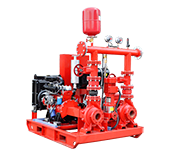
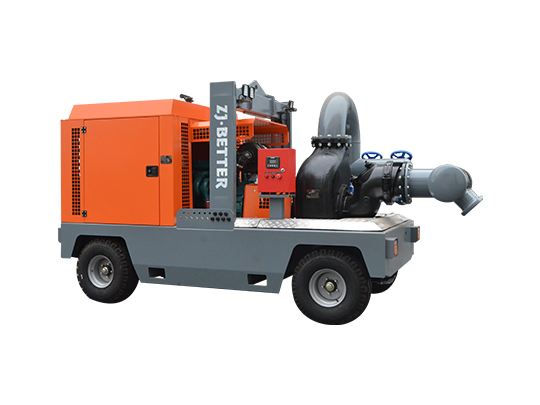
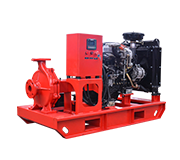
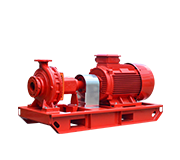
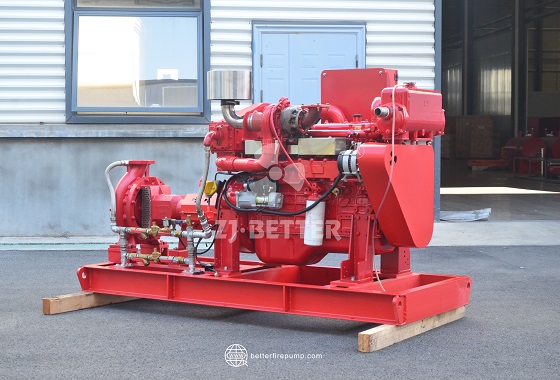
The integrated base structure is a key design feature of this type of diesel fire pump unit. By uniformly fixing the diesel engine, pump, control cabinet, and auxiliary piping on a steel structure base, the equipment forms a stable overall force-bearing system during operation, reducing mechanical stress concentration problems caused by vibration or displacement. The base is typically made of high-strength steel welded together, possessing good load-bearing capacity and torsional stiffness, and can adapt to long-term continuous operation and frequent start-stop conditions. In emergency firefighting scenarios, equipment often needs to start up quickly and maintain high-load operation within a short period. An integrated structure effectively prevents components from loosening or misaligning, ensuring the pump unit remains structurally stable even under high speed and high flow output. This design not only extends the overall lifespan of the unit but also reduces the frequency of on-site maintenance and recalibration.
2. Diesel Power System Ensures Independent Operation
Diesel drive is a crucial power source for this type of fire pump unit. Compared to electric equipment, it has lower dependence on external power, making it suitable for emergency water supply needs under unstable power grids or complete power outages. Diesel engines typically possess high torque output capabilities, enabling them to reach rated speed quickly, meeting the rapid start-up requirements of firefighting systems. Simultaneously, the combination of the fuel supply system and air-cooling or water-cooling systems ensures stable engine operation under high load conditions. For locations far from municipal power grids, such as warehouses, mines, and construction sites, this independent power configuration provides reliable fire safety assurance, ensuring the pump can be quickly deployed in the event of a sudden fire.
3. Pump Structure Design Supports Continuous High Flow Output
In emergency firefighting applications, a continuous and stable water supply is a key indicator. Integrated base structure diesel fire pump units are typically equipped with dedicated fire pump bodies. Their hydraulic models are optimized to maintain stable head and flow output within the rated speed range. The pump body is mostly made of wear-resistant cast iron or alloy materials, possessing excellent corrosion resistance and adaptability to various water quality conditions. The internal impeller and shaft sealing system are rationally matched to reduce energy loss and leakage risk, allowing the equipment to maintain high efficiency even during long-term operation. Stable flow output means a continuous supply of water to sprinkler systems or fire hydrant networks during firefighting, thereby improving firefighting effectiveness and reducing the risk of interruption.
4. Integrated Piping System Reduces Energy Loss This type of unit integrates the suction pipe, discharge pipe, and necessary valve components on the base, making the water flow channel more direct and smooth. Compared to on-site distributed piping systems, the integrated design reduces the number of unnecessary bends and connectors, thereby reducing water flow resistance and pressure loss. In emergency firefighting situations, the pump needs to deliver water to the designated location in the shortest possible time; the rationality of the piping structure directly affects the overall response efficiency. Factory pre-installation and commissioning ensures higher pipeline connection precision and better sealing, avoiding leaks or vibrations caused by installation errors. This design not only improves water delivery efficiency but also enhances system reliability under high-pressure operating conditions.
5. Automated and Safety-Linked Control System Integrated base structure diesel fire pump units are typically equipped with a dedicated control system for startup, operation monitoring, and fault alarm functions. The control cabinet can integrate an automatic start module, automatically activating the equipment when a drop in fire pipeline pressure is detected or a fire signal is received. Simultaneously, the control system can monitor key parameters such as oil pressure, water temperature, and voltage in real time, triggering protective measures in case of abnormalities to prevent continued operation under adverse conditions. The automated and safety-linked functions enable higher response efficiency in emergency scenarios, reducing the uncertainty caused by manual intervention and improving overall operational reliability.
6. Adaptability to Various Complex Operating Environments Emergency firefighting often occurs in complex environments, such as areas with high temperature, high humidity, or high dust levels. The integrated base structure diesel fire pump unit features protective designs for key components, such as protective covers, heat insulation layers, and waterproof sealing structures, enabling stable operation in harsh environments. A reasonable distance is maintained between the engine and pump body to facilitate heat dissipation and reduce the impact of heat on the control system. For applications exposed to outdoor or semi-outdoor environments for extended periods, this adaptive design helps extend the equipment's lifespan and ensures reliable start-up capability in the event of a sudden fire.
7. Modular Design Facilitates Transportation and Installation
This type of equipment adopts a modular layout, with each functional unit assembled and tested before leaving the factory. Users only need to complete simple foundation fixing and piping connections on-site to put it into use. Compared to traditional decentralized installation schemes, the integrated base structure reduces on-site construction work and shortens the system construction cycle. This modularity is particularly important for projects requiring rapid deployment of fire protection systems, such as temporary storage areas or emergency rescue sites. During transportation, the entire unit is loaded and unloaded as a whole, effectively avoiding the loss or damage of parts.
8. Stable Output Capacity Meets Continuous Operation Needs
During firefighting, water supply systems often need to operate continuously for extended periods. The integrated base structure diesel fire pump unit, through reasonable power matching and heat dissipation design, ensures stable output even under continuous operation. The matching between engine power and pump load has been calculated and verified to avoid speed fluctuations or flow rate reductions due to insufficient power. The cooling and lubrication systems work together to reduce the impact of high temperatures and wear on equipment performance. This stable output capability is a crucial guarantee in emergency firefighting scenarios, ensuring an uninterrupted water supply throughout the entire firefighting process.
9. Enhanced Maintenance Convenience for Long-Term Use Since all major components are centrally mounted on a single base, maintenance personnel can perform inspections and repairs within a confined space. The clear layout of key components such as the engine, pump, and control cabinet facilitates daily inspections and maintenance. The reserved maintenance access and inspection space make replacing vulnerable parts or making system adjustments more convenient. In the long term, this maintenance convenience reduces operating costs and minimizes the risk of downtime due to improper maintenance. For firefighting equipment requiring long service life, good maintainability is an important condition for ensuring reliable operation.
10. Application Value in Fire Protection Engineering
From an engineering application perspective, integrated base-structure diesel fire pump units are suitable for various fire protection system configurations, such as fixed fire extinguishing systems, temporary emergency water supply systems, and industrial park fire protection facilities. Their stable output capacity and independent power characteristics enable them to play a crucial role in emergency scenarios. By cooperating with piping networks, sprinkler systems, and control systems, they can form complete fire water supply solutions. The application of this type of equipment in actual engineering projects not only improves the overall reliability of the system but also enhances the ability to respond to sudden fire events, providing technical support for personnel safety and property protection.
In summary, integrated base-structure diesel fire pump units, with their stable structural design, independent and reliable power system, and efficient water supply capacity, have significant advantages in the field of emergency fire protection. Their integrated and modular characteristics make the equipment more efficient during transportation, installation, and operation, while maintaining stable output even under complex operating conditions. Through a reasonable structural layout and control system configuration, this type of equipment can be quickly deployed in sudden fire events, providing continuous water support for firefighting operations. As fire protection engineering demands increasingly higher levels of reliability and emergency response capabilities, integrated base structure diesel fire pump units will play a vital role in more application scenarios.
 WhatsApp me