

1. Diesel Power System Ensures Independent and Reliable Fire Water Supply
One of the most significant characteristics of diesel fire pump systems is their use of diesel engines as a power source. Compared to electric fire pumps, diesel power systems do not rely on external power supplies and can still operate stably even in the event of a power grid interruption or a fire causing the power supply system to fail. This independent power characteristic makes them an indispensable backup or primary fire protection equipment in large-scale infrastructure projects. In airports, ports, and large industrial facilities, fire protection systems need to maintain reliable operation under extreme conditions. Diesel engines, with their high torque output and excellent stability, can reach rated speed quickly and drive fire pumps stably. Furthermore, through a well-designed power matching system, diesel engines can continuously provide stable power under varying load conditions, ensuring the long-term efficient operation of the fire pump system. In addition, diesel fire pump systems are typically equipped with independent fuel storage devices, supporting long-term continuous operation. This is particularly important for industrial or warehouse facilities where fires are prolonged, ensuring the smooth execution of firefighting operations.
2. High-Efficiency Centrifugal Pump Structure Enables Stable Firefighting Water Supply
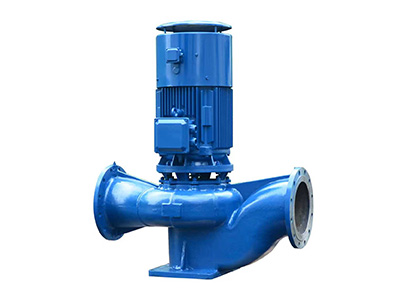
In diesel fire pump systems, centrifugal pumps are the core equipment for hydraulic delivery. Large infrastructure projects typically require high-flow, high-head firefighting water supply capabilities; therefore, fire pumps are usually designed with high-efficiency hydraulic models to meet the needs of complex fire protection systems. The fire pump impeller is precisely designed and dynamically balanced to maintain stable operation under high-speed rotation. The pump body is typically made of high-strength materials with excellent corrosion resistance and wear resistance, thus adapting to long-term operating environments. By optimizing the flow channel design, fire pumps can reach a stable operating state in a short time and maintain a stable water pressure output during continuous high-load operation. This is particularly important for large-scale fire protection piping systems, ensuring sufficient water volume and stable pressure while sprinkler systems, fire hydrant systems, and other fire protection equipment operate simultaneously.
3. Integrated Skid-Mounted Design Enhances System Integration
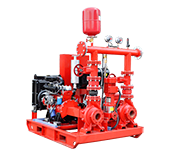
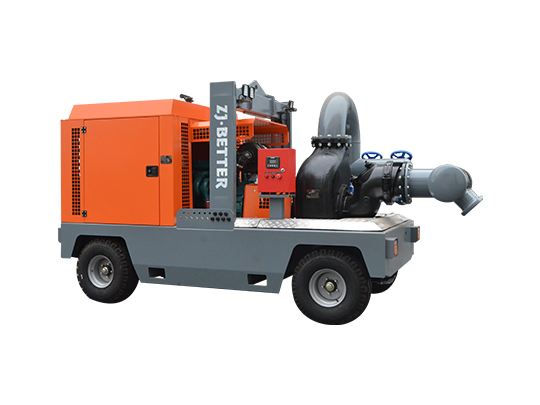
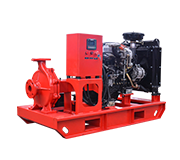
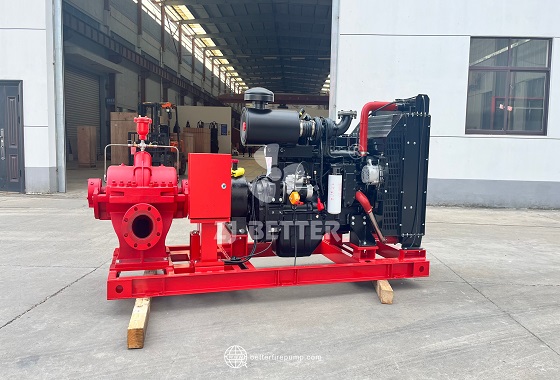
To meet the installation and transportation needs of large infrastructure projects, diesel fire pump systems typically adopt an integrated skid-mounted structure design. The diesel engine, fire pump, base frame, and some piping components are uniformly mounted on the same base, forming a complete equipment module. This design offers advantages such as compact structure, convenient installation, and high transportation efficiency. The equipment can be fully assembled and commissioned before leaving the factory, significantly reducing on-site installation time. For large projects with tight construction schedules, this modular design can significantly improve construction efficiency. Simultaneously, the skid-mounted structure can reduce on-site construction errors and improve the overall stability of the equipment. The robust steel structure base effectively absorbs vibrations generated during equipment operation, thereby extending the equipment's service life.
4. Intelligent Control System Enables Automated Operation
Modern diesel fire pump systems are typically equipped with intelligent control systems that achieve automatic start-up and shutdown through pressure sensors and control modules. When the fire pipeline pressure drops to a set value, the control system automatically starts the diesel engine and drives the fire pump. The automatic control system can also monitor the equipment's operating status in real time, including key parameters such as diesel engine speed, fuel status, water pump pressure, and cooling system temperature. In case of any abnormality, the system will promptly issue an alarm signal, ensuring safe operation of the equipment. Furthermore, the system supports manual control and remote monitoring functions, facilitating equipment management by operators in the control room or on-site. This intelligent control method not only improves system reliability but also reduces the risks associated with manual operation.
5. Structural Design Suitable for Complex Environments
Large infrastructure projects are often located in complex environments, such as the high humidity of port areas, the corrosive environment of petrochemical bases, and extreme climatic conditions in high or low temperature regions. Therefore, diesel fire pump systems must be designed with environmental adaptability in mind. The equipment typically uses corrosion-resistant coatings and high-strength structural materials to enhance corrosion resistance. The diesel engine cooling system is also optimized to ensure stable operation even in high-temperature environments. Meanwhile, the equipment's structural design emphasizes vibration resistance and noise reduction, ensuring stable and reliable operation over long periods. These design features enable the diesel fire pump system to adapt to various complex operating conditions.
6. Meeting the High Flow Demands of Large-Scale Fire Protection Systems
In large-scale infrastructure projects, fire protection systems often need to provide water to multiple fire-fighting devices simultaneously, such as fire sprinkler systems, outdoor fire hydrant systems, and fire monitors. These systems have very high requirements for water volume and pressure. Through reasonable hydraulic design, the diesel fire pump system can provide a stable, high-flow-rate water supply, thus meeting the operational needs of large-scale fire protection systems. By configuring different models of fire pumps, fire water supply schemes with different flow rates and pressure levels can be achieved. This flexible configuration capability allows the diesel fire pump system to adapt to projects of different scales, providing a reliable water source for large-scale fire protection systems.
7. Easy Maintenance and Long-Term Stable Operation
Fire protection equipment typically needs to be in a standby state for extended periods, and must be able to start immediately in the event of a fire. Therefore, the diesel fire pump system is designed with particular emphasis on ease of maintenance. The equipment structure is rationally laid out, with reserved maintenance space for each key component, facilitating daily inspection and maintenance. The diesel engine's fuel system, lubrication system, and cooling system all employ a modular design, making maintenance more efficient. Regular maintenance and inspections ensure the equipment is always in optimal operating condition, thus fulfilling its intended function in critical moments.
8. Widely Used in Large Infrastructure Projects
Diesel fire pump systems are widely used in large infrastructure projects. Facilities such as airport terminals, ports, large energy bases, and transportation hubs all require reliable fire water supply systems. In these locations, the demand for firefighting water is enormous in the event of a fire. Diesel fire pump systems can start quickly and provide a stable water supply, supporting the continuous operation of fire-fighting equipment. Furthermore, in areas far from the city's power grid, such as mining areas or remote industrial bases, diesel fire pump systems are crucial for ensuring fire water supply.
9. Enhancing the Overall Safety Level of Fire Protection Systems
The fire pump system is the core equipment of the entire fire water supply system, and its reliability directly affects the safety level of the fire protection system. Diesel fire pump systems, through the combination of independent power, high-efficiency pumps, and intelligent control systems, significantly improve the overall reliability of the fire protection system. In the event of a fire, the equipment can start quickly and provide a stable water source, enabling fire-fighting equipment to be deployed immediately. This rapid response capability is crucial for controlling the spread of fire. With continuously improving fire safety standards, the importance of diesel fire pump systems in large-scale infrastructure projects is becoming increasingly prominent.
10. Modular Design Meets Future Engineering Needs
With the development of engineering technology, modern fire pump systems are gradually moving towards modularization and integration. Diesel fire pump systems, through standardized modular design, can be flexibly combined according to different project needs. This design approach not only improves equipment production efficiency but also facilitates system upgrades and expansions. For example, when the project scales up or the fire protection system is upgraded, the system's water supply capacity can be increased by adding equipment modules. Modular design enables diesel fire pump systems to better adapt to the needs of future large-scale engineering projects, providing more flexible solutions for fire protection engineering.
As a crucial core device in large-scale infrastructure fire water supply systems, diesel fire pump systems play an irreplaceable role in modern fire protection engineering due to their independent power, high-efficiency hydraulic performance, and stable and reliable structural design. Through integrated skid-mounted design, intelligent control system, and high-performance centrifugal pump structure, this system can provide a stable high-flow water supply guarantee for large-scale fire protection pipe networks. Diesel fire pump systems have become crucial equipment for ensuring fire safety in critical infrastructure projects such as airports, ports, energy bases, and large industrial facilities. As fire safety standards continue to rise and project scale expands, these highly reliable fire pump systems will play an even more vital role in future fire protection engineering construction.
 WhatsApp me