

1. Independent Diesel Engine Power Design Ensures Stable Water Supply Under Power Outage Conditions
As the core power source of the system, the diesel engine provides independent operation capability completely independent of mains power. In large buildings, fires are often accompanied by power outages, at which point the fire-fighting water supply system must possess emergency self-starting and continuous stable operation capabilities. The diesel engine power unit adopts a high-pressure common rail or mechanical pump injection structure to ensure sufficient fuel atomization and stable combustion, maintaining rated speed output even under heavy loads or high-temperature environments. Meanwhile, the system is typically equipped with an independent starting battery, preheating device, and cryogenic auxiliary system, enabling rapid start-up even in cold or humid environments. For scenarios with extremely high requirements for continuous water supply, such as underground commercial areas and warehousing and logistics centers, this system can ensure a response within seconds after a power outage, quickly deploying for firefighting operations.
2. Integrated Base Structure Reduces Installation Workload and Improves Operational Stability
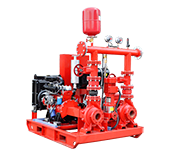
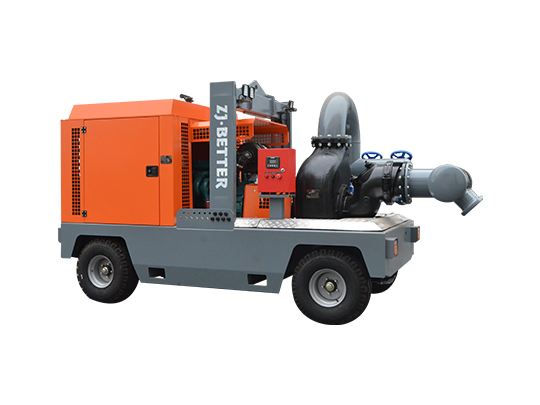
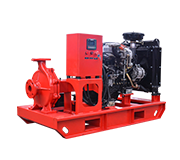
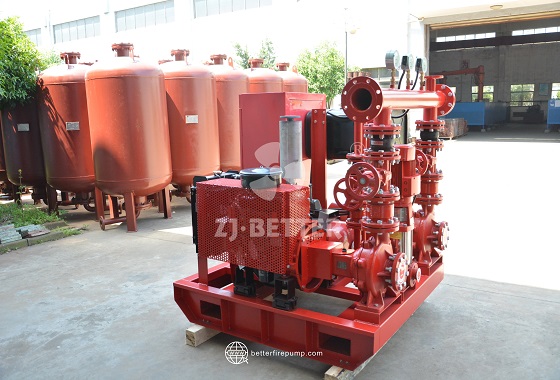
The system utilizes a robust and durable integrated base, centrally fixing the diesel engine, fire pump, coupling, control cabinet, and auxiliary equipment onto a single platform in an optimal layout. This structure not only reduces the difficulty of alignment during installation but also significantly shortens the construction cycle. The base is typically designed with thick steel plates and undergoes stress relief treatment to ensure no deformation under prolonged high-load operation. The equipment's center of gravity is rationally distributed, effectively reducing vibration during operation and extending the service life of the pump set and pipelines. Another advantage of the integrated structure is its ease of transportation and hoisting, making it particularly suitable for projects with limited space between equipment or complex construction conditions, such as renovation projects or mountain construction. The integrated structure makes installation more standardized and reduces the complexity of on-site commissioning.
3. High-efficiency fire pumps provide strong hydraulic performance and stable pressure output.
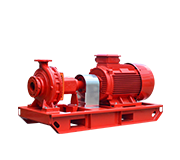
The fire pumps utilize a volute pump body with a high-efficiency fluid design, and the impellers are dynamically balanced to ensure stable output even at high speeds. Both fire hydrant systems and automatic sprinkler systems require maintaining certain pressure and flow rates under different operating conditions. This system features smooth internal flow channels and minimal hydraulic loss, improving overall flow output efficiency while ensuring water supply pressure. To meet the needs of various projects, the pumps can be customized with different head and flow rate combinations. The pump shaft is made of thickened stainless steel, offering strong corrosion resistance and fatigue resistance, suitable for long-term continuous operation. Furthermore, fire pumps are typically equipped with leak detection and bearing temperature monitoring functions to ensure equipment reliability under high-load operating conditions.
4. Automated control system enables unattended intelligent operation and management.
To ensure automatic response in emergency situations, the system is equipped with an intelligent control cabinet with automatic start, manual start, and remote signal linkage functions. When the pressure switch detects a drop in system pipeline pressure, the control system immediately issues a start command, causing the diesel engine to start quickly and drive the fire pump. Meanwhile, the control cabinet also features multiple alarm and protection functions, including low oil pressure, high water temperature, overspeed, low speed, low oil, and charging abnormalities, and can be linked with the fire control center for data exchange. During routine maintenance, the system can automatically initiate drills and record operational data, providing reliable data for maintenance personnel. Intelligent control significantly enhances the system's safety and reliability, enabling rapid response in the event of a sudden fire.
5. The system includes complete auxiliary operation modules to ensure stable operation over extended periods.
To maintain stable output during continuous long-term operation, the diesel engine fire pump is equipped with multiple auxiliary systems, including a fuel supply system, lubrication system, cooling system, and exhaust system. The fuel tank typically features a large-capacity design and can be customized to meet project requirements, enabling continuous operation for several hours or more. The lubrication system provides reliable lubricating oil circulation, reducing mechanical friction and ensuring efficient engine operation. The cooling system uses a circulating water tank or radiator structure to effectively dissipate heat generated during operation, preventing performance degradation due to overheating. The exhaust system is equipped with high-temperature resistant insulated pipes to ensure smooth exhaust and reduce noise, and can be customized for extension based on outdoor installation requirements. A complete set of auxiliary modules forms a robust power supply chain, enhancing the system's long-term performance.
6. Modular Design Adapts to Diverse Engineering Installation Environments
The integrated diesel fire pump system adopts a modular design, allowing for flexible layout based on the fire protection requirements of different buildings, machine room structures, and construction environments. Whether it's an above-ground fire pump room, an underground equipment room, or an outdoor rainproof pump room, this system can achieve optimal installation results through modular combinations. The modular design ensures highly standardized connection interfaces for each component, facilitating rapid disassembly and maintenance. For complex projects, such as chemical plants, port terminals, or facilities in remote areas, the system can be modified to achieve corrosion resistance, explosion-proof, or other corrosion-resistant properties. Furthermore, additional components such as pressure-stabilizing pumps, flexible joints, and bypass pipelines can be added according to project requirements, allowing the entire system to better match the overall fire protection plan of the project.
7. High Adaptability to Harsh Environments Enhances System Reliability
The diesel fire pump system is designed with environmental factors such as temperature, humidity, dust, and rain/snow in mind. Its power unit has excellent protective performance, enabling stable operation in high-temperature, high-humidity, low-temperature, and dusty environments. The electrical control system features an IP-rated protective enclosure, resisting moisture and dust intrusion to ensure circuit safety. Furthermore, an optional insulation and heating device can be added, allowing for rapid start-up even in cold regions. Large-scale industrial and mining projects often encounter corrosive gases or vibrations and shocks; the pump body and piping materials of this system possess excellent resistance to corrosion and impact. Due to its strong adaptability, this system is widely used in coastal areas, open-air environments, and remote areas.
8. Convenience of Maintenance Ensures Long-Term Stable Operation
The integrated structure and modular design simplify daily maintenance. The rational layout of key components and ample maintenance space facilitate the inspection and replacement of filters, belts, pump bearings, engine oil, and cooling water. The control system features an operation log function, alerting maintenance personnel to changes in equipment status and helping to detect potential faults early. The diesel engine is equipped with multiple detection sensors and alarm devices, making the maintenance process more predictable. Because it does not rely on an external power source, the system itself has a lower risk of failure, making maintenance costs more controllable during long-term operation. For locations requiring high reliability, such as high-rise residential buildings and large commercial complexes, this ease of maintenance significantly extends equipment lifespan and stability.
9. Widely Applicable to Large and Critical Building Projects
This system can be applied to various large-scale building environments, including high-rise buildings, commercial complexes, industrial plants, logistics and warehousing centers, underground spaces, airports, hospitals, and ports. In these scenarios, the continuity of fire-fighting water supply is extremely important, and the diesel fire pump system can maintain a stable water supply even in the event of power outages or unstable power. Furthermore, for mountainous areas, tunnels, islands, or other areas with unstable power supply, this system is an irreplaceable core fire-fighting device. Whether for new construction or renovation/expansion projects, it can be perfectly integrated into the fire protection system by configuring different flow rates, heads, and control methods.
10. Deeply Customizable to Enhance Overall Firefighting Efficiency
To meet the complex needs of different projects, the system supports comprehensive customization, including pump specifications, power configuration, fuel capacity, unit size, smoke extraction method, control logic, and protection level. For high-rise buildings, the pump head capacity can be significantly improved; for chemical plants, corrosion resistance can be enhanced; and for large warehouses, continuous operating time can be increased. Simultaneously, it can be integrated with pressure-stabilizing pumps, inspection pumps, and intelligent remote monitoring modules to achieve a more efficient overall fire water supply layout. Customization can significantly improve the overall fire protection efficiency of the project, allowing the equipment to better match the actual usage scenario of the project and enhance its full life-cycle value.
The integrated diesel engine fire pump system, with its independent power, intelligent control, modular design, and strong environmental adaptability, provides a safer, more efficient, and stable fire water supply guarantee for large buildings. Its ability to continue operating even in power outage environments makes it an indispensable core fire protection equipment in many critical engineering projects. Through reasonable configuration and scientific installation, the system can maintain reliable operation for a long time, effectively improving the overall fire safety level of the building.
 WhatsApp me