

1. System Composition and Overall Structural Advantages of Diesel Centrifugal Fire Pump Units
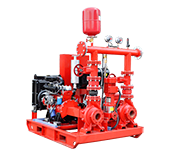
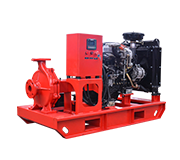
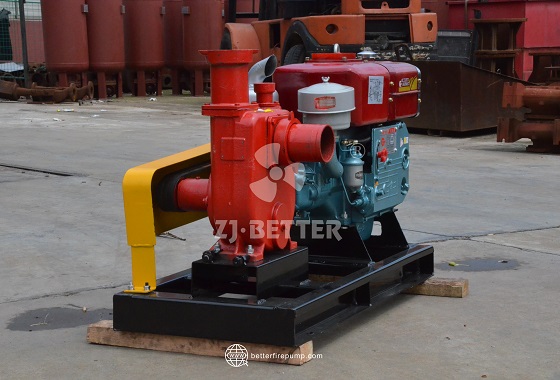
Diesel centrifugal fire pump units typically consist of a diesel engine, a centrifugal fire pump, a base, a cooling system, a fuel system, and control devices. The overall structure is compact and highly integrated. The engine and pump body are connected via direct coupling or flexible coupling, effectively reducing power transmission loss and improving operating efficiency. The entire unit is mounted on a high-strength steel base, ensuring good stability during long-term operation or emergency start-up and shutdown. This modular design allows for greater flexibility in on-site installation and system integration. It can be used as an independent main fire pump or integrated with electric fire pumps, pressure-stabilizing pumps, and other equipment to form a complete fire pump system, meeting fire protection needs of different scales and levels.
2. Stable Flow Output Capacity from Centrifugal Hydraulic Design
Centrifugal fire pumps, with their mature and reliable hydraulic structure, offer significant advantages in fire protection applications. Through reasonable impeller design and optimized pump chamber structure, diesel centrifugal fire pump units can continuously output a stable flow rate at rated speed, maintaining stable operation even under fluctuating pipeline pressure or changes in water consumption. This stability is particularly crucial for fire protection systems, effectively preventing water hammer and pressure surges that could impact the pipeline network and terminal equipment, ensuring a continuous and reliable water supply for fire sprinklers, fire hydrants, and other systems during a fire.
3. Diesel Power Drive Ensures Continuous Operation in the Absence of Electricity
Compared to electric fire pumps, the biggest advantage of diesel centrifugal fire pump units is their complete independence from external power sources. In the event of a mains power outage, damaged substation facilities, or unstable power supply in remote areas, the diesel power system can still start quickly and be put into operation, ensuring uninterrupted fire-fighting water supply. The engine is typically equipped with an independent starter battery and mechanical speed control, ensuring a high success rate of starting and operational reliability even in extreme environments or emergency situations, making it the "last resort" in the fire-fighting system.
4. Continuous Operation Capability Meets Long-Term Firefighting Needs
In large fires or complex rescue scenarios, fire-fighting equipment often needs to operate continuously for extended periods. Diesel centrifugal fire pump units are specifically optimized for this characteristic in terms of cooling systems, lubrication systems, and structural strength. High-efficiency heat dissipation devices effectively control engine operating temperature, preventing performance degradation due to prolonged high-load operation. Simultaneously, a stable lubrication system ensures that critical moving parts maintain good operating conditions under continuous operation, providing reliable support for long-term firefighting operations.
5. Materials and Manufacturing Processes Adaptable to Complex Operating Conditions
To meet the high durability requirements of fire-fighting systems, diesel centrifugal fire pump units typically use high-strength cast iron or alloy materials to manufacture the pump body and key flow components, possessing excellent pressure resistance and wear resistance. The shaft seal structure is reinforced for frequent start-stop and long-term operation, reducing the risk of leakage. These manufacturing details enable the equipment to operate stably for extended periods in high-temperature, high-humidity, dusty, or corrosive environments, making it particularly suitable for complex applications such as industrial plants, chemical parks, and municipal facilities.
6. Guaranteed Start-up Reliability for Rapid Emergency Response
In fire protection systems, the ability of equipment to start successfully in the first instance is crucial. Diesel centrifugal fire pump units are typically equipped with multiple start-up safeguards, including electric start systems, manual auxiliary start, and start-up protection logic, ensuring highly reliable start-up performance in critical moments. Simultaneously, reasonable engine matching and tuning allow the unit to quickly reach rated operating conditions after startup, shortening the response time from alarm reception to effective water supply, buying valuable time for firefighting operations.
7. Easy-to-Maintain Structural Design Reduces Operation and Maintenance Costs
From a long-term operational perspective, ease of maintenance directly impacts the overall cost of ownership. Diesel centrifugal fire pump units are designed with daily inspection and maintenance needs in mind, with a rational layout of major components and easily accessible key maintenance points. The easy inspection and replacement of filters, oil lines, and cooling systems effectively reduces maintenance difficulty and downtime, ensuring high operational availability throughout the equipment's lifespan.
8. Widely Applicable to Various Fire Protection System Applications
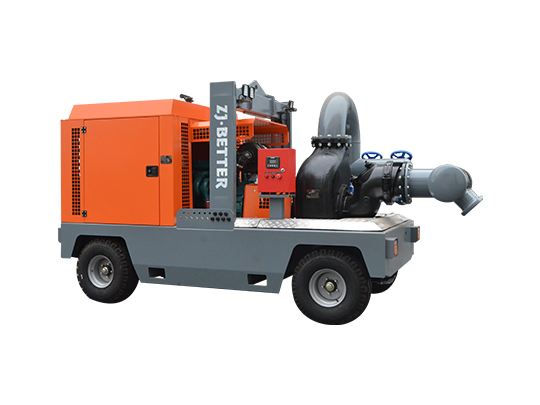
Diesel centrifugal fire pump units are widely used in industrial plants, municipal fire stations, logistics warehouses, high-rise buildings, and infrastructure projects. In fixed fire pump rooms, they are typically used as the main or backup pump; in special locations, they can also be integrated with mobile water supply systems to form a multi-level fire protection system. Their excellent compatibility allows for easy connection to fire duct systems of different standards, meeting diverse engineering needs.
9. Meets Fire Protection System Reliability Design Concepts
Modern fire protection systems emphasize "redundant design" and "multiple safeguards," and diesel centrifugal fire pump units are a key embodiment of this concept. By complementing electric pump systems, they effectively avoid system risks caused by the failure of a single power mode. Configuring diesel fire pumps in critical locations not only meets regulatory requirements but also provides crucial protection for personnel safety and property.
10. Core Position and Development Trend in Fire Protection Engineering Solutions
With the continuous upgrading of fire protection codes, the requirements for equipment reliability, continuous operation capability, and emergency response speed are increasing. The role of diesel centrifugal fire pump units in fire protection engineering solutions is becoming increasingly prominent. Their mature technology and stable operation ensure that they will remain one of the core devices in fire water supply systems for a considerable period of time.
Diesel centrifugal fire pump units, with their comprehensive advantages such as independent power, stable flow rate, and strong continuous operation capability, have become the core equipment for high-stability continuous water supply in fire protection systems. Whether in municipal fire protection, industrial protection, or emergency rescue scenarios, they play an irreplaceable and vital role. For fire protection projects that prioritize system safety, reliability, and long-term operational stability, this type of equipment is undoubtedly a key choice worthy of priority configuration.
 WhatsApp me