
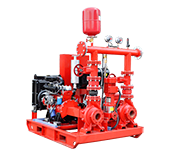
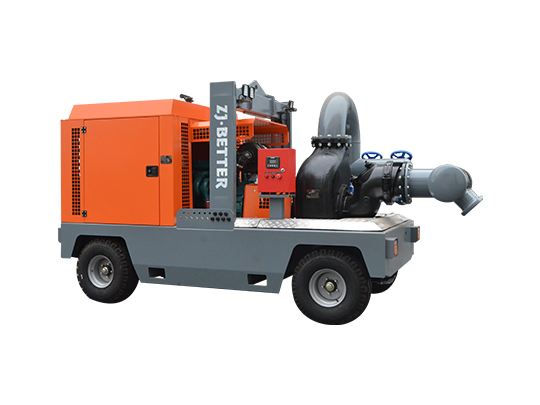
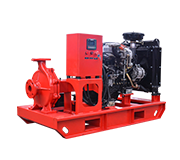
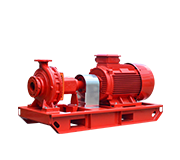
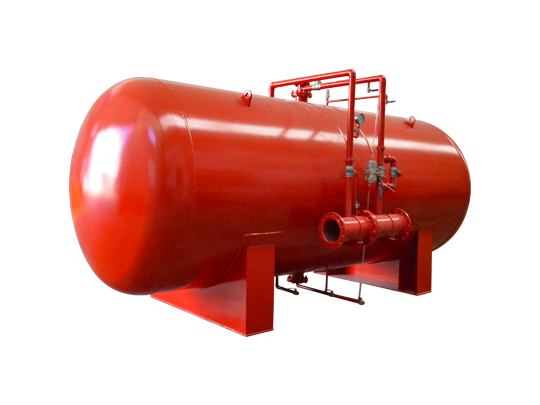
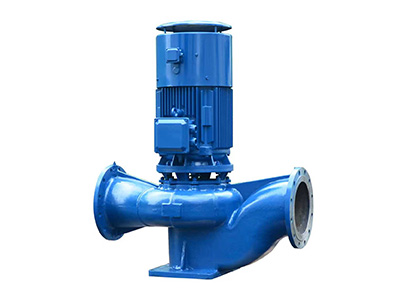

1. Compact Design, Suitable for Deep-Well Water Supply Environments
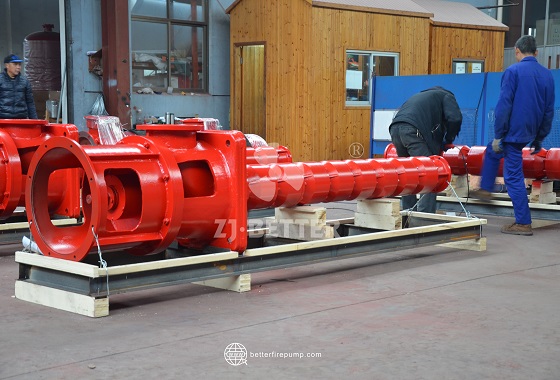
Deep-well submersible fire pumps utilize a vertical long-shaft or submersible design. The motor and pump body are connected by a drive shaft, enabling long-term, stable operation in deep wells or underground water sources. The pump body is constructed of high-strength, corrosion-resistant materials, effectively resisting corrosion from particles, silt, and chemicals that may be present in groundwater. Its modular design allows for flexible adjustment of the number of impeller segments and shaft length based on well depth and required flow rate, ensuring efficient water supply at varying depths. Compared to traditional suction pumps, this pump completely eliminates the vacuum problem associated with water intake, significantly improving water extraction efficiency.
2. High Head Output Meets Long-Distance Water Delivery Needs
The deep-well submersible fire pump boasts a powerful head capacity, easily meeting long-distance, high-rise, and high-pressure water supply needs. Its multi-stage tandem impeller design achieves greater energy output within a limited space, ensuring stable water pressure output even after multiple stages of pressurization. For high-rise buildings, mountainous facilities, or deep-well water intake points located far from the fire protection network, this pump ensures stable water supply without the need for additional pressurization equipment, effectively reducing system costs and maintenance.
3. Excellent Corrosion and Rust Resistance
Deep-well submersible fire pumps operate underwater year-round, placing extremely high demands on material corrosion resistance. The pump's main flow-through components are treated with stainless steel, copper alloy, or epoxy anti-corrosion coatings to effectively resist corrosion, scaling, and electrochemical damage. For water drawn from groundwater, seawater, or chemical environments, corrosion resistance is particularly important. This design ensures the equipment maintains high efficiency and reliability over long periods of operation, significantly extending its service life.
4. Fast Startup and Short Response Time
In fire emergencies, time is of the essence. Deep well submersible fire pumps feature fast startup, ensuring stable water supply within seconds. Their high-efficiency motors are equipped with an automatic start-up system that enables remote communication with the fire control center. Upon receiving the start signal, the pump automatically operates, ensuring immediate water supply to the fire network, making them suitable for a variety of emergency response scenarios.
5. Low Noise and Vibration
Because most of the deep well submersible fire pump's components operate underwater or within a well, noise and vibration are significantly lower than those of traditional surface pumps. Their balanced design and precision machining ensure smooth operation, preventing mechanical vibration from impacting the system structure or generating noise pollution. This feature makes them particularly suitable for installation in noise-sensitive locations such as hospitals, schools, and residential areas, improving the working environment while reducing the burden on infrastructure.
6. Easy Maintenance and Long Life
Although this pump has a complex structure, its modular design simplifies routine maintenance and overhaul. The bearings, impeller, and seal components all utilize standardized, replaceable structures, allowing for localized maintenance without disassembling the entire unit. Furthermore, wear-resistant bushings and a high-efficiency lubrication system reduce mechanical friction and energy loss, effectively extending the life of the unit. This low-maintenance feature is particularly important for fire water supply systems that require long periods of unattended operation.
7. Energy-Efficient and Highly Efficient, with Low Operating Costs
Deep-well submersible fire pumps are designed with energy efficiency optimized from the outset. Through efficient hydraulic models and precise impeller design, they maximize the utilization of fluid energy. The highly efficient matching of the motor and pump body reduces overall system energy consumption by 15%-30% compared to traditional pumps. Over extended operation, this energy-saving feature significantly reduces electricity costs, delivering greater economic and environmental benefits to users.
8. Intelligent Control Systems Enhance Operational Safety
Modern deep-well submersible fire pumps are typically equipped with intelligent control systems that monitor key data such as water pressure, water level, current, voltage, and operating temperature in real time. If an abnormality occurs, such as low water levels, abnormal pressure, or motor overload, the system automatically issues an alarm and initiates protective actions to prevent equipment damage. This intelligent control technology not only enhances equipment safety but also simplifies operation and reduces operational risks caused by human error.
9. Flexible Installation, Adaptable to Various Operating Conditions
Deep-well submersible fire pumps are suitable for a variety of water supply environments, including deep wells, underground reservoirs, rivers, lakes, and coastal water sources. Depending on the installation location and water level fluctuations, they can be driven by either a submersible or dry motor, offering enhanced flexibility. Furthermore, their vertical structure occupies a small footprint and is easy to install, making them suitable for fire pump rooms with limited space or underground locations. This flexible installation method significantly enhances the system's adaptability.
10. Widely Used in Major Firefighting Projects
Deep-well submersible fire pumps are widely used in petrochemical bases, ports and terminals, high-rise buildings, industrial parks, and municipal fire protection systems. In these locations, deep well water supply or underground water storage is commonplace. With its high head, corrosion resistance, and high reliability, these pumps are the preferred solution for deep-water firefighting systems. It not only ensures a stable fire water supply but also seamlessly integrates with sprinkler systems, fire hydrant systems, and foam fire extinguishing systems to build a comprehensive fire water supply network.
Deep-well submersible fire pumps, with their superior structural design, high head output, corrosion resistance, and intelligent control advantages, have become an indispensable core equipment in modern fire protection projects. Whether used for deep-source water supply in high-rise buildings or remote fire protection systems in industrial parks, they demonstrate efficient, stable, and reliable performance. With the continuous advancement of intelligent and energy-saving technologies, deep-well submersible fire pumps will continue to play a key role in fire safety, providing continuous power support for the safe operation of cities and industries.
 WhatsApp me